Tag: Malignancy
-
Dr. Marilyn Gaston’s lifesaving research
Howard FischerUppsala, Sweden “[W]e can seize the opportunity to honor the too-often-neglected accomplishments of [B]lack Americans in every endeavor throughout our history.”1– President Gerald Ford, 1976 Marilyn Gaston, MD (b. 1939), grew up in a poor family, with both parents working at low-wage jobs. She… Read more
-
It’s not the patient who hit you…
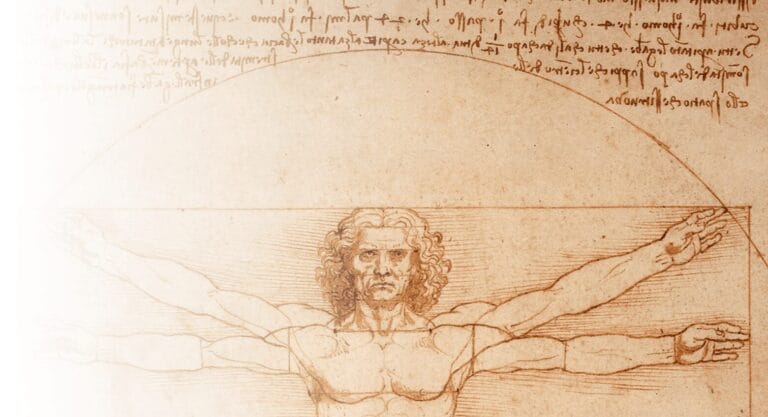
JP SutherlandNorth America Although Christopher’s appearance was extraordinary, there was no sign (not even in retrospect) that he would kick me in the groin within the next hour. He was naked, and standing motionless with his arms held out perpendicularly from his sides. If anyone… Read more
-
James Joyce’s Ulysses and the human experience
Mateja LekicPhoenix, Arizona, United States Ulysses is a novel that explores universal themes of the human experience. A modern retelling of the Odyssey, it follows Leopold Bloom during his encounters on the streets of Dublin in a single day. Each episode loosely follows in Odysseus’s… Read more
-
Huntington’s chorea
JMS PearceHull, England In the history of medicine, few writers can have received a finer accolade than that bestowed by William Osler on George Huntington. Osler commented: “In the whole range of descriptive nosology there is not to my knowledge, an instance in which a… Read more
-
Making radiation visible: Hiroshima, Nagasaki, and Godzilla
Howard FischerUppsala, Sweden “The theme of the film, from the beginning, was the terror of the bomb.”1—Tomoyuki Tanaka, producer of Gojira (Godzilla) The Third Reich surrendered to the Allies in early May 1945. This did not yet end World War Two, as the forces of… Read more
-
The ordeal of Evelyn Waugh
Stephen McWilliamsDublin, Ireland In Evelyn Waugh’s second-last novel, The Ordeal of Gilbert Pinfold (1957), the eponymous character experiences some singular and troubling symptoms. Mr. Pinfold is a successful writer, not unlike Waugh himself, who embarks on a sea voyage in an effort to cure the… Read more
-
Book review: The Big Necessity: Adventures in the World of Human Waste
Howard FischerUppsala, Sweden Its title might seem frivolous, but this book is serious, and the problems Rose George describes are a matter of life and death. Her take on the disposal of human waste is clearly detailed in her introduction. She avoids euphemism and favors… Read more
-
A doctor of the old school
“The apparition of a god would not have caused more commotion… “He belonged to that great school of surgery begotten of Bichat, to that generation, now extinct, of philosophical practitioners, who, loving their art with a fanatical love, exercised it with enthusiasm and wisdom. Everyone… Read more
-
And for unto us… Medicine, Messiah, and Christmas
Desmond O’NeillDublin, Ireland Although the very first performance of the Messiah took place in April 1742 in Dublin with the London première following in March 1743, the oratorio is closely associated with the Christmas season in the Anglophone world. The origin of this custom has… Read more
-
Help from the horseshoe crab
Howard FischerUppsala, Sweden The horseshoe crab (Limulus polyphemus) has not changed in more than 450 million years. It has been called “a living fossil.”1 It is, in fact, not a crab at all, but an arthropod, more closely related to arachnids such as spiders and… Read more
-
Douglas Argyll Robertson and his pupils
JMS PearceHull, England In my student days, the Wasserman reaction (WR), though not specific, was performed almost routinely in patients on medical wards to detect syphilis. Several direct and serological tests of varying sensitivity and specificity have now replaced the WR. Since reaching a historic… Read more