Mariam Banoub
Matthew Hill
Julius Bonello
Peoria, Illinois, United States
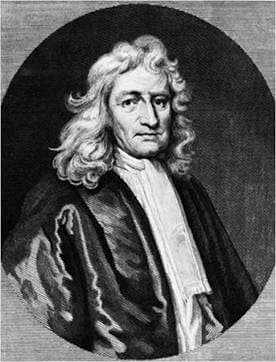
The Chamberlen family of barber-surgeons had a secret, an invention unknown to anyone else at the time. They protected this invention at all costs, even when it cost a human life. To ensure their secrecy, they always arrived at a patient’s home in a highly decorated carriage. Assistants brought in a large, ornately carved box and placed it in the patient’s room, implying a very intricate and valuable instrument. With the bedroom door closed to all family members, the lights were dimmed and the patient blindfolded. A blanket was fashioned to conceal the device. When the procedure commenced, the assistants sang, bells were rung, and peculiar sounds were heard by the family. At the completion of the procedure, whether successful or not, the entourage was paid and the barber-surgeon left. Through this elaborate performance, they were able to protect their invention for over one hundred years and as a result were the sole profiteers.
The sixteenth century was a period of profound upheaval, driven largely by Protestant revolution. In 1569, Catholic France drove William Chamberlen, a Protestant barber surgeon, to Southampton, England with his wife and son, Peter (later called Peter the Elder). Three years later, a second son was born, also named Peter (later called Peter the Younger). While the endeavors of William Chamberlen in England are lost to history, it is noted that he died in 1596. His legacy, however, lived on through both his sons and continued through the invention of a new profession, the male midwife, otherwise known as an accoucheur.
Since the beginning of recorded time, midwives had solely been women, as it was considered improper for men to view women’s genitalia. In the mid-sixteenth century, barber-surgeons convinced the general population of their importance in the labor room through their complex knowledge of instruments. Ambroise Paré’s (1510–1590) invention and introduction of internal podalic version—a technique in which the surgeon inserts a hand into the womb to turn the fetus—cemented the role of barber-surgeons and gave rise to accoucheurs.
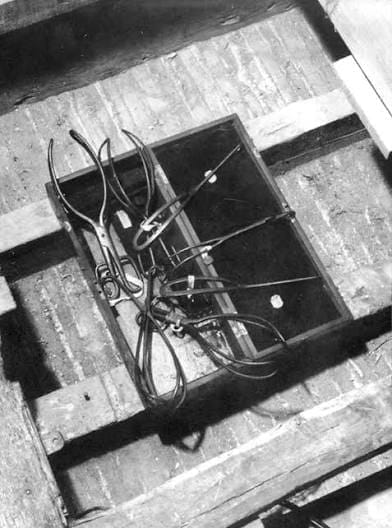
Historically, the use of instruments in childbirth dates back thousands of years. Ancient Japanese used filets of whale bone over the fetal head to extract an obstructed fetus from the mother. Some Hindu texts described a knife and hook for perforation and extraction of the fetus. While these tools were meant to relieve obstruction, in truth, they were destructive tools that could only be used to extract a dead fetus. Avicenna, a Muslim physician of the tenth and eleventh centuries, was the first to propose that an instrument could extract a fetus while alive. He wrote that if manual traction was not successful, this should be followed by use of instruments. It was not until almost 600 years later that forceps were invented and implemented. That invention was credited to William Chamberlen’s son, Peter the Elder.
Obstetric forceps were designed to help with difficult labor and delivery when the cervix was fully dilated and the fetal head was situated in the pelvis. Despite the novelty of the instrument, the Chamberlen family kept its invention a secret and instead tried to influence their way into society through their knowledge.
In 1616, Peter the Elder, with the help of his brother Peter the Younger, attempted to establish the accoucheur profession within the College of Physicians without success. This, however, did not stop the influence of the Chamberlen family. The tradition and secret continued with Peter the Younger’s sons for generations, each attempting to incorporate midwifery into the College of Physicians while profiting greatly from the use of their forceps in secret.
Peter, son of Peter the Younger, born in 1601 and known as Dr. Peter Chamberlen, obtained his medical degree in Padua, Italy in 1619. He was made a fellow of the College of Physicians. The following year, he attended the birth of the future King Charles II. In 1632, he was appointed court physician. He was deeply involved in midwifery and gave lectures to both midwives and barber surgeons on anatomy. In 1634, he too petitioned the King to create a corporation of midwives but again was turned down by the College of Physicians.
Dr. Peter Chamberlen’s eldest son, Hugh the Elder, was born in 1630. He practiced midwifery, but there is no record of him obtaining a medical degree. In 1670, he visited Paris, hoping to raise funds by selling the family secret to the French government. He captured the attention of France’s most famous “obstetrician,” Francois Mauriceau, who tasked him with delivering a thirty-eight-year-old woman with a severely deformed pelvis. Hugh failed, and both mother and fetus died. Although he failed to sell his invention, he was able to obtain a copy of Mauriceau’s text on obstetrics. He translated this in 1672 as The Accomplish’t Midwife. In the forward, he references his family’s secret but does not reveal the specifics. The book became quite popular, going through multiple editions over the next 100 years.
In 1688, Hugh was accused of practicing without a license and departed for Holland, where he spent the next five years. While there, he sold his family’s secret device to a Dutch obstetrician, but in truth, he only sold one blade. It was not until the early 1700s when the family secret was finally revealed through Hugh the Elder’s son, Hugh the Younger. Without any male heirs to carry the family tradition, Hugh the Younger allowed the family secret to leak, putting an end to the questionable one-hundred-year run of profitability for the Chamberlen family. In 1813, five pairs of obstetric forceps were found under the floorboards in the home of Peter the Elder, which had been hidden by his wife upon his death. Without the protection of their secret, the only legacy left by the Chamberlen family was one of tragedy and greed.
“He who keeps so secret so beneficial an instrument as the harmless obstetrical forceps deserves to have a worm gnaw his vitals for all eternity.”
—Anonymous
Afterword
In contrast, in 1923, the inventors of insulin, Frederick Banting, Charles Best, and James Collip, sold their patent to the University of Toronto for just one dollar each. Banting famously stated that “insulin does not belong to me, it belongs to the world,” emphasizing his desire for widespread access to the drug.
References
- Dunn, Peter. “The Chamberlen family (1560-1728) and the forceps.” Arch Dis. Child Fetal Neonatal Ed. 1999, vol 81: 232-235.
- Young, Ronald L. “Obstetrical Forceps: History, Mystery, and Morality.” Houston History of Medicine Lectures 13 (2011). https://digitalcommons.library.tmc.edu/homl/13.
MARIAM BANOUB is a fourth-year medical student at the University of Illinois College of Medicine Peoria (UICOMP). She will graduate in 2026. She plans to pursue a career in surgery.
MATTHEW HILL is a fourth-year medical student at the University of Illinois College of Medicine Peoria (UICOMP). His career interests include gastroenterology, internal medicine, and surgery.
JULIUS BONELLO, MD, is a Professor Emeritus at the University of Illinois. He has been teaching students for 50 years.