
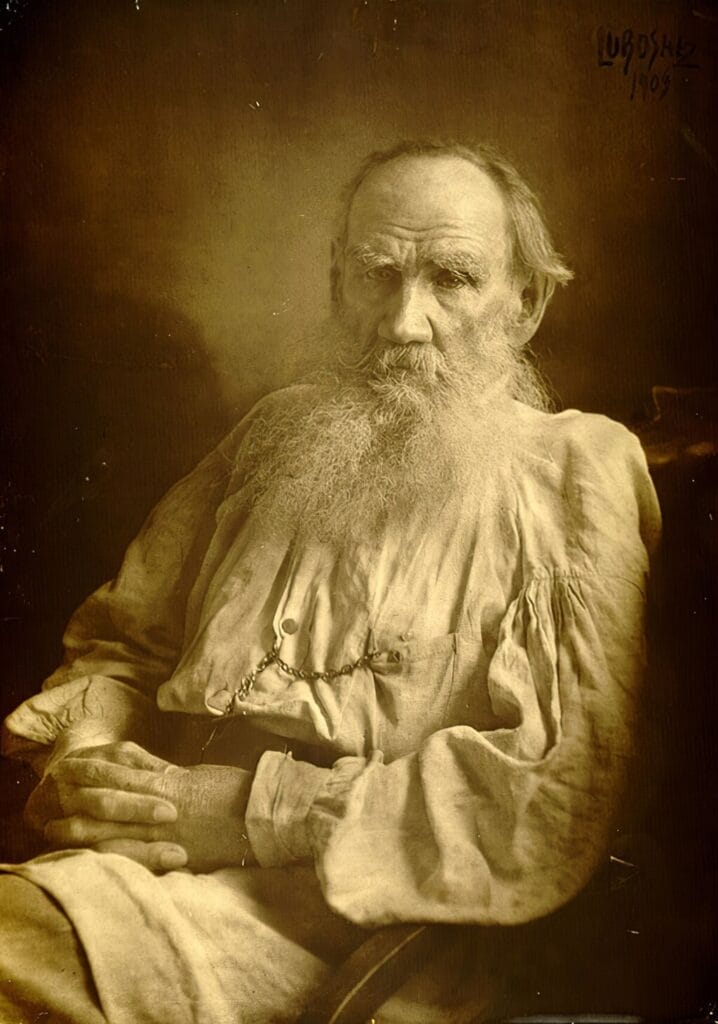

Leo Tolstoy (1828–1910), one of literature’s greatest novelists, lived through an age of intense change in medicine. Nineteenth-century Russia was a country caught between ancient folk remedies and the rise of modern scientific practice, and Tolstoy himself straddled both worlds. His health was fragile, his writings repeatedly explored themes of illness, suffering, and death, and his interactions with doctors reflected both skepticism and fascination. The medical aspects of his life and work illuminate not only his personal philosophy but also broader cultural shifts in his era.
From an early age, Tolstoy struggled with a body prone to weakness. He endured recurrent bouts of fever, digestive troubles, and later, attacks of depression and anxiety that today might be classified as mood disorders. His diaries describe insomnia, heart palpitations, and a pervasive sense of nervous exhaustion. Physicians of the time prescribed the usual regimens: cold baths, bloodletting in earlier decades, and later, tonics and “rest cures.” Yet Tolstoy remained skeptical of such interventions, often preferring vigorous exercise, horse riding, or manual labor as his medicine.
In his later years, Tolstoy developed angina pectoris, the heart condition that eventually led to his death in 1910. Accounts from his family and companions describe him clutching his chest in pain, short of breath, but still stubbornly refusing consistent medical treatment. His final illness became almost a parable: fleeing his home in Yasnaya Polyana in pursuit of solitude and moral clarity, he collapsed at a remote railway station, where doctors attended him in vain. The scene, complete with the presence of physicians, family, and a public eager for news, resembled the dramatic deathbeds he had so often depicted in his fiction.
Tolstoy’s ambivalence toward the medical profession reflected his larger mistrust of institutional authority. He frequently criticized doctors for focusing on symptoms rather than the soul, accusing them of arrogance and materialism. In essays and letters, he mocked the certainty with which physicians prescribed treatments, even when cures were elusive. Yet he did not entirely dismiss medical science: he allowed himself to be examined, tried suggested remedies, and maintained friendships with some doctors. His skepticism arose less from ignorance than from his conviction that health was inseparable from moral and spiritual life.
One telling episode involves his crisis of faith in the 1870s. As he searched for religious truth, Tolstoy contrasted the medical profession’s inability to cure death with religion’s promise of meaning. Doctors, in his view, were skilled at prolonging life but powerless against mortality. This perspective shaped his fiction, where physicians often appear as limited figures—competent but spiritually blind, unable to grasp the deeper dimensions of human suffering.
Tolstoy’s literary genius found some of its most powerful expression in scenes of illness and dying. In War and Peace (1869), Prince Andrei’s slow decline after his battlefield wound becomes a meditation on pain, love, and transcendence. Tolstoy describes not only the physical symptoms—the fever, weakness, and wasting—but also the shifting inner states of the patient, his acceptance of mortality, and his final serenity. The medical attendants are present but marginal, their role overshadowed by spiritual revelation.
Anna Karenina (1877) contains an equally striking medical subplot in the story of Kitty’s illness. After her romantic disappointment with Vronsky, Kitty falls into a state of nervous debility, a diagnosis akin to hysteria or neurasthenia. Tolstoy depicts doctors prescribing mineral waters and travel to a German spa—common therapies for upper-class Russians of the era. Kitty’s recovery, however, comes not from medicine but from moral renewal and eventual domestic happiness. Here again Tolstoy questions the sufficiency of medicine when confronted with existential malaise.
Perhaps the most direct confrontation with medical themes comes in The Death of Ivan Ilyich (1886). This novella, often considered one of the greatest works on mortality, portrays a judge whose mysterious illness—likely cancer—brings him face to face with death. Tolstoy’s descriptions of medical consultations are laced with irony: Ivan’s doctors debate technical details, argue over terminology, and exude professional confidence, while the patient feels increasingly alienated and terrified. The futility of medical jargon contrasts with Ivan’s growing realization that his suffering has moral and spiritual dimensions. Tolstoy uses this dissonance to critique both the medical establishment and a society that denies death’s reality.
Tolstoy’s medical reflections cannot be separated from his broader philosophy. He regarded health as a moral condition, attainable through simplicity, temperance, and alignment with natural law. In his later years, he advocated vegetarianism, abstinence from alcohol and tobacco, and physical labor as pathways to both bodily and spiritual health. These practices resonated with contemporary movements in Europe and Russia that linked health reform with moral renewal.
His distrust of doctors also mirrored his critique of institutions—whether the state, the church, or science—that claimed authority over individual conscience. Medicine, in his view, risked becoming another form of tyranny, imposing treatments without addressing the soul’s needs. Yet his works reveal not rejection but tension: an acknowledgment of medicine’s power to relieve suffering, paired with insistence that true healing requires moral awakening.
Tolstoy’s medical aspects reveal a man deeply engaged with the problem of human frailty. His own ailments, his interactions with physicians, and his portrayals of illness in literature all point to a central conviction: medicine can treat the body, but it cannot cure the fear of death or provide ultimate meaning. That task, for Tolstoy, belonged to philosophy, religion, and art. In an age of rapid medical progress, his skepticism served as a reminder of the limits of science. His novels continue to resonate not only because they depict sickness with unflinching realism but also because they illuminate the enduring human struggle to find dignity and truth in the face of mortality.