
Caleb Wamanga
Kakamega, Kenya
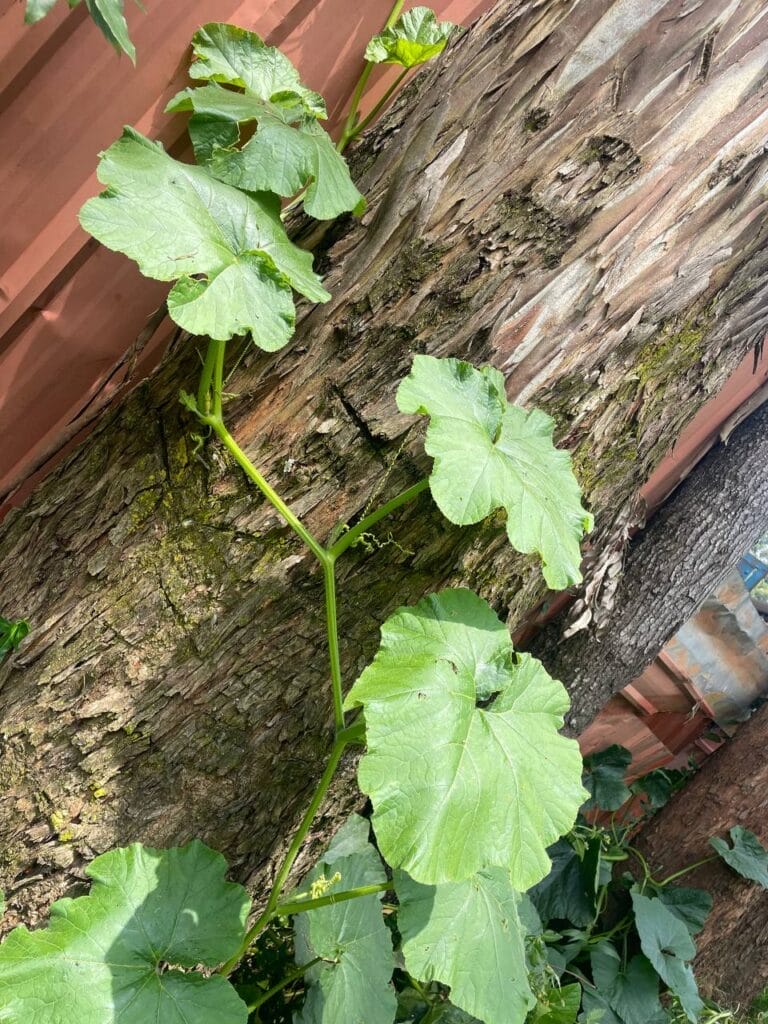
Before the rain starts, the vine creeps across the yard. Mboga ya kienyeji (traditional vegetable), the green leaf that rounded off a meal, was what we called them. It is a gift that is never announced, never wrapped, but always there when a child seems pale or a woman staggers back from birthing a child.
My grandma used to crouch under the leaves before daybreak, carefully picking each one with her worn hands. After many years of practice, she could carefully remove the veins using only her thumb and forefinger. It was not until I had observed her for three consecutive dawns that I started to understand how and why she selected certain leaves. Over fire and water, the leaves turned dark green while the bitterness mellowed. Sometimes she stirred in groundnut paste, sometimes milk. Salt, never too much. I ate without question, the flavor pressed against the tongue with a reminder of earth, of bone, of breath. It was simple nourishment. Moreover, it carried something powerful.
When I was young, I used to complain about having pumpkin leaves for supper. I did not know they contained iron, calcium, vitamin A, and fiber until much later, that the leaves contributed to the production of blood,¹ that the antioxidants could reduce inflammation,² or that bioactive substances contained in them protected the liver.³ The worth of what was transmitted from bowl to child and from hand to vessel has now been validated by modern science.
However, nobody said any of this in the kitchen I grew up in. Food was prepared in service to a family. Repetition until the body talked back was the method used to keep memory, not lectures. Never were these greens grown for commercial purposes. Despite pests and dry spells, they obstinately grew in neglected areas. Harvested frequently, cooked simply, and served regularly, particularly during the rainy seasons when meat was hard to come by and supermarkets were out of reach. Their consistent inclusion in diets, especially for women after childbirth¹ and children prone to fatigue,¹ functioned as herbal remedies.⁴ They still do, in many rural households across Eastern Africa.
Pumpkin leaves, botanically known as Cucurbita maxima or moschata, are nutritionally dense. One cup (roughly 30–40 g cooked) provides high amounts of iron, calcium, potassium, folate, and vitamins A and C.¹ Iron supports hemoglobin formation,¹ which prevents anemia without the copper spoon of a supplement bottle. Their phenolic compounds and flavonoids, like rutin and caffeic derivatives, boost immune function and reduce inflammation.² Steam blanching in plain water preserves much of this benefit.⁵ Various types of pumpkins are used in sub-Saharan Africa not only as food but also as herbal remedies for weak blood,¹ fevers,⁴ and hemorrhoids.⁴ However, this information is rarely formally documented; it is discussed more in kitchens and marketplaces than in treatises.⁴
In urban Kenya, bright, imported greens appear in supermarket displays. Social media posts celebrate traditional leaves branded as “superfoods,” their benefits highlighted in a bulleted list with no mention of the women who have always cooked and served them. The memory thins, the labor disappears, and the ritual way vanishes. Where the vine itself once carried memory, we now look for research published in journals and benefits explained at conferences. But the leaves have always been medicine.
I once visited a Nairobi restaurant that offered pumpkin leaf stew with quinoa and kale. The customers were wealthy and curious. They called the pumpkin leaf a “nutrient-dense African green.” But when pressed, a few spoke of the stew also having been eaten at home.
In many homes, gathering and cooking pumpkin leaves is women’s work. It usually begins early in the morning before first light, before school, and before the market opens. It is done with a few words and little praise. The vine is free; the kitchens and tools used to prepare them modest. What really matters is how the leaf is handled, knowing where to pinch, how to remove the fibrous ribs, and when to stop simmering. Girls watch quietly and learn the cadence of cooking enough leaves without overcooking them or stiffening them. Such labor becomes hidden expertise that is undervalued outside its own domain, even as households rely on it for everyday health. When women drink the stew after birth or boil a pot for an anemic child, the gesture is nourishing. This is a domestic medicine without a label.
Eating pumpkin leaves today is not merely nostalgic; it is practical, beneficial, and urgent. These leaves offer more than taste: they provide accessible, nutrient-rich nourishment precisely where it is most needed.¹ Beyond their nutrition value, these leaves represent economic and social potential.⁴ In South Africa, researchers found that most of the local sellers in marketplaces, including harvesters, marketers, and customers, are women.⁴ That means opportunities for income generation and better organizational structures for women, as well as crop diversity.⁴ Pumpkins also support food systems and reduce waste.⁶ In rural farming systems across sub-Saharan Africa, they thrive in poor soil and under drought conditions.⁶ Leaves and vines that are discarded after fruit harvest can serve as compost, livestock feed, and human food.⁶
Global nutrition initiatives have begun to recognize native ingredients like pumpkin leaves as vital in curing micronutrient deficiencies.⁷ They offer a low-cost, culturally familiar solution to anemia, vitamin A deficiency,¹ and undernutrition,⁷ especially when compared to imported vegetables or supplements. Their value is further increased by culinary diversity. Stews, soups, curries, grain blends, and fermented foods all contain pumpkin leaves.⁷ According to fermentation experiments, combining leaves with melons improves their antioxidant and carotenoid retention, which raises the possibility of value-added foods and a functional diet.²
Rarely do we measure the worth of a vegetable just by its ease of transport or by foreign demand. Yet here is a green that grows on its own, is rich in iron and vitamins, and offers a low-cost remedy for a variety of health conditions. Over that pot of pumpkin leaf stew, I started reconsidering what constitutes wellness. True health solutions often start outside of the laboratory, in gestures of care that shape a meal. In such moments, a simple leaf can speak volumes about culture, resilience, and the body’s own wisdom.
References
- Abubakar M et al. “Proximate Composition and Nutritional Evaluation of Cucurbita maxima Leaves.” Frontiers in Nutrition. 2021;8:641939.
- Cheng X et al. “Phenolic Compounds and Antioxidant Activity of Pumpkin (Cucurbita moschata) Leaves.” Foods. 2021;13(22):3562.
- Khan MN, Qureshi R. “Hepatoprotective Effects of Cucurbita maxima Leaf Extracts in Rodent Models.” Journal of Ethnopharmacology. 2022;158:112–120.
- Oladele OI, Emmambux MN. “Ethnobotanical Survey of Pumpkin Leaves in South Africa.” African Journal of Traditional, Complementary and Alternative Medicines. 2018;15(4):3383.
- Dutta P et al. “Bioavailability of Iron and Calcium in Traditional Leafy Vegetables.” Food Chemistry. 2019;272:719–726.
- Peters RM. “Effects of Blanching on Nutritional Quality of Pumpkin Leaves.” Journal of Food Processing and Preservation. 2020;44:e14372.
- Smith JK, Liu Y. “Antioxidant and Anti-inflammatory Potential of Pumpkin Leaf Extract.” International Journal of Food Science. 2019;2019:912345.
- World Health Organization. Nutrition Guidance: Indigenous Leafy Vegetables. WHO Report 2022;45:1–30.
CALEB WAMANGA is a freelance writer based in Kakamega, Kenya who loves research and to create stories that people can connect with and relate.