The maps of the world are ever-changing as small principalities grow into mighty empires, which, in their turn, decline and break apart. The Slovenians, ever since their arrival from the Eastern European plains, have been part of several permutations and combinations, eventually belonging to the Habsburg Empire, which itself began as a small territory at the foothills of the Alps. In 1918, at the end of World War I, Slovenia was incorporated into the newly formed Kingdom of the Serbs, Croats, and Slovenes. In 1929, this new kingdom was renamed Yugoslavia. It survived World War II and several decades of communism but disintegrated in 1992 into its constituent entities. Of these, Slovenia has been one of the most successful. It is a stable, democratic republic of about 2.1 million people with a strong, diversified economy and a high quality of life, supported by modern industries, strong exports, tourism, and a successful transition from socialism to a free-market economy.
The territory that became modern Slovenia was originally inhabited by Illyrian and Celtic tribes. Conquered by the Romans in the second century BC, it was integrated into the empire as the provinces of Pannonia and Noricum. During the decline of the Roman Empire, a succession of invaders established themselves on its soil, including the Ostrogoths, Byzantines, Avars, and Lombards. The Avar Khaganate, a powerful steppe empire, ruled much of Central Europe during the 6th–8th centuries.
In the 7th century, Slavic tribes from the north settled in the area and became known as the Alpine Slavs. They often had to pay tribute to the Avars or serve under them. According to the Chronicle of Fredegar, the only surviving source from that time, a Frankish merchant named Samo used his money to unify some Slavic tribes and become their king. He reigned for 35 years, between 623/631 and 658, solidifying his rule by marrying 12 women and having numerous children (22 sons and 15 daughters). Loosely associated with Samo’s forces may have been other Alpine Slavs—later known as Carantanians—who may have helped overthrow the Avar Khaganate. After conducting several successful campaigns, Samo is believed to have been elected “King of the Slavs” (Rex Sclavorum), first having united the Slavs against the Avars and, in 631, defeating King Dagobert I of the Franks at the Battle of Wogastisburg and securing the independence of his kingdom.
When Samo died around AD 658, the confederation dissolved, and Carantania rose as a distinct Alpine Slavic polity. Briefly independent (AD 658–828) and considered to be the predecessor of modern Slovenia, it was eventually incorporated into the empires of Charlemagne and its successor, the Holy Roman (Germanic) Empire. From the mid-14th century to the end of World War I in 1918, Slovenia was ruled by the Habsburg monarchy. This fundamentally shaped Slovenia by integrating it into Central Europe, establishing Roman Catholicism, and fostering bureaucratic and infrastructural development. It was culturally and politically aligned with Vienna, promoting high literacy and a market economy alongside loyalty to the crown while being defended against Ottoman incursions and enduring Germanization pressures.
After more than 70 years as part of Yugoslavia, the Slovenes elected to pursue an independent path, with almost 90% of the population voting for independence in a 1990 referendum. Slovenia joined the European Union in 2004, became a member of NATO, and adopted the Euro as its currency in 2007. Melania Trump, the First Lady of the US, hails from Slovenia, where she was born Melanija Knavs in Novo Mesto. Throughout its history, Slovenia was also influenced by its Italian neighbors, the Republic of Venice and the Kingdom of Italy, as well as by its Balkan neighbors.
Slovenia is one of Europe’s most wooded countries, with over 50% of its land forested. Its Adriatic coastline is small, extending for only 46 kilometers. Western Slovenia is geographically the most dramatic part, where high mountains, limestone plateaus, and underground caves come together in a relatively small area. To the northwest, along the borders with Italy and Austria, rise the Julian Alps, Slovenia’s most rugged mountain region, dominated by sharp ridges and glacial valleys. Its highest peak, Mount Triglav (2,864 m), and other peaks form part of the Triglav National Park. Moving south and southwest, the terrain descends into the Karst plateau (Kras), a limestone region where surface rivers disappear underground, leaving a landscape of sinkholes, dry valleys, and sparse vegetation. Beneath this plateau lies a vast network of caverns and caves featuring dramatic stalactites, stalagmites, and underground rivers carved over millions of years. As a result, the landscape shifts from the towering Julian Alps in the northwest to the limestone Karst plateau with its cave systems in the southwest, offering a varied natural setting.
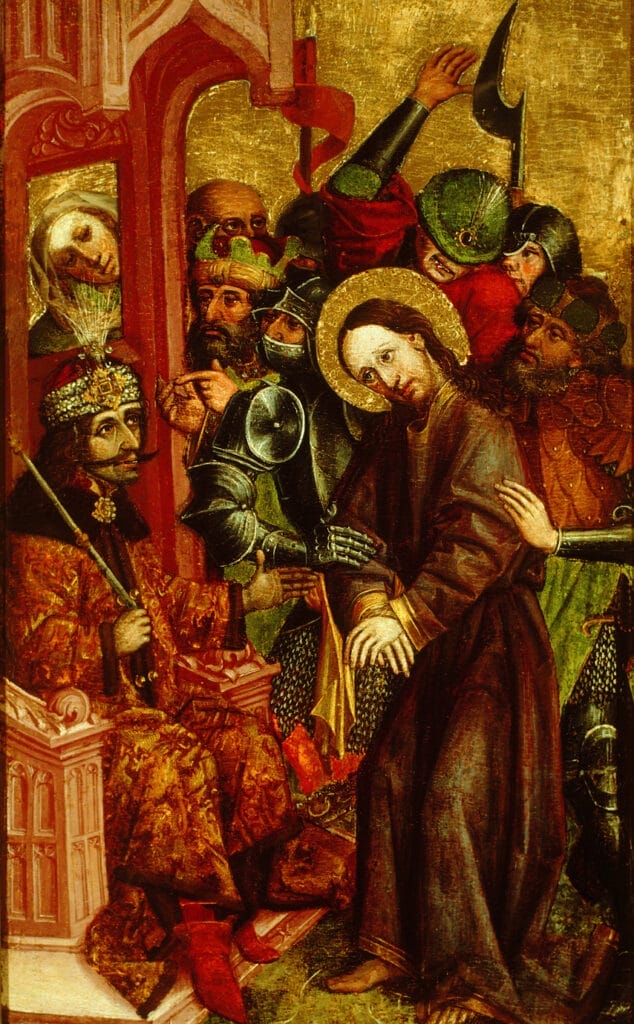
The capital of Slovenia, Ljubljana, is a lovely city with a population of 300,000. It has many parks and pedestrian bridges, a pedestrian-only center, and a balance of historical and modern buildings. It was crowned Europe’s Greenest Capital in 2016. It has many museums, including the National Museum of Slovenia, which displays historical exhibitions (including a 15th-century work by an unknown author depicting Vlad III the Impaler judging Jesus), and the Museum of Modern Art, home to 20th-century Slovene art. The University of Ljubljana, founded in 1919, enrolls around 40,000 students and employs more than 6,000 teachers, researchers, and assistants. The Ljubljana University Medical Centre is the largest hospital in Slovenia, with 2,100 beds and over 8,300 employees.
Not far from Ljubljana is Lipica, one of the oldest stud farms in the world. From a small stadium, one can watch the training of the renowned Lipizzaner horses, closely intertwined with the Habsburgs, who established this stud farm over 400 years ago. Other notable towns in Slovenia are the picturesque lakeside town of Bled, the coastal Venetian-style town of Piran, and the oldest town in Slovenia, Ptuj, where in 69 AD the Danubian legions elected Vespasian Roman Emperor, and which was later plundered by the Huns. Mariborg, with 114,000 inhabitants, is the second-largest city in Slovenia, located in the country’s eastern part on the Drava River. It is famous for its wines, its Lent festival, and its winter sports.
Slovenian cuisine represents a synthesis of Alpine dairy and Adriatic seafood, known for its sausages (klobassa), filled dumplings, bean and sauerkraut stew, and desserts. Central European baking and winemaking flourish in the valleys. Wine regions such as Maribor and the rolling hills of Goriška Brda produce varieties that have been cultivated for centuries. There is a vineyard for roughly every 70 people in Slovenia, making it one of the most vineyard-dense countries in the world, and it has, in Maribor, the world’s oldest still-producing vine (over 400 years old). Traditional foods emphasize seasonal ingredients, vegetables, grains, and fermented products. Slovenia has a massive beekeeping tradition, with the most beekeepers per capita in Europe and its own native bee, the Carniolan honeybee.
On the medical side, Slovenia has developed a publicly funded healthcare system that provides universal coverage for all citizens. Funded through compulsory contributions from employers and employees, it provides primary, specialist, and hospital care. The University of Ljubljana Medical Centre functions as a teaching institution and a tertiary referral center for regional hospitals. Primary care is generally provided by smaller community health centers, and medical education is provided by the University of Ljubljana. In many ways, the outcomes align with those observed in other European nations, as do the challenges posed by an aging population and the increasing costs of sustaining a universally accessible healthcare system. The problem of retaining medical staff amid higher salaries in Western Europe and the Gulf region also exists.
Politically, Slovenia has become increasingly integrated with the rest of Europe. It joined the North Atlantic Treaty Organization and the European Union in 2004, as well as adopted the euro currency in 2007, demonstrating the advantages of a small country entering stronger partnerships while maintaining a culture and tradition some 1,500 years old.