.jpg)
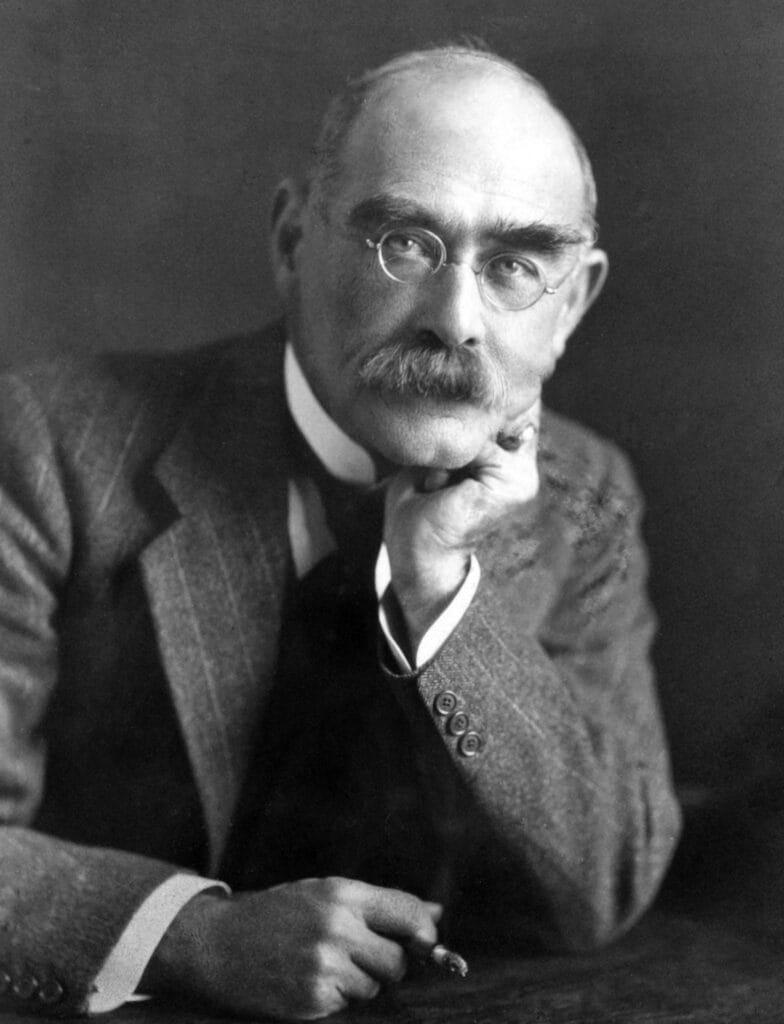
Rudyard Kipling (1865–1936), the British writer best known for The Jungle Book, Kim, and his haunting short stories, lived a life profoundly intertwined with medicine. Though not a physician, Kipling’s experiences of illness, grief, and global travel exposed him to medical realities that shaped both his personal life and his literary imagination. His encounters with disease, his dependence on physicians, and his depictions of medical themes in fiction reveal how closely medicine and literature intersected in his career.
Kipling was born in Bombay, India, during an era when colonial families were constantly threatened by infectious diseases. Malaria, cholera, and smallpox loomed over European communities, and infant mortality was high. Kipling himself suffered from recurrent illnesses in childhood. After being sent to England for his education at age six, he endured poor living conditions in Southsea, where neglect and possibly malnutrition exacerbated his fragile health. His recurrent eye problems, requiring corrective lenses from an early age, shaped his self-image and later affected his service aspirations; he was barred from military enlistment due to defective eyesight. These early medical hardships made him acutely aware of the body’s vulnerability.
Kipling’s adult life was marked by extensive travel—to India, South Africa, the United States, and beyond. Each of these environments brought exposure to different medical landscapes. In Vermont, where he lived in the 1890s, he observed the American health system’s pragmatism, contrasting it with British traditions. Later, in South Africa during the Boer War, Kipling became deeply involved in relief work for British soldiers. He helped establish the Imperial War Graves Commission and worked alongside medical personnel in field hospitals. These experiences left him with firsthand knowledge of battlefield surgery, infection, and the psychological wounds of war. His descriptions of wounded men in prose and verse often reveal both admiration for medical caregivers and a sober recognition of medicine’s limits.
Kipling’s personal tragedies were bound up with medicine. His eldest daughter, Josephine, died of pneumonia at age six in 1899, despite the best medical care available. The loss left him shattered, and he later wrote with bitterness about medicine’s inability to save her. Kipling himself nearly died of pneumonia in New York the same year; his recovery was slow and left lasting physical weakness. These twin experiences reinforced his sense of the precariousness of life and deepened the elegiac tone in his later poetry.
Kipling’s son, John, suffered from severe myopia yet managed to enlist in the Irish Guards during the First World War, partly due to his father’s influence. John was killed at the Battle of Loos in 1915. The combination of medical frailty, war, and tragic loss profoundly colored Kipling’s later works, such as Epitaphs of the War, which meditate on mortality, suffering, and remembrance.
Kipling frequently drew on medical imagery and themes. His short story “Love-o’-Women” portrays venereal disease as both a medical condition and a moral metaphor within the army. “The Surgeon’s Assistant” and other stories from Plain Tales from the Hills highlight the figure of the colonial doctor, often overworked and isolated, balancing science with compassion. In Kim, the Tibetan lama’s search for spiritual healing is juxtaposed with the British officers’ reliance on Western medicine, reflecting Kipling’s awareness of both traditional and modern therapeutic systems. His use of medical detail added realism to his narratives while simultaneously interrogating the limits of science in confronting death.
In later life, Kipling endured painful gastric ulcers, a condition poorly treated at the time. He underwent exploratory surgery in 1936 but died shortly afterward, likely from a perforated ulcer leading to peritonitis. His death serves as a reminder of how limited surgical and pharmaceutical interventions were in the early twentieth century, even for the most celebrated of authors.
Kipling’s life illustrates how literature and medicine often run parallel courses. His illnesses, bereavements, and encounters with medical systems across continents shaped his vision of human fragility. His writings offer testimony not only to the power of narrative but also to the omnipresence of disease and healing in the modern age.