
Enrique Chaves-Carballo
Kansas City, Kansas, United States
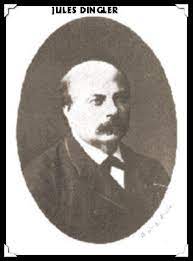
According to David McCullough, author of best-seller The Path Between the Seas, Jules Isidore Dingler “was not impressive-looking…he was short and bald…had small round shoulders, a soft, round face, soft blue eyes, and a drooping, mahogany-colored mustache….The appearance suggested neither initiative nor resolution and the appearance [sic] was deceiving.”1 Dingler graduated near the top of his class at the École Polytechnique in France, and was appointed as chief engineer for the Corps des Ponts et Chausées (Bridges and Roads), a position of great responsibility and subject to public scrutiny. His career impressed both Ferdinand de Lesseps (Director General of the Compagnie Universelle du Canal Interocéanique du Panama) and his son, Charles, leading to Dingler’s appointment as Director General of the French enterprise.
Dingler first arrived in Panama accompanied by Charles de Lesseps in March 1883. After the customary series of banquets and champagne toasts, Charles returned to France one year later, while Dingler stayed to diligently examine every aspect of the canal enterprise, traveling on his $42,000 Pullman.2 At the end of the year, he returned to France and presented a comprehensive plan that included increasing the amount of rock and soil to be removed, sloping the edges of the trench, and eliminating unnecessary expenditures. Although the new plan would cost more than anticipated, it was approved unanimously by the advisory board.1
When asked about the danger of deadly tropical diseases, Dingler made the unfortunate statement that “only drunkards and the dissipated take the yellow fever and die there,” a bold statement he would regret later. Emboldened by the support he received from le grand francais de Lesseps, Dingler returned to the isthmus in the fall of 1883 accompanied by his wife, a son, and a daughter and her fiancé. In accordance with his high position in the French enterprise, he built a large mansion in Ancón Hill at a cost of $150,000 with stables to house the thoroughbred horses he brought from France.
A few months later his daughter Louise, “a pretty, dark-haired girl…about eighteen” and her parents’ pride and joy, died of yellow fever. A month later his son Jules, age twenty-one, “the picture of physical health and strength,” contracted the disease and died three days later, followed by his daughter’s fiancé.3 Although overcome by unimaginable grief, Dingler nevertheless continued his work with diligence, demonstrating that honor and duty were more important to him than personal matters. However, in December 1884, Dingler’s wife, who was his most ardent supporter and advisor, also died of yellow fever. The next morning he was dutifully at work, but after the funeral, he took all his horses and shot them. The magnificent mansion he had built for himself and his family was never occupied. Finally, heartbroken and burdened by grief, Dingler returned to France and died a year later at age sixty-five without receiving the recognition he deserved for his devotion.
According to Gorgas, one of the French engineers came with a party of seventeen young Frenchmen. Within a month, all had died of yellow fever except himself.4 And of the twenty-five sisters who arrived to be nurses at Ancón Hospital, twenty-one died within a few years, mostly of yellow fever.4
In the end, Dingler’s plan failed and the French abandoned the canal project amidst scandal and political intrigue. Ferdinand de Lesseps, who promised that Panama would be easier to build than Suez, suffered from dementia and was spared the grief of defeat and failure.
References
- McCullough D. The Path Between the Seas. New York, 1977. Simon & Shuster, pp. 153-160, 171.
- Haskin FJ. The Panama Canal. New York, 1913. Doubleday, Page & Company. p. 208.
- Parker M. Panama Fever. New York, 2009. Knoff Doubleday Publishing Group, pp. 21-22. 4. Bishop JB. The Panama Gateway. New York, 1913. Charles Scribner’s Sons. pp. 94-95.
- Bishop JB. The Panama Gateway. New York, 1913. Charles Scribner’s Sons. pp. 94-95.
ENRIQUE CHAVES-CARBALLO, M.D., University of Kansas Department of History and Philosophy of Medicine, Kansas City, KS 66160.