Tag: Florence
-
The early Medici in Florence
The history of the beautiful city of Florence dates to the early Middle Ages and is intertwined with that of the remarkable Medici family. Their very name suggests a medical origin, and legend has it that an early Medici was physician to Charlemagne. As early as the 1200s, Chiarissimo di Giambuono (de’ Medici) is reported…
-
The magnificent Boboli Gardens of Florence
The Boboli Gardens, one the most magnificent Renaissance gardens in Italy, originated in 1549 after Cosimo I de’ Medici bought the Pitti Palace to create formal gardens on the hillside behind it. Niccolò Tribolo was the first architect given the task to design the gardens, before other renowned architects such as Bartolomeo Ammannati, Bernardo Buontalenti, and Guilio and Alfonso and Parigi joined the project. A two-century-long collaboration produced…
-
The gift of the Medici
Credit for the present status of Florence as a jewel of European art and culture is rarely given to where it is due. Accounts of its history are replete with descriptions of the founder of the Medici’s wealth, Giovanni de’ Bicci; the exploits of Cosimo, pater patriae; the splendor of Lorenzo the Magnificent; and the…
-
Dipinto di blu: Turning blue in a Florence hospital
Giulio NicitaFlorence, Italy We were in the middle of the 1970s in Florence, Italy. We had concluded the long, tedious years of university study. Real work awaited us in Villa Monna Tessa, a large early 1900s four-story building. It housed several departments of Medicine as well as Urology. The edifice, once an elegant patrician residence,…
-
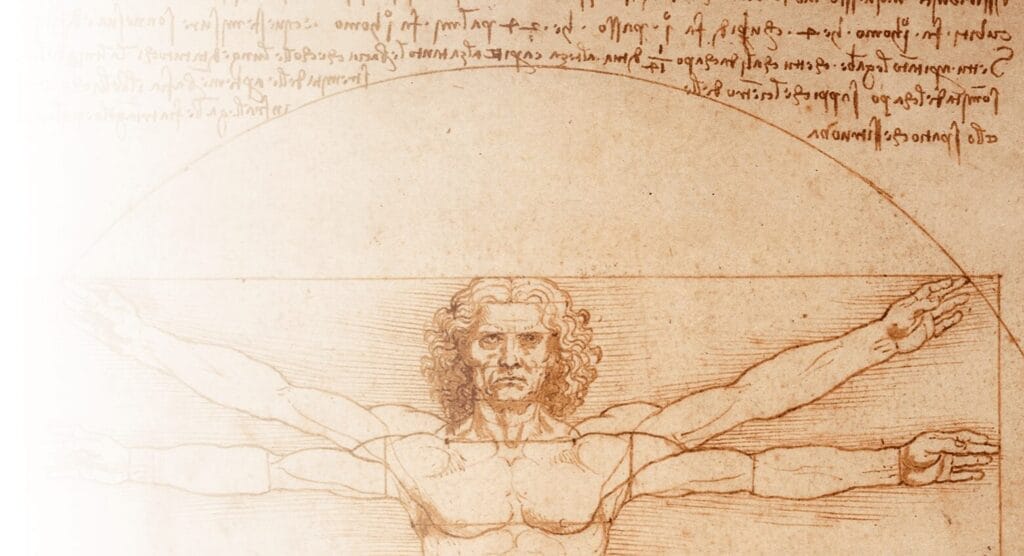
Leonardo’s Vitruvian Man
JMS PearceEngland, UK Second only to his Mona Lisa, the most famous drawing in the world of art is perhaps Leonardo da Vinci’s (1452–1519) Vitruvian Man. Leonardo was the illegitimate son of a notary and a peasant girl. He was named after his birthplace Vinci (at Anchiano) near Florence. He became a painter, draftsman, sculptor,…
-
Antonio Benivieni, early anatomist and pathologist
The Florentine Antonio Benivieni dissected corpses and recorded his findings some seventy years before Andreas Vesalius and even more so before Batista Morgagni. Yet though he has been called the “founder of pathology,” he never achieved the fame and recognition accorded to his distinguished successors. He was the eldest of five sons in an ancient…
-
Michelangelo’s David and the anatomical politics of religious art
Sam ShusterWoodbridge, Suffolk It is impossible to see Michelangelo’s David without marvelling at the way its power and humanity have been fashioned from coarse stone. Apart from its living warmth, there is a unique display of human anatomy, each feature of which stands out in perfection, and together make an image that can be looked…
-
The Bonifacio Hospital: Reforming psychiatric hospital care
Panagiota KitsantasFairfax, Virginia, United States In 1369-1377 Bonifacio Lupi, mayor of Florence and Captain of the People, founded the Bonifacio Hospital (Ospedale di Bonifacio) dedicated to St. John the Baptist. In the sixteenth century, the hospital admitted patients suffering from syphilis, known as the “French disease,” spread by troops of Charles VII returning from Naples.…