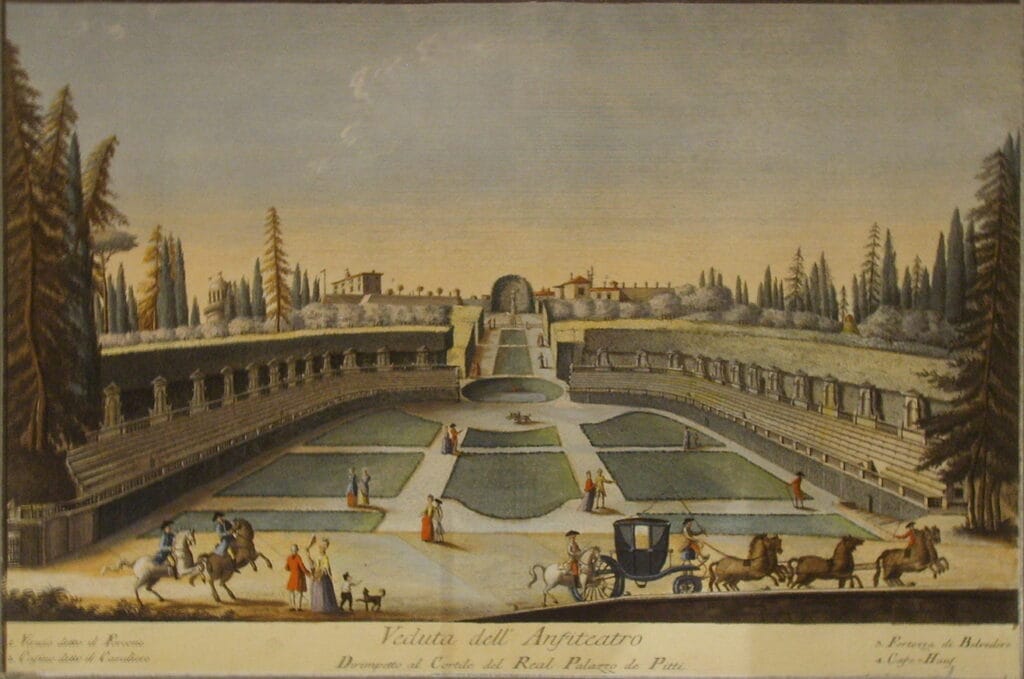
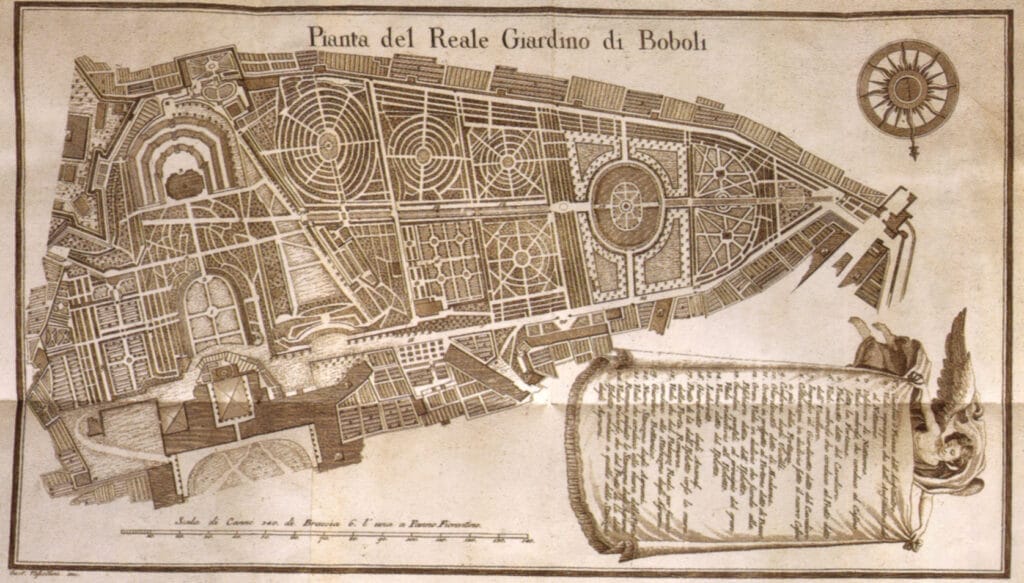
The Boboli Gardens, one the most magnificent Renaissance gardens in Italy, originated in 1549 after Cosimo I de’ Medici bought the Pitti Palace to create formal gardens on the hillside behind it. Niccolò Tribolo was the first architect given the task to design the gardens, before other renowned architects such as Bartolomeo Ammannati, Bernardo Buontalenti, and Guilio and Alfonso and Parigi joined the project. A two-century-long collaboration produced a garden that combined formal garden principles with the natural landscape of the Florentine hills. The Boboli Gardens served as an area where the Medici family augmented their political power by using the gardens for diplomatic events and education. Many European scholars, physicians, and botanists visited the Medici court to study and work.
Thus, the Boboli Gardens also became a source of knowledge. Extensive collections of aromatic plants and medicinal plants were integrated into the garden. Lavender, sage, rosemary, and thyme plants were cultivated for fragrance and used to treat various illnesses. Medical students were educated under the guidance of the renowned botanist-physician Andrea Cesalpino. He spent time at the gardens of Pope Clement VIII while serving as professor at the University of Pisa to study botany, which he later incorporated into his book De Plantis (1583).
Renaissance design principles guided the creation of Boboli Gardens. The garden design incorporated carefully planned views with strategically placed water elements. In the Grotta Grande, designed by Buontalenti, the artificial caves featured stalactites and shells together with sculptural decorations to create environments with cool, humid conditions that doctors believed could treat respiratory illnesses. The Gardens displayed Renaissance water healing principles through their central Neptune Fountain and many smaller cascades and pools. The outdoor space served as an educational platform to teach students about plant identification and medicine preparation. The sculptures and architectural elements, together with landscape design and therapeutic functions, merged to combine a healing environment with culture and artistic beauty. Today the Gardens remain a beautiful memorial of the grandeur of the Medici of Florence.