
Avi Ohry
Tel Aviv, Israel
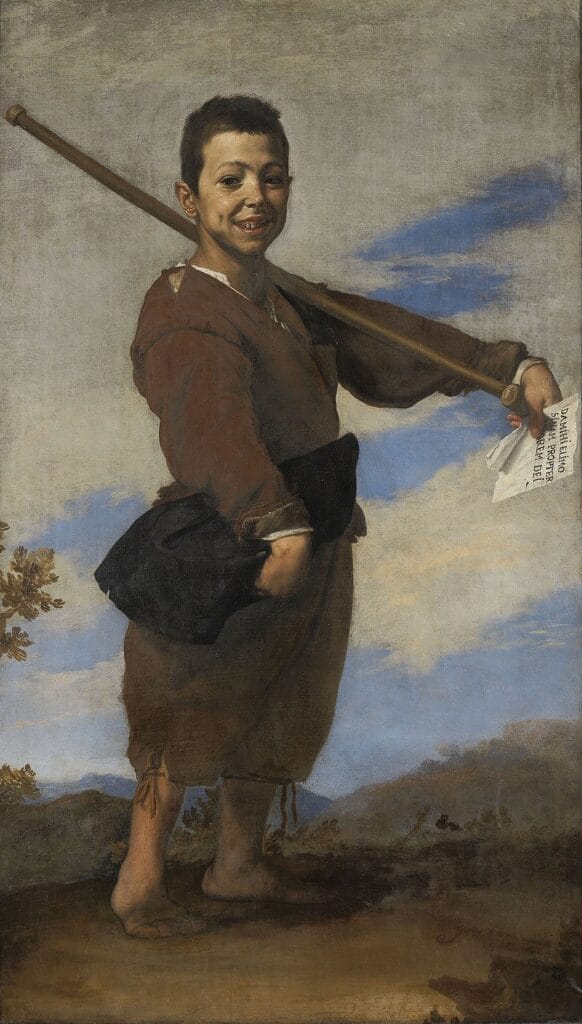
A clubfoot,1 or congenital talipes equinovarus (CTEV), is a birth defect in which the foot is inverted. If untreated, children with TEV often walk on their ankles, or on the sides of their feet. The condition occurs about one in every 1,000 live births.
Recently, I watched an excellent French film, Ma mère, Dieu et Sylvie Vartan (Once Upon My Mother), based on a book with similar title.2 In this story, Roland Perez, a French lawyer and broadcaster, is born with this deformity in 1963, and his mother’s “unwavering devotion helps her son…overcome physical challenges and social barriers. Her powerful promise drives their remarkable journey through life’s ups and downs.”3
In spite of all social and family pressure, and against all pessimistic functional prognoses, Esther, the mother, finds the widow of a famous orthotic technician in Paris who treated thousands of children born with clubfoot with non-surgical methods, a combination of stretching, casting, and bracing. The lady agrees to treat Roland by these methods. Finally, after a long process, Roland gains good functional gait control, belatedly goes to school, and becomes a famous lawyer.
Through history, from ancient Egypt on, children with clubfeet were depicted in sculptures, paintings and reliefs.
Jusepe de Ribera (1591–1652) was a Spanish artist.4 His painting The Clubfoot (1642) is also known as The Club-Footed Boy and is in the Louvre Museum in Paris.
Felix Würtz (early 1500s – early to mid-1590s) was a Swiss surgeon.5 As a child, he was apprenticed by a surgeon and became a barber-surgeon in Zurich.6 He was acquainted with the city physician (Conrad Gesner, 1516–1565). In his book Wund-Artzney (Basel, 1563) we find a section entitled “Of crooked and lame children, coming thus into the world,” in which he described methods of treating clubfoot.7
Charles-Maurice de Talleyrand-Périgord8-10 (1754–1838) was a French secularized clergyman and political figure. He studied theology and later was nominated as a bishop. He served as the French Diplomat in the Congress of Vienna. Talleyrand had a club-foot, walked with a limp, and used a fitted orthopedic shoe. It is likely that he consulted with British-born orthopedist Dr. Sigmund Wolfsohn (1765–1850), who made artificial limbs and surgical appliances, for better adapted shoes for his clubfoot.
Lord Byron (1788–1824) was a famous British poet who flourished during the Romantic movement and was born with a clubfoot deformity of the right foot.11 He “was affected by a limp that caused him lifelong psychological and physical misery, aggravated by painful and pointless ‘medical treatment’ in his childhood and the nagging suspicion that with proper care it might have been cured.12 He was involved in politics and was well known to the public. He influenced many poets, musicians, and authors.
Gustave Flaubert13 (1821–1880) was a famous French novelist best known for his masterpiece Madame Bovary (1857), which involves the botched treatment of a character with clubfoot.14 Flaubert’s father, Achille Cléophas Flaubert, was a chief surgeon and clinical professor at the Hôtel-Dieu hospital in Rouen.
Ignacio Ponseti15,16 (or Ignasi Ponsetí i Vives; 1914–2009) was a Spanish-American orthopedic surgeon. He served as a medic during the Spanish Civil War, traveled to America, and practiced and taught orthopedics in Iowa. He developed his famous Ponseti method, a non-surgical, conservative treatment for clubfoot.
Joseph Hiram Kite17 (1891–1986) was a medical technician in bacteriology and communicable disease and became a professor of microbiology in 1972. He “recommended repeated gentle manipulations to achieve a correction,” using “serial plaster casts” to do so.
Dudley Moore18 (1935–2002) was a British actor, comedian, and musician. His final fatal disease was a degenerative neurological condition, progressive supranuclear palsy. He was notably short (5’2”, or 1.52 m) and born with two club feet that required “extensive” hospital treatment. More on this deformity in modern times can be found in the literature.1,19
References
- Carroll NC. Clubfoot in the twentieth century: Where we were and where we may be going in the twenty-first century. J Pediatr Orthop B. 2012;21(1):1-6.
- Perez R. Ma mère, Dieu et Sylvie Vartan. Éditions Les Escales, 2021.
- Once Upon My Mother Plot: Summaries. IMDB. www.imdb.com/title/tt29927144/plotsummary/?ref_=tt_ov_pl
- Jusepe de Ribera. Wikipedia. https://en.wikipedia.org/wiki/Jusepe_de_Ribera
- Felix Würtz. Wikipedia. https://en.wikipedia.org/wiki/Felix_Würtz
- Kossoy E and Ohry A. The Feldshers: Medical, Sociological, and Historical Aspects of Practitioners of Medicine with Below University Level Education. Jerusalem: Magnes Press, 1992.
- Dunn PM. Felix Wurtz of Basel (1518–75) and clubfeet. Arch Dis Childhood. 1992;67:1242-1243.
- Charles Maurice de Talleyrand-Périgord. Wikipedia. https://en.wikipedia.org/wiki/Charles_Maurice_de_Talleyrand-P%C3%A9rigord
- Ohry A. Dr. Sigmund Wolfsohn (1765–1850) and the Biedermeier era: an orthopaedist, manufacturer of surgical appliances and leisure time products, and the builder of the Apollosaal in Vienna. Vesalius 2010;16(2):91-4.
- Lacheretz M. Le pied bot de Talleyrand. Etiologie et considérations génétiques [Talleyrand’s clubfoot. Etiology and genetic considerations]. Chirurgie 1987;113(2):148-53.
- Eibel P. Lord Byron’s clubfoot. Orthop Rev 1986;15(3):190-3.
- Lord Byron. Wikipedia. https://en.wikipedia.org/wiki/Lord_Byron
- Gustave Flaubert. Wikipedia. https://en.wikipedia.org/wiki/Gustave_Flaubert
- Dunea G. Madame Bovary: The clubfoot operation. Hektoen International Summer 2012;4(3). https://hekint.org/2017/02/01/madame-bovary-the-clubfoot-operation/
- Ignacio Ponseti. Wikipedia. https://en.wikipedia.org/wiki/Ignacio_Ponseti
- Author reply in Ponseti IV. The ponseti technique for correction of congenital clubfoot. J Bone Joint Surg Am. October 2002;84(10):1890-1.
- Kite JH. Nonoperative treatment of congenital clubfoot. Clin Orthop Relat Res. 1972;84:29-38.
- Dudley Moore. Wikipedia. https://en.wikipedia.org/wiki/Dudley_Moore
- Strach EH. Club-foot through the centuries. Prog Pediatr Surg. 1986;20:215-37.
AVI OHRY, MD, is married with two daughters. He is Emeritus Professor of Rehabilitation Medicine at Tel Aviv University, the former director of Rehabilitation Medicine at Reuth Medical and Rehabilitation Center in Tel Aviv, and a member of The Lancet‘s Commission on Medicine & the Holocaust. He conducts award-winning research in neurological rehabilitation, bioethics, medical humanities and history, and on long-term effects of disability and captivity. He plays the drums with a jazz band.