
Nicolas Robles
Badajoz, Spain

.jpg)
Enrique IV was born on January 5, 1425, in Valladolid, Spain. He was the son of John II of Castile and Maria of Aragon, daughter of King Ferdinand I of Aragon. When John II died on 20 July 1454, Enrique was proclaimed king the following day. Prince Enrique had married Blanche of Navarre in 1440 when he was fifteen years old. But in May 1453, the Bishop of Segovia, Luis Vázquez de Acuña, declared the marriage annulled on the grounds that Enrique had been made sexually impotent from a curse. The annulment request was accompanied by testimony from several prostitutes in Segovia claiming to have had sexual relations with Enrique, furthering his argument that a curse was involved, which only affected his sexual abilities with his wife. Apart from prayers and offerings, the future king resorted to every possible remedy, from concoctions and potions with alleged invigorating effects sent by his ambassadors in Italy to financing exotic expeditions to Africa in search of a unicorn’s horn.
He then married Joan of Portugal, daughter of King Edward of Portugal, in 1455. On 28 February 1462, the queen gave birth to a daughter, Juana, whom people called “La Beltraneja” because the child was considered to be the result of an extramarital affair between the queen and Beltrán de la Cueva, a duke. A few months after Juana’s birth, the queen announced that she was pregnant again, this time with a boy, though the pregnancy ended in miscarriage. The chronicles of Hieronymus Münzer tell that a precarious form of in vitro fertilization was used; Enrique’s doctor, Samaya Lubel, made a gold cannula through which he attempted to insert the king’s semen into the queen’s vagina, but this proved unsuccessful. He also described a deformation of the king’s penis.
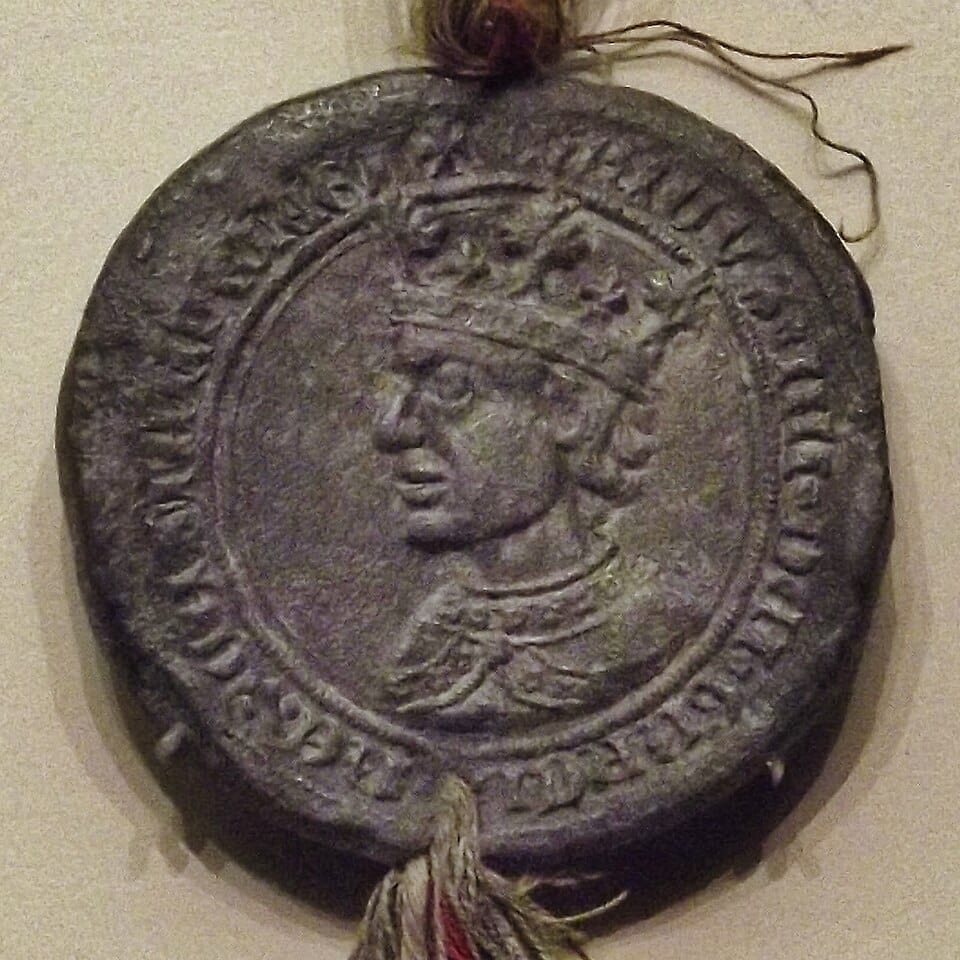

Enrique died on December 11, 1474. After a civil war, Juana’s aunt, Isabel “La Católica”, deposed her and took the throne. The king was buried at Guadalupe Monastery in Extremadura. The tomb was lost until 1946 when a workman came across two coffins in terrible condition while repairing the convent church. Gregorio Marañon exhumed the corpse. He had previously published in 1930 a “Biological Essay on Enrique IV of Castile and His Time.”1 The study of Enrique IV’s perfectly preserved mummy served to corroborate evidence of hormonal deficiencies. It was observed that the monarch had a broad forehead, that his disproportionately large hands had long, thick fingers, and that he had a valgus foot. The deformation of one of his feet would explain the clumsiness of movement described in almost all writings about him. The mummy was 1.70 meters tall, and considering that complete mummification reduces the height of a living person by twelve to fifteen centimeters as the intervertebral discs and the rest of the tissues dry out, his living height can be estimated at over 1.80 meters (around 5 feet 9 inches). For a man in the Middle Ages, this would have been very tall. One diagnosis that has been offered is eunuchoid dysplasia with acromegalic reaction.
Emilio Maganto in 2003 reviewed ten chronicles and five contemporary manuscripts about Enrique IV.2 He suggested that the king suffered acromegaly secondary to a growth-hormone and prolactin-producing hypophyseal tumor from childhood, which might explain his impotence and other symptoms. Chronic renal lithiasis finally led to acute obstructive uropathy, the main cause of his death. That the kidney stones were part of a multiple endocrine neoplasia syndrome (MEN I) could not be ruled out.
I suggest another possible diagnosis: Klinefelter syndrome. This condition results when a male has an extra copy of an X chromosome instead of the typical XY (XXY). Signs and symptoms include taller than average height, a small penis, and a low or nonexistent sperm count.3 The syndrome was first described in 1942, and in 1959 Patricia Jacobs and J.A. Strong discovered the causative chromosomal abnormality.4 But only a chromosomal analysis of the king’s mummy would resolve this definitively.
References
- Marañón G. Ensayo Biologico sobre Enrique IV de Castilla y su Tiempo. (14th ed). Madrid. Ediciones Austral. 2000.
- Maganto Pavón E. Enrique IV de Castilla (1454-1474). An exceptional urologic patient. An endocrinopathy causing the uro-andrological problems of the Monarch. Chronic renal lithiasis (II). Arch Esp Urol. 2003;56:222-32.
- Lucas-Herald AK, Aksglaede L, Caspersen ID, Ahmed SF, Carlomagno F, Isidori AM. New Horizons in Klinefelter Syndrome: Current Evidence, Gaps, and Research Priorities. Endocr Rev. 2025 Jul 15;46(4):447-478. doi: 10.1210/endrev/bnaf005.
- Jacobs PA, Strong JA. A case of human intersexuality having a possible XXY sex-determining mechanism. Nature. 1959;183(4657):302-3.
NICOLAS ROBERTO ROBLES is a full professor of Nephrology at the University of Extremadura (Badajoz) and member of the Academy of Medicine of Extremadura.