
Wanjiku Dyer
Los Angeles, California, United States
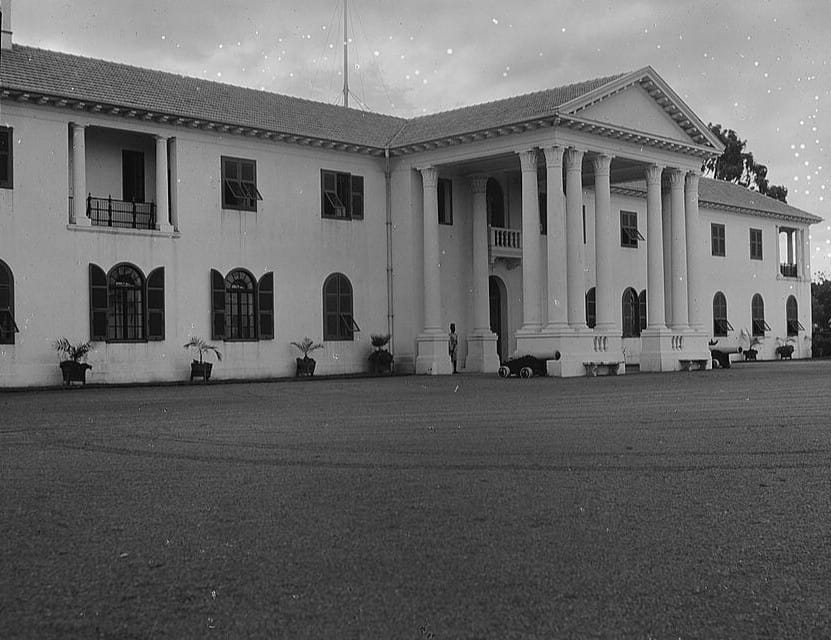
In 1910, on the outskirts of Nairobi, the British colonial government converted a smallpox isolation center into what it called the Nairobi Lunatic Asylum.¹ By 1924, the facility had been renamed Mathari Mental Hospital. For the next four decades, it would serve as both a psychiatric institution and an instrument of empire—a place where European doctors, none of them formally trained in psychiatry, used the language of mental science to argue that Africans were biologically incapable of rational thought.
The story of Mathari is not well known outside East Africa, but it deserves attention from anyone interested in how medicine can be bent to serve power. It is a story about skulls measured and brains weighed, about frontal lobes declared lazy and rebellion rebranded as psychosis. And it is a story with consequences that did not end with Kenyan independence in 1963.
The earliest architect of this pseudoscience was H.L. Gordon, a British physician who arrived in Kenya in 1925 with no psychiatric credentials.² Gordon had spent the early 1920s on his farm in the Kenyan highlands contemplating what he considered the causes of African intellectual inferiority. When he was appointed medical officer at Mathari, he found his laboratory. Working with government pathologist F.W. Vint, Gordon conducted post-mortem examinations on the brains of African patients and published his findings in The Times of London in 1933: the mental capacity of an adult African, he claimed, was equivalent to that of a seven- or eight-year-old European boy.² Vint’s own paper in the Journal of Anatomy reported a fifteen percent deficiency in cortical gray matter compared to European subjects and argued that Kenyan brains ceased development after the age of eighteen.³ Their combined conclusion was blunt—academic education for Africans was dangerous and unnecessary.
The methodology was appalling even by the standards of the era. The study sample consisted entirely of mentally ill patients at Mathari, hardly a representative population. Neither Gordon nor Vint held formal psychiatric qualifications. When their eugenicist claims came under scrutiny in the late 1930s, Gordon was largely dismissed as a charlatan.² But his ideas did not disappear. They found a more polished spokesperson in J.C. Carothers.
Carothers, also a British physician stationed at Mathari, proved far more influential. In 1951, he published a paper in the Journal of Mental Science titled “Frontal Lobe Function and the African,” in which he advanced a startling analogy: the normal African brain, he argued, functioned like the brain of a European who had undergone a leucotomy (a lobotomy).⁴ Africans, Carothers claimed, made very little use of their frontal lobes, resulting in what he termed “frontal laziness.” This cortical sluggishness, in his view, explained everything from criminality to an apparent inability to synthesize complex information. Two years later, the World Health Organization published his monograph The African Mind in Health and Disease as the seventeenth volume in its monograph series, lending one of the foremost international health bodies’ imprimatur to a work of racial pseudoscience.⁵ Reviews were scathing. Critics in the American Journal of Orthopsychiatry, the American Journal of Physical Anthropology, and the Journal of Mental Science dismantled Carothers’ reasoning, pointing to his reliance on biological determinism and his wholesale ignorance of the social conditions created by colonialism itself.⁶
But by then, Carothers had attracted a more consequential audience: the British government. When the Mau Mau uprising erupted in 1952, colonial authorities needed a framework that could delegitimize the rebellion without acknowledging its political roots. Carothers, by then back in England, obliged. In 1954, the colonial government commissioned and widely distributed his pamphlet The Psychology of Mau Mau, in which he recycled much of his earlier work and added a theory of “forest psychology” to explain why Kikuyu fighters had taken to the forests of Mount Kenya.⁷ The rebellion, in Carothers’ account, was not a struggle for land, freedom, or dignity. It was the expression of an unconscious frustration complex—a mass psychiatric event among a people whose brains were simply not equipped for the pressures of modernity.
The pamphlet became a tool of counterinsurgency. It provided a medicalized rationale for the brutal suppression of the uprising, including the mass detention camps where tens of thousands of Kenyans were held.⁸ Frantz Fanon, the Martinican psychiatrist and anti-colonial theorist, recognized exactly what was happening. In Chapter Five of The Wretched of the Earth, titled “Colonial War and Mental Disorders,” Fanon singled out Carothers by name, citing his claim that African psychiatric conditions could be attributed to frontal laziness.⁹ Fanon’s response was devastating in its clarity: the problem was not the African brain. The problem was that colonial psychiatrists had built an entire diagnostic framework while ignoring what he called “an enormous social fact”: the native exists under the domination of the settler.
Fanon, who had served as chief of psychiatry at Blida-Joinville Hospital in Algeria, drew on his own clinical cases to demonstrate that the psychiatric symptoms colonized people exhibited were not evidence of racial pathology but direct consequences of colonial violence. Where Carothers saw biology, Fanon saw politics. Where Carothers prescribed psychological adaptation, Fanon prescribed liberation.
Meanwhile, the institution at the center of this history operated under conditions that mirrored the theories it had incubated. Under colonial rule, Mathari was racially segregated: African patients, who constituted roughly ninety-five percent of the population, endured the worst conditions, while the small number of European patients received comparatively adequate care.¹ All senior medical staff were European until independence. The hospital also served a more overtly political function. Elijah Masinde, founder of the anti-colonial movement Dini Ya Msambwa, was committed to Mathari in 1945 after refusing to sign a peace bond. A government psychiatrist declared him schizophrenic. He remained confined for two years, his political dissent reframed as mental illness.⁸ This weaponization of psychiatric diagnosis against dissidents was not unique to Kenya, but the Kenyan case is distinctive in the degree to which it was underwritten by a pseudo-scientific theory that the WHO itself helped disseminate.
The colonial psychiatric establishment did not operate in a vacuum. For centuries before their arrival, East African communities had maintained their own systems for treating mental disturbance—herbal preparations, spiritual intervention, community-based care. The colonial Witchcraft Act of 1925 collapsed these traditions into a single criminal category, forcing practitioners underground and severing the generational transmission of indigenous healing knowledge.¹⁰ The suppression was not incidental to colonial psychiatry, but foundational. Gordon and Carothers could claim that Africans lacked the mental architecture for modern thought only because the intellectual traditions that would have contradicted them had already been silenced.
Independence in 1963 brought Kenyan psychiatrists into Mathari’s senior ranks for the first time. The hospital was established as a teaching institution affiliated with the University of Nairobi and remains Kenya’s only public psychiatric hospital for specialized care.¹ But the colonial legacy is legible in the numbers: as recently as 2020, Kenya had approximately 120 registered psychiatrists for a population exceeding fifty million, a ratio of roughly 0.2 per 100,000 people.¹¹ Outside Nairobi, the figure approaches one psychiatrist for every three to five million. A 2023 Human Rights Watch report documented continuing conditions of disrepair, understaffing, and patient abuse at Mathari itself—a reminder that the institution’s troubled history has not been fully reckoned with.¹²
The story of colonial psychiatry in Kenya is ultimately a story about who gets to define what a healthy mind looks like, and what happens when that power is held by those who have a political stake in the answer. Gordon and Carothers did not practice psychiatry in any meaningful clinical sense. They practiced ideology dressed in medical terminology, and they did so with the backing of institutions—the WHO, the British government, the colonial medical establishment—that should have known better.
Fanon understood this. He understood that medicine practiced without attention to the conditions under which people actually live is not medicine at all. That insight, articulated from within the colonial hospital system itself, remains the sharpest critique of what happened on the hill at Mathari. For those of us training in psychiatry today—particularly those of us whose families came from the countries where this history unfolded—it is also a charge: to practice the discipline that was once used to deny our humanity in a way that finally, fully restores it.
References
- Mathari National Teaching and Referral Hospital. Background. Ministry of Health, Government of Kenya. https://www.mntrh.go.ke/background
- Chloe Campbell. Race and empire: eugenics in colonial Kenya. Manchester University Press; 2007.
- Vint FW. The brain of the Kenya native. Journal of Anatomy. 1934;68(Pt 2):216-223.
- Carothers JC. Frontal lobe function and the African. Journal of Mental Science. 1951;97(406):12-48.
- Carothers JC. The African Mind in Health and Disease: A Study in Ethnopsychiatry. Geneva: World Health Organization; 1953. Monograph Series No. 17.
- McCulloch J. Colonial Psychiatry and the African Mind. Cambridge: Cambridge University Press; 1995.
- Carothers JC. The Psychology of Mau Mau. Nairobi: Government Printer; 1954.
- Mahone S. The psychology of rebellion: colonial medical responses to dissent in British East Africa. Journal of African History. 2006;47(2):241-258.
- Fanon F. The Wretched of the Earth. Translated by Constance Farrington. New York: Grove Press; 1963. Chapter 5: Colonial War and Mental Disorders.
- Witchcraft Act, Cap 67. Laws of Kenya, 1925. http://www.kenyalaw.org
- Jenkins R, Kiima D, Njenga F, et al. Mental health policy and programmes in Kenya. International Review of Psychiatry. 2010;22(6):574-589.
- Human Rights Watch. Kenya’s troubled 60-year mental health journey. December 9, 2023. https://www.hrw.org/news/2023/12/09/kenyas-troubled-60-year-mental-health-journey
WANJIKU W. DYER is a medical student at Charles R. Drew University of Medicine and Science in Los Angeles, the first HBCU medical school on the west coast. A first-generation Kenyan-American, she is pursuing psychiatry with a focus on health disparities in underserved communities. Her research spans global health, HIV care delivery, and mental health equity across the United States and Sub-Saharan Africa.