
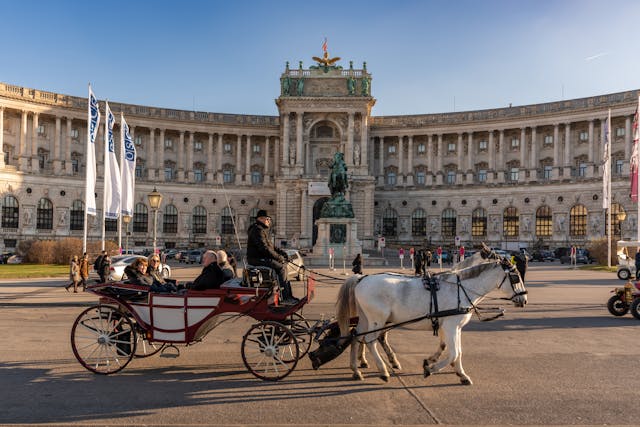
The Austro-Hungarian Empire, which existed from 1867 until its dissolution in 1918, was one of the most scientifically vibrant states in the world. Its medical culture, centered primarily in Vienna but extending across a sprawling, multiethnic realm, produced some of the most consequential advances in modern medicine. From pathology and psychiatry to immunology and public health, the empire’s physicians and scientists helped define what medicine would become in the twentieth century.
Vienna and the medical schools
Vienna stood at the heart of Austro-Hungarian medicine. The city’s medical faculty, attached to the University of Vienna, was among the most prestigious in the world during the nineteenth century. The so-called “Vienna Medical School” had already distinguished itself in the first half of the century through the work of reformers who insisted that diagnosis should be grounded in systematic physical examination and post-mortem findings rather than in theoretical speculation. Carl von Rokitansky, who performed over 30,000 autopsies during his career, brought empirical rigor to pathological anatomy, transforming how disease was understood. His colleague Josef Škoda developed methods of percussion and auscultation that connected bedside observation directly to anatomical findings—an approach that shaped clinical medicine for generations.
The Semmelweis tragedy
No figure better illustrates both the promise and frustration of Austro-Hungarian medicine than Ignaz Semmelweis. Working at Vienna’s General Hospital in the 1840s, Semmelweis demonstrated through careful statistical analysis that puerperal (childbed) fever—which was killing a shocking proportion of new mothers—was transmitted by the unclean hands of physicians moving directly from the autopsy room to the delivery ward. He instituted mandatory handwashing with chlorinated lime solution, dramatically reducing mortality rates in his ward. Yet the medical establishment, resistant to the implication that doctors themselves were causing deaths, largely rejected his findings. Semmelweis died in 1865, ironically of an infection, without receiving recognition. His vindication came only after Pasteur and Lister confirmed the germ theory of disease.
Psychiatry and the mind
Vienna in the late imperial period became the world capital of psychiatry. It was here that Sigmund Freud developed psychoanalysis, proposing that mental illness arose from unconscious conflicts rooted in early experience, and that the talking cure—the careful excavation of repressed memories and desires—could relieve neurotic suffering. Whatever later assessments of Freud’s specific theories, his transformation of the way Western culture thought about the inner life was profound. Alongside Freud, figures such as Richard von Krafft-Ebing systematically catalogued and described sexual psychopathology in works that, whatever their limitations, brought human sexuality into the realm of clinical inquiry.
Public health and the provinces
Beyond Vienna, the empire faced the daunting challenge of managing public health across a diverse population of some fifty million people speaking a dozen languages. The late nineteenth century saw major investments in urban sanitation, particularly the construction of Vienna’s famous mountain spring waterworks, which brought clean water into the city and helped control cholera. Imperial health authorities worked to coordinate vaccination campaigns and establish networks of hospitals across Bohemia, Hungary, Galicia, and the other crownlands, though resources and standards varied enormously by region.
Legacy
By the time the empire collapsed in the aftermath of World War One, its medical culture had seeded advances that would spread across the world. Alumni of the Vienna schools went to North America, Latin America, and other parts of Europe, carrying with them the empirical, pathology-grounded ethos of their training. The empire’s brief, brilliant medical flowering remains a testament to what concentrated intellectual culture, institutional investment, and freedom of inquiry can produce—even, and perhaps especially, in a state otherwise defined by its contradictions.
Further reading
- Ignaz Semmelweis: The original hand hygiene pioneer, Matthew Hill, Abdullah Mubarik, Julius Bonello
- Joseph Škoda (1805–1881), George Dunea