
Rafiq Yusifli
Sevil Yusifli
Baku, Azerbaijan
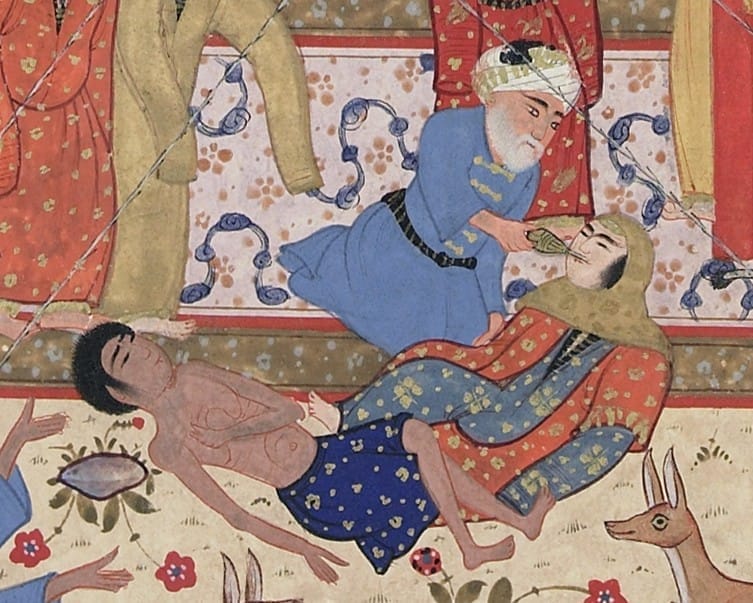
The role of emotional factors in the development of cardiovascular diseases has long been a focus of attention for physicians and researchers. Some acute cardiac pathologies that arise following intense emotional stress were only defined as independent entities toward the end of the twentieth century. Takotsubo syndrome, also known as “broken heart syndrome,” represents one of the most striking examples of the emotional and psychosomatic aspects of medicine.
Discovery and clinical characteristics of Takotsubo syndrome
In the 1990s, following a powerful tsunami in Japan, individuals without known coronary artery disease—including young people—presented findings that resembled acute myocardial infarction after experiencing severe emotional stress. Although laboratory findings and ECG changes similar to myocardial infarction were detected, coronary angiography did not reveal any hemodynamically significant stenosis.
Echocardiographic examination demonstrated a transient, spherical dilation of the apical region of the left ventricle, resembling the shape of a vessel used in Japan for octopus fishing known as a takotsubo. This clinical condition was later termed Takotsubo syndrome, or stress cardiomyopathy. Its pathogenesis is believed to involve a sharp increase in catecholamines during severe psycho-emotional stress, coronary vasospasm, and microcirculatory disturbances.1
Subsequent observations and studies have shown that Takotsubo syndrome occurs in approximately 1–2% of patients hospitalized with suspected acute coronary syndrome, and the great majority of these are postmenopausal women.2,3
Although the onset of the disease is dramatic and potentially life-threatening, the rate of mortality in-hospital is relatively low. In most cases, left ventricular function fully recovers within several weeks, at most within one to two months. Nevertheless, heart failure and rhythm disturbances may persist, particularly in patients with pre-existing cardiovascular disease.4
Takotsubo syndrome in history and culture
Despite the fact that the clinical description of Takotsubo syndrome is a modern development, cases of sudden death following intense emotional stress have been widely reflected throughout human history and cultural memory.
Diagoras, a former Olympic champion, is considered a classic example of Takotsubo syndrome triggered by positive emotional stress. In 448 BCE, while celebrating the Olympic victories of his two sons—who carried him on their shoulders before an audience of 30,000 spectators—he suddenly died.5 Similarly, the sudden death of Philippides after delivering news of victory from the Battle of Marathon reflects the combined effects of physical and emotional stress.
Such phenomena are also evident in art. In Karl Bryullov’s painting The Last Day of Pompeii, visible fear and terror from the eruption can be interpreted as conditions leading to stress cardiomyopathy. Particularly striking are the depictions of the sudden deaths of a mother clutching her two children and of the writer, scholar, and philosopher Pliny the Elder.
Comparable examples are observed in everyday life as well. Media reports have documented sudden deaths of previously healthy individuals, such as a forty-seven-year-old mother embracing her child who had returned safely from war, or parents who collapse upon receiving news of their child’s death in battle.6
One of the most magnificent love epics of Eastern literature, Layla and Majnun, has for centuries been regarded as a symbol of pure and unfulfilled love. Originally based on true events, this epic has since inspired many works of art. Nizami Ganjavi and Muhammad Fuzuli elevated this theme to poetic and philosophical heights, while Uzeyir Hajibeyli immortalized it musically through opera.
The love between Qays and Layla, which began during their school years, was not an ordinary affection; it was a passion that exceeded the limits of human endurance. This love transformed Qays into a lover who lived through Layla’s existence and burned in her absence. Those who were unable to comprehend the depth of his devotion called him “Majnun,” or a madman. The ignorance of the era that prevented their union—Layla’s forced marriage to a man whom she did not love—brought her life to an early end. Her heart stopped, filled with love for Qays.
The news of Layla’s death marks the peak of Majnun’s emotional devastation. He searches for Layla’s grave, wanders through deserts without food or water, and confronts wild animals, yet the purity of the love in his heart renders him untouchable.
Upon finally finding his beloved’s grave, Majnun utters his last lament at Layla’s tomb and, with his own heart breaking, passes into eternity. Through Nizami Ganjavi’s pen, this tragedy becomes an artistic embodiment of how love can afflict the human heart.
“There came a day when he felt a great weakness. Once more he dragged his body to Layla’s tomb…”7
The death of Majnun, who, according to Nizami Ganjavi’s artistic portrayal, embraced Layla’s grave and died, may, from a modern medical perspective, be regarded as stress cardiomyopathy developing against a background of acute emotional stress.
Conclusion
Takotsubo syndrome is not only a phenomenon of modern clinical practice but also a part of cultural and literary memory. In the epic Layla and Majnun, the destructive impact of emotional suffering on the heart is depicted by Nizami Ganjavi in an artistic yet remarkably realistic manner. This approach creates a bridge between medicine and the humanities, demonstrating the importance of understanding diseases not only in biological terms but also within emotional and cultural contexts.
More than seventy synonyms for stress cardiomyopathy have been identified. We believe that another name for this syndrome may be “Layla–Majnun syndrome,” which symbolically and artistically identifies the role of emotional stress in cardiac pathologies.
References
- Sato H, Tateishi H, Uchida T. Takotsubo-type cardiomyopathy due to multivessel spasm. In: Kodama K, Haze K, Hon M, eds. Clinical Aspect of Myocardial Injury: From Ischemia to Heart Failure. Kagakuhyouronsha 1990:56–64.
- Bybee KA, Prasad A, Barsness GW, et al. Clinical characteristics and thrombolysis in myocardial infarction frame counts in women with transient left ventricular apical ballooning syndrome. Am J Cardiol. 2004;94(3):343–346.
- Deshmukh A, Kumar G, Pant S, et al. Prevalence of Takotsubo cardiomyopathy in the United States. Am Heart J. 2012;164(1):66–71.e1. doi:10.1016/j.ahj.2012.03.020.
- Eshtehardi P, Koestner SC, Adorjan P, et al. Transient apical ballooning syndrome: clinical characteristics, ballooning pattern, and long-term follow-up in a Swiss population. Int J Cardiol. 2009;135(3):370–375. PMID:18599137.
- Katsanos S, Filippatou A, Ruschitzka F, Filippatos G. Positive emotions and Takotsubo syndrome: “happy heart” or “Diagoras” syndrome? Eur Heart J. 2016;37(36):2821–2822. doi:10.1093/eurheartj/ehw197.
- Yusifli R. Stress, stress cardiomyopathy, or broken heart syndrome. Ədalət. 2022;14–16.
- Nizami Ganjavi. The Story of Layla and Majnun. Gelpke R, trans. Bruno Cassirer; 1966:210–211.
RAFIQ YUSIFLI, MD, PhD, is a cardiologist and medical researcher at the Scientific-Research Institute of Cardiology named after academician J. Abdullayev in Baku, Azerbaijan. He is the author of several medical articles and books in the field of cardiology, and is greatly interested in the history and culture of Azerbaijan, especially in the medical area.
SEVIL YUSIFLI is a high school student currently studying in Baku, Azerbaijan. Her academic interests include the classical literature, history, and culture of Azerbaijan and its neighboring countries.