Ashutosh Gupta
Chicago, Illinois, United States
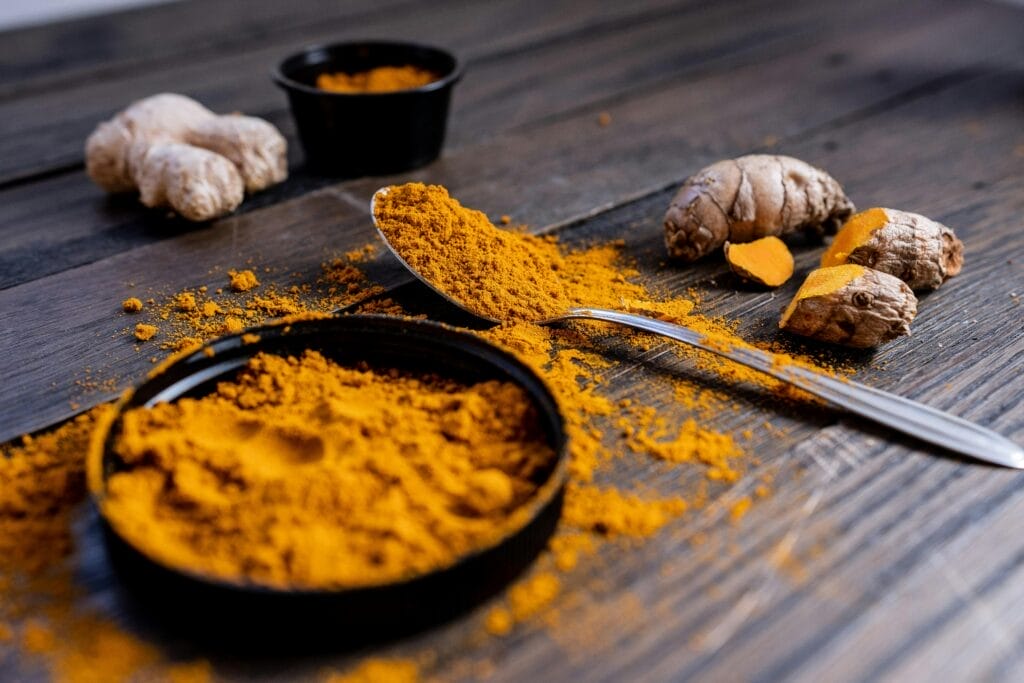
Turmeric (Curcuma longa) is a flowering plant native to the Indian subcontinent and Southeast Asia. It belongs to the ginger family, Zingiberaceae. Turmeric is called haldi in the Hindi language and is derived from a Sanskrit word, haridra, meaning “one that enhances health.”
Turmeric stems (rhizomes) with multiple buds and nodes grow underground parallel to the surface. These stems are boiled in water, dried, and then ground into a fine, deep golden-yellow powder for various means of consumption. (Fig. 1)
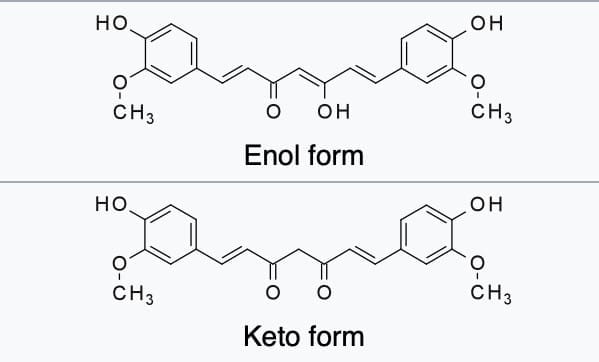
French chemists Henri Auguste Vogel and Pierre Joseph Pelletier named the biologically active compound in turmeric as curcumin in 1815. Curcumin, a polyphenol, is one of the three phenolic pigments (curcuminoids) imparting the golden-yellow color to turmeric powder. Milobedzka and Lampe, Polish and German chemists respectively, reported the chemical structure of turmeric in 1910 and subsequently synthesized it in 1913. Chemically, it is diferuloylmethane with a molecular weight of 368.4. Curcumin exists in keto form in water and in enolic form in organic solvents. Curcumin is poorly soluble in water. It has a very low bioavailability due to its poor absorption, rapid metabolism, and elimination. Black pepper (which has a major active compound of piperine) blocks the metabolic pathway and increases the bioavailability of curcumin by 2,000%.1,2 (Fig. 2)
Turmeric powder, often called “the golden spice,” has been used for various purposes for a long time in India. It is commonly used as a coloring and flavoring agent in Asian cuisines and in Hindu religious rituals and ceremonies. It is also used for medicinal purposes in the Ayurvedic tradition, an ancient Indian holistic system of health and disease. Turmeric is used worldwide in different ways for its health benefits, primarily due to its anti-inflammatory and antioxidant properties. In China it is used in traditional medicine and as a colorant, in Japan in tea, in Korea in drinks, in Thailand in cosmetics, and in the US as a preservative and coloring agent in food items like mustard, cheese, butter, and chips.
Anti-inflammatory property2
Conditions like atherosclerosis, Alzheimer’s disease, metabolic syndrome, multiple sclerosis, Parkinson’s disease, cardiovascular diseases, arthritis, diabetes mellitus, psoriasis, and acquired immune deficiency syndrome have an increased production of inflammatory cytokines like Interleukin-1 (IL-1), IL-6, IL-12, IL-18, tumor necrosis factor alpha (TNF-⍺), interferon gamma (IFN𝛾), and granulocyte-macrophage-colony stimulating factor (GM-CSF). Out of these cytokines, TNF-⍺ is a major mediator of inflammation regulated by activation of a transcription factor known as Nuclear Factor-𝜅B (NF-𝜅B). The anti-inflammatory effect of curcumin occurs predominantly by blocking the activation of NF-𝜅B and thereby decreasing the amount of secreted TNF-⍺ and other pro-inflammatory cytokines.
Antioxidant property2
Human cells and tissues undergo oxidative stress when there is an imbalance between free radicals (causing damage to the cells) and antioxidants (protecting the cells by neutralizing the free radicals). Free radicals (e.g. reactive oxygen species and reactive nitrogen species, ROS and NOS) are produced as a result of normal metabolic processes and some other factors like environmental pollution, excessive sun exposure, smoking, alcohol abuse, and stress. They are unstable molecules missing an electron. Free radicals acquire an electron from normal molecules and make them unstable, producing damage.
Antioxidants donate an electron to the free radicals, making them stable and thus protecting the cell. Common antioxidants are vitamin C, vitamin E, beta-carotene, and selenium, available in various fruits, vegetables, brown rice, eggs, and seafoods. Curcumin increases the serum activities and concentration of some antioxidants (superoxide dismutase, catalase, glutathione peroxide, and lipid peroxide). Curcumin also reduces free radicals by scavenging and inhibiting ROS generating enzymes.
Ayurveda and turmeric3,4,5
Ayurvedic medicine is based upon the concept that the entire universe, including the human body, is made up of five elements, namely ether (space), air, water, fire, and earth. According to Ayurveda, there are three systems of bioenergy in the human body called Doshas, which are made up of different combinations of these five elements. These Doshas are Vata, Pitta, and Kapha and need to remain in a state of equilibrium for normal health and harmony. An imbalance of these Doshas will lead to unhealthy physical and mental states.
Turmeric is considered to be a rejuvenation herb. Its fundamental qualities include a bitter or pungent taste, a light and dry quality, and heat-producing potency. Due to these properties, turmeric has the ability to balance the three Doshas. Turmeric also enhances immunity and the ability to fight against bacterial, viral, and fungal infections.
In Ayurvedic practice, turmeric is used to treat various forms of arthritis, chronic inflammatory conditions, digestive, respiratory, and liver disorders. It is also used in skin disorders like acne, psoriasis, burns, wounds, and hyperpigmentation. Turmeric is also useful in improving skin and hair health. When used as a paste with honey and lemon juice, it increases skin brightness and glow by increasing the microcirculation of the skin. It can be used as a mask when combined with yogurt, Fuller’s earth, sandalwood, and rose water. It is also used to reduce wrinkles and hair loss.
Although turmeric has been used in Ayurvedic medicine for a long time, extensive clinical studies have failed to demonstrate its usefulness in treating any disease. This may be related to its limited bioactivity, chemical instability, or water insolubility.
Turmeric use in Hindu weddings, religious rituals, and ceremonies6
In Hindu weddings, a very specific event called the haldi ceremony is observed prior to the wedding day. A turmeric paste is applied on the face, arms, and legs of the bride and the groom, giving an enhanced glow to the skin. This is also considered to symbolize purification of body and soul and to impart blessings for the couple as they start their new life journey. In Hindu religious rituals and ceremonies, turmeric paste is applied on the foreheads of devotees and statues of deities as an auspicious symbol.
Curcumin is commercially available as an herbal supplement in forms like powder, tablets, capsules, liquid, ointments, cosmetics, and soaps. Commercial supplements usually contain 1,000 mg of curcumin per capsule. Clinical trials have shown a good safety profile and tolerability at up to 4,000 and 8,000 mg per day. In high doses, it can cause abdominal pain, nausea, diarrhea, and dizziness. As an herbal supplement, it has been reported to cause liver injury in rare cases.1
The US Food and Drug Administration (FDA) has approved curcuminoids (group of three related curcumins) as “Generally Recognized as Safe” (GRAS). However, the FDA does not regulate the contents nor the quality of turmeric supplements. Turmeric supplements should always be used under the guidance of a physician, as it can interact with several medications such as warfarin, amlodipine, and glyburide. Turmeric should be avoided during pregnancy and lactation.7
References
- Curcumin. Wikipedia. Last edited November 24, 2025.
- Susan Hewlings and Douglas Kalman. Curcumin: A review of its effects on human health. Foods 2017;6(92):1-12.
- Ayurveda Doshas: The complete guide to the Three Doshas. Adivaidyam: Ayurveda Yoga, November 19, 2024.
- Benefits of turmeric: Ayurvedic remedy for many ailments. Ayurvedic India. December 12, 2024.
- Ayurvedic benefits of turmeric on skin and hair. The Ayurvedic Experience. August 8, 2022.
- The fascinating cultural significance of turmeric in India. Taste Read. May 29, 2025.
- Jenette Restivo. Turmeric benefits: A look at the evidence. Harvard Health Publishing. March 22, 2024.
ASHUTOSH GUPTA, MD, is a retired nephrologist. He was associated with the Nephrology Associates of Northern Illinois and practiced nephrology from 1978 to 2017 in the Chicago area. Currently, he is a board member of the Hektoen Institute of Medicine.