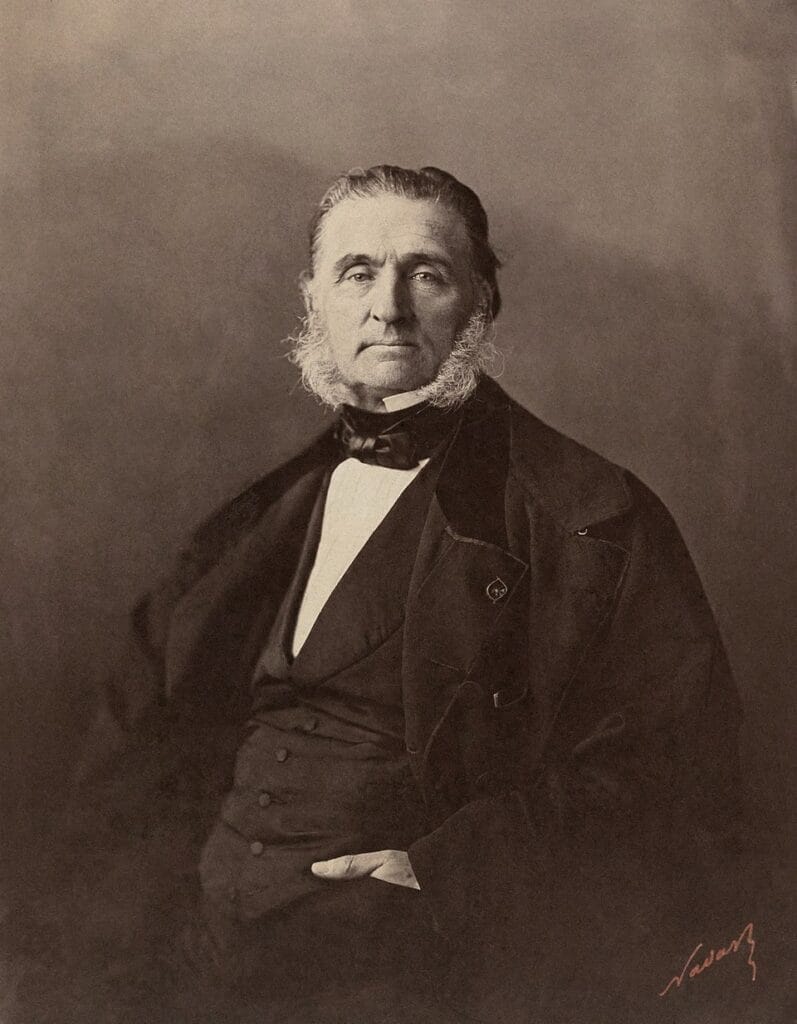

Armand Trousseau (1801–1867) was one of the most important figures of 19th-century French medicine. His career spanned the era when medicine was transitioning from speculative theory to clinical observation, careful diagnosis, and systematic teaching. A physician of immense influence, Trousseau made significant contributions to the understanding of diseases ranging from croup and tuberculosis to cancer and thrombosis. His role as a clinician, educator, and author made him an enduring presence in medical history, and his name continues to resonate through the eponymous “Trousseau’s sign” and “Trousseau’s syndrome,” which remain familiar to medical students and practitioners today.
Trousseau was born in Tours, France, on October 14, 1801, into a modest family. Despite limited means, he displayed great intellectual promise. He pursued medical studies in Paris. There, he came under the mentorship of Pierre Bretonneau, a physician of Tours who had emphasized the importance of careful bedside observation and clinical differentiation of diseases such as typhoid fever and diphtheria. Trousseau earned his medical doctorate in 1825, writing a dissertation on croup.
Trousseau made significant advances in the diagnosis and treatment of respiratory diseases. He became known for his work on croup and diphtheria, advocating the use of tracheostomy at a time when it was still a controversial practice. Trousseau refined the procedure and saved many lives, thereby helping to establish tracheostomy as a legitimate therapeutic option.
He also distinguished himself in the study of tuberculosis, pneumonia, and bronchitis. He combined a careful physical examination—inspection, palpation, percussion, and auscultation, with an appreciation of the patient’s overall condition. He described the connection between cancer and venous thrombosis, known today as Trousseau’s syndrome. He recognized that unexplained migratory blood clots could serve as a harbinger of occult malignancy. He is also remembered for what is still called Trousseau’s sign, seen in a clinical maneuver used to detect latent tetany caused by hypocalcemia by inflating a blood pressure cuff on the arm.
This emphasis on careful observation linked him to the great French tradition of clinical medicine associated with Laennec and Bretonneau. He believed that medicine must be based on what can be seen, heard, and palpated at the bedside. He was a great teacher, and as a professor at the Hôtel-Dieu in Paris and later at the Collège de France, he attracted students from across Europe and the Americas to his lectures, many of whom later became prominent physicians in their own right.
His two-volume Clinique médicale de l’Hôtel-Dieu de Paris (1861–1862), a collection of his clinical lectures, became a classic of 19th-century medicine. He was admired for his clinical skill and believed it was the physician’s duty to relieve suffering. He argued that medicine was not merely a science but also an art. He supported vaccination campaigns and hygienic measures to control epidemic disease.
In the final years of his life, Trousseau became the subject of his own clinical observations. In 1867, he developed migratory thrombophlebitis. Recognizing the implication, he predicted his own diagnosis of gastric carcinoma, which was confirmed at autopsy after his death in June 1867.
Trousseau is remembered through his students, his writings, and the enduring eponyms attached to his name. Even more important than any single discovery was his embodiment of the physician as careful observer, compassionate healer, and inspiring teacher.