
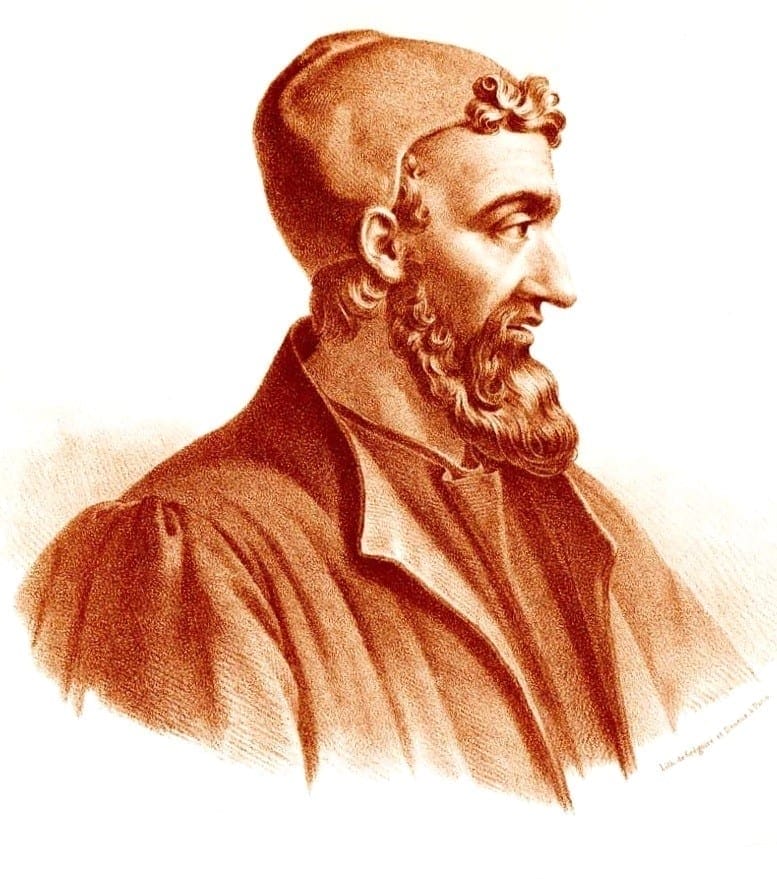
Few figures in the history of medicine have left a legacy as profound and enduring as Claudius Galenus, better known simply as Galen. Born in Pergamon in 129 CE, Galen was educated in the vibrant intellectual centers of the Greco-Roman world, studying philosophy, anatomy, and medicine in places such as Smyrna, Corinth, and Alexandria. His career ultimately brought him to Rome, where he served as physician to gladiators and later to emperors, including Marcus Aurelius. Over the course of his long life, he composed an immense body of writings—more than 20,000 pages survive—that shaped medical thought for more than a millennium.
Central to Galen’s influence was his insistence on understanding the body through direct observation and dissection. Although cultural taboos prevented him from dissecting human cadavers in Rome, he performed detailed dissections and vivisections on animals, particularly apes and pigs. From these studies, he offered descriptions of the circulatory, nervous, and muscular systems. His discovery that arteries contained blood rather than air, for example, corrected misconceptions inherited from earlier Greek theories.
Nevertheless, Galen’s anatomical work contained errors that persisted for centuries. Believing that blood was formed in the liver and consumed by the tissues, he rejected the idea of circulation. His authority was so commanding that even when future anatomists noticed discrepancies in the human body, they hesitated to contradict him.
Galen did not see medicine as a technical craft alone; rather, he fused it with philosophy. He was deeply influenced by Hippocrates, adopting and systematizing the theory of the four humors—blood, phlegm, yellow bile, and black bile. According to Galen, health resulted from their balance, while disease arose from imbalance. This humoral framework, integrated with Aristotelian logic and Stoic ethics, made Galen’s medicine both a practical system of treatment and a comprehensive philosophy of nature.
For therapy, he emphasized regimen and lifestyle—diet, exercise, and moderation—as the first line of defense. When necessary, he prescribed drugs, surgery, or bloodletting. His pharmacological writings catalogued hundreds of remedies, many derived from plants, and were copied and studied well into the Renaissance.
Galen’s writings were not only prolific but rhetorically powerful. He wrote with the confidence of a philosopher-physician whose observations and reasoning brooked little dissent. His texts became canonical in Byzantine, Islamic, and later Latin Europe. In the medieval Islamic world, scholars such as Hunayn ibn Ishaq translated Galen into Arabic, ensuring his survival and integrating his thought into the medical curriculum of Baghdad and beyond. By the twelfth century, Latin translations circulated in Europe, forming the backbone of medical education at universities like Bologna, Paris, and Oxford.
The longevity of Galenic medicine is both a testament to his genius and a reflection of the authority he wielded. For nearly 1,400 years, his writings were treated as unquestionable truth. While this preserved much ancient medical knowledge, it also constrained innovation. Anatomists such as Andreas Vesalius in the sixteenth century challenged Galen’s errors by dissecting human cadavers, exposing fundamental inaccuracies. William Harvey’s discovery of the circulation of blood in the seventeenth century finally overturned Galen’s model of physiology.
Yet, to reduce Galen to his errors alone would be misleading. His holistic vision of medicine, his emphasis on careful observation, and his synthesis of philosophy and healing established medicine as an intellectual discipline rather than a mere trade. He insisted that physicians be learned, ethical, and rigorous, setting professional standards that resonate even today.
Galen stands as one of the towering figures of medical history. His blend of empirical study, philosophical reasoning, and practical therapeutics created a system so compelling that it dominated thought for over a millennium. Though later science corrected many of his anatomical mistakes, the intellectual framework he built helped define what it meant to practice medicine as both an art and a science. In Galen, the world inherited not only a physician of emperors but also a philosopher of the human body whose influence continues to echo in the story of medicine.