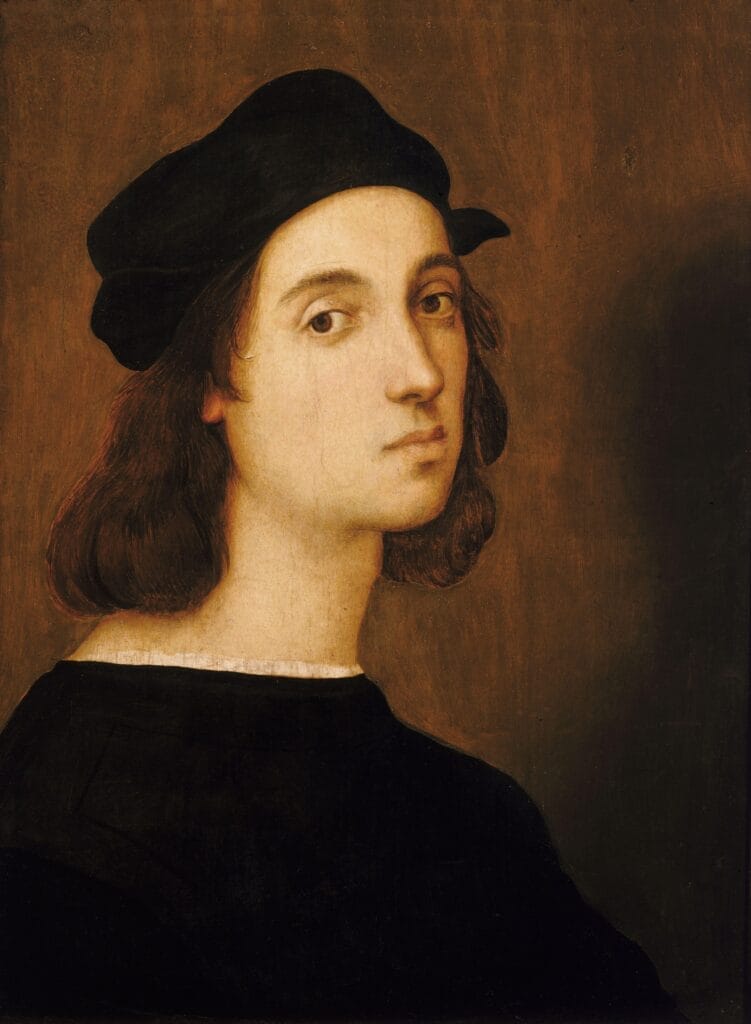
The famous High Renaissance artist Raffaello Sanzio was working at the court of Pope Julius II when he developed an acute illness that killed him within fifteen days. His body was publicly displayed and mourned in the Vatican, and he was buried in the Pantheon, an honor reserved only for Rome’s most revered figures. No full anatomical autopsy was ever caried out, but soon after his death some unlikely stories began to circulate. His contemporary biographer Giorgio Vasari wrote that his illness had been brought on by “excessive amorous pursuits.” Syphilis indeed was prevalent in Rome at the time of his illness, but the whole idea does not make sense because syphilis is rarely so suddenly fatal. It was also suggested that he died because he had hidden his symptoms from his doctors, but doctors would not been able to save him and might have only made things worse by bleeding him. Medicine at that time was based on the Galenic theory of trying to achieve a balance between the humors. It is more likely, according to the reported symptoms, that he died from an acute infection, typhoid, severe community-acquired pneumonia, or, less likely, according to more recent opinions, from meningococcal meningitis, malaria, or leptospirosis.
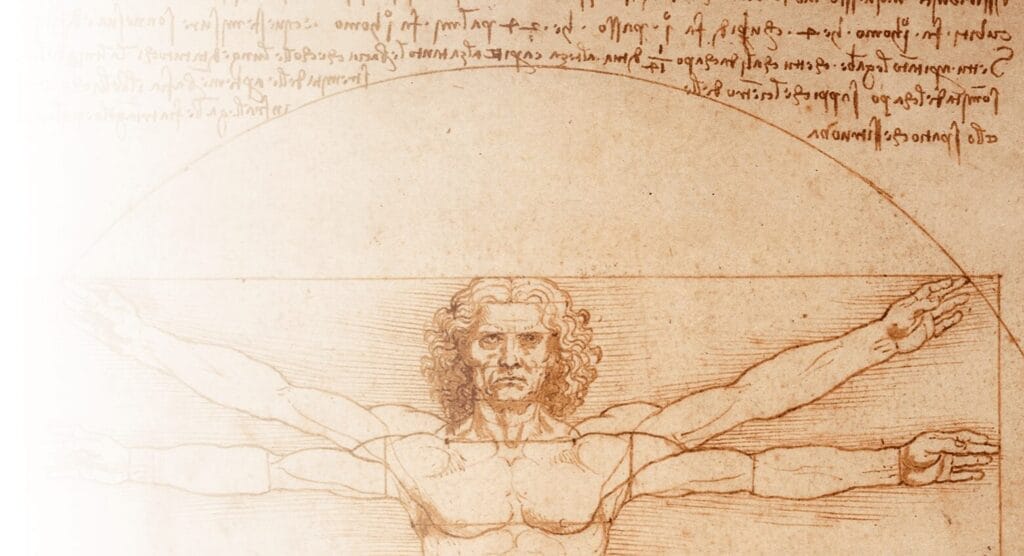
Contributing to his illness may have been a crowded urban environment, limited sanitation, and heavy professional stress. Raphael’s career had been intense and physically demanding. Moving to Florence around 1504, he studied the works of Leonardo and Michelangelo, then went to Rome in 1508, where Pope Julius II commissioned him to decorate the papal apartments in the Vatican. This work involved scaffold climbing, extended periods of painting frescoes overhead, and exposure to pigments and solvents. Certain Renaissance paints such as lead white and vermilion (mercuric sulfide) contained substances which have been found to contribute to long-term health problems. Although no clear evidence links Raphael’s death to occupational poisoning, prolonged exposure could have contributed to an underlying tendency to infections.
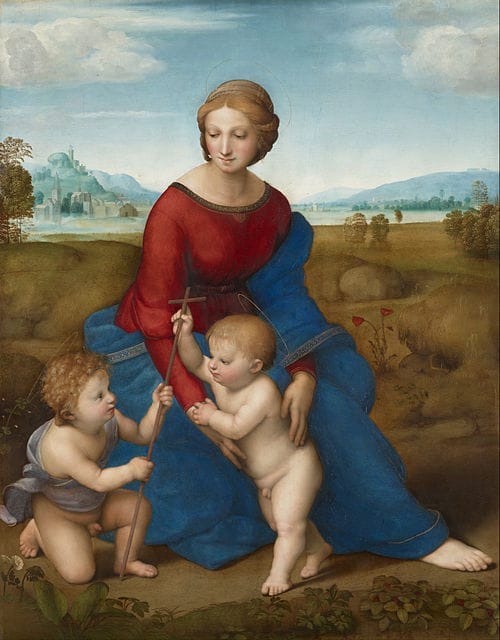
Born on April 6, 1483, in Urbino, a thriving Renaissance court that valued art, humanism, and learning, Raphael rose to become one of the most celebrated painters and architects of the High Renaissance. While in Rome, he moved in elite circles that included physicians, scholars, and architects. The papal court employed some of the best doctors in Europe, who blended classical medical theory with new anatomical observations emerging from human dissection. Raphael is believed to have had knowledge of anatomy, which contributed to the naturalistic qualities in his figures. His connections with the other great painters of his time likely exposed him to discussions about the human body, proportion, and medical science. Though not known for overtly medical paintings, his work reflects the Renaissance’s interest in the human form and anatomy, as shown in The School of Athens (Fig. 1). His Madonnas and other portraits frequently show detailed physical characteristics, such as skin tone, posture, and musculature, indicating careful observation comparable to that of a physician examining a patient.