Michael Abramson
Melbourne, Australia
Michael Mathias Perl was born in Melbourne, Australia on 22 May 1903, the first child of Jacob and Elizabeth Perl. He was named after his grandfather who had been born in Chodziessen, Prussia, and arrived in Port Phillip aboard the Arabian in 1853. His father worked as a clerk and later a pharmacy assistant, his mother as a milliner. His uncle, Mathias Michal (generally known as Monty) Perl, was the first doctor in the family, specializing in venereology after the First World War.1 His sister Leah was born a year later, and they remained close throughout their long lives.
The Perl family lived in Parkville, an inner suburb of Melbourne, which was not salubrious prior to the urban gentrification. Michael and Leah started their education at Parkville Primary School and then attended Errol Street, North Melbourne Primary School.2 Michael celebrated his bar mitzvah at the Bourke St. Synagogue in 1916. This Jewish ceremony requires thirteen-year-old boys to sing passages from the Old Testament. He apparently showed promise as a singer and later joined the synagogue choir. He completed his secondary education at Scotch College, obtaining his leaving certificate in 1921. A school report from 1918 noted that he collected stamps, was fond of gardening, rowing, and tennis, and his probable career was as a doctor.
Michael spent most of the 1920s at the University of Melbourne, where he faced a choice between medicine or music. He studied piano for a year at the Conservatorium of Music; he was secretary, then treasurer of the Melbourne University Musical Society, helping to plan concerts and involved in publishing a songbook in 1926. Some concerts by the Society were broadcast on ABC Radio. He was friends with Bernard Heinze, later conductor of the Melbourne Symphony Orchestra.3 However, ultimately, he decided to complete his medical degree, graduating MBBS in 1930.
In 1931, Michael was appointed one of three resident medical officers at the Bendigo & Northern District Base Hospital, about 150 kilometers north of Melbourne.4 He often told the story of how he got his driving license, despite backing his car into the wall of the police station! He presented to a meeting of the British Medical Association in Bendigo a challenging case of a ten-year-old girl with hyperglycemia associated with a raised renal threshold, in which he successfully managed her diabetes with the still relatively novel treatment of insulin.5 He was very active in the social life of the Bendigo Hospital, with one of the nurses recalling, “The doctors joined in the fun, which ended up rather abruptly with Micky Perl being forcibly put into a bath of cold water.”6 In 1932, he played the role of Richard Greatham in the Bendigo Repertory Society production of Hay Fever, a light comedy in three acts by Noël Coward.
In September 1933, Michael went to New Guinea as a ship’s surgeon aboard the SS Montoro.7 Other passengers included the architect Walter Burley Griffin.8 The Burns Philp Line conducted “picnic races” on board, in which he acted as “veterinary surgeon.” The Montoro traveled from Sydney to Brisbane, Townsville, Cairns, Port Moresby, Torres Strait Islands, Rabaul to Lae. The round trip to Lae and back to Sydney took about thirty-five days, for which the first-class fare was £50. He landed at Lae, was flown to Bulolo by Guinea Airways, and was taken to the Morobe gold fields9 by dredge. He was offered a locum position there as a doctor, but ultimately declined because he believed there was too much drinking by the miners.
Back in Melbourne, Michael took over the medical practice of his Uncle Monty at 79 Wellington Street, Windsor1 and shared consulting rooms on the first floor of “Pasteur House”, 32 Collins Street, with Drs. Tonkin and Samuel Gerstman, an ophthalmologist. In 1936, he took over 221 Dandenong Road, Windsor for £2/10 rent per week, where he established a general practice. In 1937 he was knocked over by a car in Chapel Street, Prahran and required three months to recover before resuming his practice.10 He later purchased the Dandenong Road property for £6,500 and practiced there for over forty years.11 In 1939 he was invited to inspect the new central block of Prince Henry’s Hospital on St. Kilda Road, where he held an honorary appointment from 1936–1940. Although not a fellow, he was invited to the second ceremony of the Royal Australasian College of Physicians in 1940.
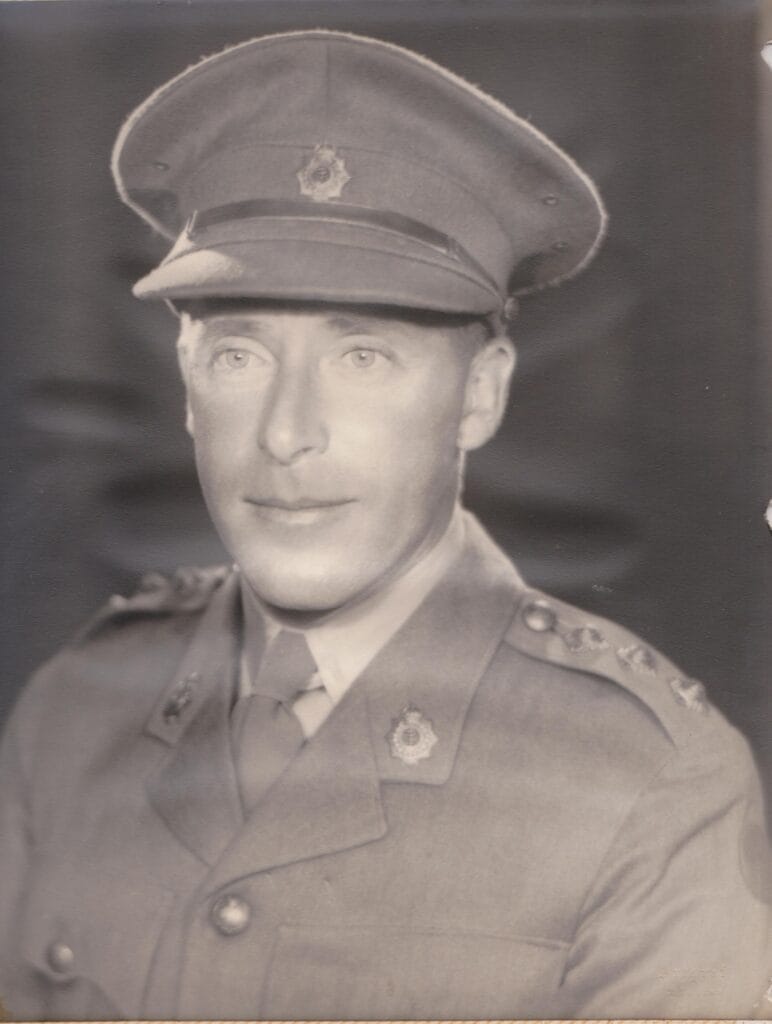
World War Two began in September 1939, and Prime Minister Robert Menzies announced that Australia was also at war. Michael joined the Australian Army Medical Corps reserves as a Captain (Figure 1). He enlisted in the Second Australian Imperial Force (AIF) at Royal Park on 6 January 1941.12 He was granted leave of absence from his honorary appointments as a clinical assistant to medical outpatients at the Alfred and Children’s Hospitals in Melbourne. The management of the Alfred congratulated him on joining the AIF and wished him all the best for the future.13

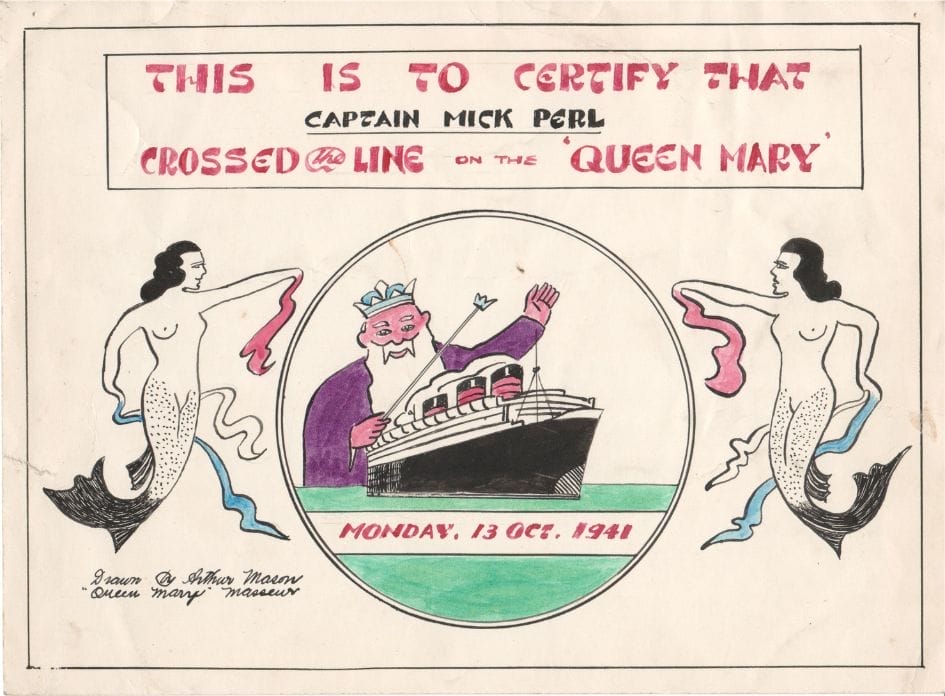
Michael was initially sent to Puckapunyal, north of Melbourne, for training, then to the University of Sydney, to undertake a short course on tropical medicine. He embarked that September for the Middle East to help establish an Australian military hospital, crossing the equator on the RMS Queen Mary on 13 October 1941 (Figure 2). He met Chaplain Booth on station and was sent to the 2nd/7th Australian General Hospital (AGH),14 then at Kilo 89 near Tel Aviv, in the British Mandate of Palestine. The previous night the Luftwaffe had bombed the Isle of France docked at Port Said, Egypt. He joined an officers’ mess at AIF Staging Camp K in the canal zone. In between his medical work at the AGH, there was time for sightseeing in Egypt (Figure 3), Gaza, and Beirut.
In January 1942, Michael left the Middle East in Operation Stepsister, initially bound for Rangoon, Burma. However, after Singapore fell to the Japanese Imperial Forces on 15 February,15 Australian PM John Curtin ordered the 2nd AIF to return to Australia. Many ships in the convoy were sunk, but Michael eventually landed at Freemantle in March 1942. He remembered a Red Cross padre offering him use of a car, but he could not drive it as it was too new a model. He wired headquarters to ask what to do with the boxes (probably medical supplies) and went by ship to Adelaide. He was apparently told to drop them overboard.
Michael traveled to Canberra as part of an Army delegation for the opening session of the Commonwealth Parliament in April 1942. In the House of Representatives, PM Curtin (who was also Minister for Defence) reported that a substantial part of the AIF had returned and been strategically disposed.16 The Curtin Government had already decided to defend the entire continent of Australia. The Senate debated rates of pay for the military forces and the calling up of men who served in the First World War for compulsory military service, particularly in the Volunteer Defence Corps.17
Michael traveled by train with Padre Bradbury to Rocky Creek near Toowoomba and then onto Hughenden, 376km west of Townsville, Northern Queensland. He was involved in establishing the 2/2nd Australian General Hospital, just south of Hughenden, but this site proved unsuitable following a cyclone.18 Following the Battle of the Coral Sea, he was sent to Rockhampton. In 1943, he was admitted to the 2/2 AGH a couple of times for treatment of tonsillitis.19 In April 1943, he flew to Townsville and was attached to the 2/2 AGH, which had relocated there. He was in charge of a nineteen-year-old patient with eosinophilic leukemia, which in those days was essentially untreatable.20 In October 1943, he and Sister Gladys Farthing21 attended a flower show organized by the Australian Red Cross Society to raise funds for the 2/2nd AGH.
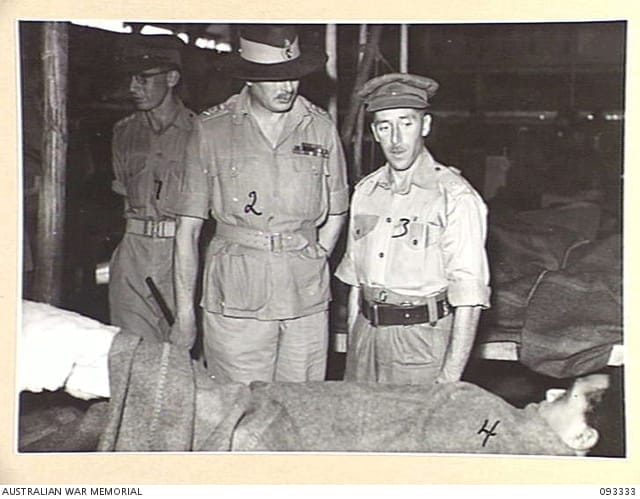
Volunteers were called for to serve in New Guinea and as Michael could speak Pidgin from his earlier time there, he was offered a post. His commanding officer Col. Kenneth Fraser22 did not want him to go and offered him another position in Queensland, which he found “too terrible to imagine.” He again embarked from Townsville on SS Montoro and took up an appointment as Deputy Director of Medical Services, Northern Region, Angau Headquarters. He was promoted to Major on 10 July 1944. While in Lae, he was admitted to 2/7 AGH with contact dermatitis of the feet.19 He was on a second tour of duty in Lae when in June 1945 the Governor General HRH Duke of Gloucester came to inspect Australian troops and visited the surgical ward of the Angau Native Hospital (Figure 4).
Japan surrendered on 2 September 1945 following the detonation of atomic bombs23 and the war in the Pacific theater was over. Michael returned from Lae in October 1945 and was appointed medical officer to the 20th Australian Camp Hospital at Broadmeadows. He applied for demobilization on 7 January 1946 and his appointment with the Army ended on 8 February 1946.
Michael returned to civilian life as a general practitioner in Windsor24 and was appointed honorary inpatient physician at the Children’s Hospital in 1947. He remained a clinical assistant to outpatients there until 1961. He was a member of the Australian Medical Association11 and the Royal Australian College of General Practitioners, which was formed in 1958. Phillip Abramson, MBBS (Melbourne, 1953), joined him as an assistant from 1955–1956, but it was mostly a solo practice. He was remembered by his patients as a caring GP, particularly attentive to the complex needs of other returned servicemen. He was still visiting elderly patients in nursing homes when in his seventies. He eventually retired from clinical practice to care for his wife.
Michael had married Jean Marks at the Melbourne Hebrew Congregation on 30 March 1943. Jean had trained as a biochemist at St. Bartholomew’s Hospital in London, prior to war. She then worked at the Baker Institute, next to the Alfred Hospital in Melbourne. After the war, they had two children: Margaret and Dianne. Like many members of the Perl family, Michael was quite short—only 5 feet 3 inches tall (Figure 4). To his many university and army friends, he was known as “Mick.” To his niece and nephew, “Uncle Micky Mouse.” To his great-nephews and great-nieces, he was simply “Uncle Mouse,” hence the title of this article. After suffering a fractured femur neck and a series of strokes, he died in Malvern on 19 May 1994, just days before his ninety-first birthday. Over the course of his long life, Michael Perl had shown great creativity, and he faithfully and lovingly served his family, friends, community, and country.
Acknowledgments
I would like to thank my cousin Margaret Robieson and her husband Norman for sharing their recollections of and memorabilia from her father. Anne Toville found his case report in the Medical Journal of Australia. A manual search of this journal and a Medline search did not reveal any other authored publications. The Soldier Career Management Agency of the Australian Army provided a copy of his service record. Figure 3 was scanned by my brother, David Abramson.
References
- Abramson MJ. Dr Monty Perl – Pioneering Australian Venereologist. Hektoen International Spring 2024. https://hekint.org/2024/05/09/dr-monty-perl-pioneering-australian-venereologist/
- Sesquicentenary of the forerunner of the Errol Street Primary School. Hotham History Project. Accessed 23 Jan 2025. https://www.hothamhistory.org.au/sesquicentenary-of-the-forerunner-of-the-errol-street-primary-school/
- Heinze, Sir Bernard (Thomas). Baker’s Biographical Dictionary of Musicians. Encyclopedia.com. Accessed 9 Jan 2025. https://www.encyclopedia.com/arts/dictionaries-thesauruses-pictures-and-press-releases/heinze-sir-bernard-thomas-0
- Bendigo & Northern District Base Hospital, Bendigo. 75th Annual Report, Year ended 30th June 1931.
- Perl MM. Hyperglycaemia associated with raised renal threshold. Med J Aust 1932;2:703-5.
- Collins YMJ and Kippen SA. Aprons and arches: a history of Bendigo Hospital trained nurses. Bendigo, Vic.: Holland House, 1998: 102.
- Burns Philp Company, Melbourne. Letter of introduction for Dr. M.M. Perl. 15 September 1933.
- Walter Burley Griffin. Wikipedia. Accessed 22 January 2025. https://en.wikipedia.org/wiki/Walter_Burley_Griffin
- Gold mining in New Guinea: aerial transport made Bulolo possible. The Western Argus, Kalgoorlie, 26 Apr 1938. Trove, National Library of Australia.
- Personal section. The Argus, Melbourne, 4 Dec 1937: 2. Trove, National Library of Australia.
- List of members of the Branches of the British Medical Association in Australia. Sydney: Australasian Medical Pub Co, 1951-1962.
- Australian Military Forces. Attestation form for special forces raised for service in Australia or abroad. RO41/38A Dr. M.M. Perl VX39227.
- Letter from the Manager & Secretary of the Alfred Hospital (J.H.P. Eller) to Dr. M.M. Perl, 18 Mar 1941. Personal collection of Margaret Robieson.
- 2/7th Australian General Hospital. Birtwistle Wiki. Accessed 24 Jan 2025. https://birtwistlewiki.com.au/wiki/2/7th_Australian_General_Hospital
- Fall of Singapore. Wikipedia. Accessed 25 Jan 2025. https://en.wikipedia.org/wiki/Fall_of_Singapore
- Question: International Affairs: Review op War Situation [sic]. Australia, House of Representatives, 1942, pg. 604. Historic Hansard. https://historichansard.net/hofreps/1942/19420429_reps_16_170/
- Question: Pay of fighting forces. Australia, Senate, 1942, pg. 576. Historic Hansard. https://historichansard.net/senate/1942/19420429_senate_16_170/#subdebate-19-0
- 2/2nd Australian General Hospital. Anzac Square, State Library of Queensland. Accessed 26 Jan 2025. https://www.anzacsquare.qld.gov.au/historic-places/queensland-wwii-history-map/22nd-australian-general-hospital
- Officer’s Record of Service. Dr. M.M. Perl VX39227.
- Fenner F. A case of eosinophilic leukaemia. Med J Aust 1943;2:7-8.
- Officer’s Record of Service. Gladys Jean Farthing NFX76449. Later Matron of Concord Repatriation Hospital.
- Helen Gregory. Fraser, Sir Kenneth Barron (1897–1969). Australian Dictionary of Biography, National Centre of Biography, Australian National University. Accessed 6 Feb 2025. https://adb.anu.edu.au/biography/fraser-sir-kenneth-barron-10245/text18115
- Surrender of Japan. U.S. National Archives and Records Administration. Accessed 27 Jan 2025. https://www.archives.gov/milestone-documents/surrender-of-japan
- Special advertisements. The Argus, Melbourne, 4 Apr 1946: 2. Trove, National Library of Australia.
MICHAEL ABRAMSON is Emeritus Professor of Public Health & Preventive Medicine at Monash University in Melbourne, Australia. He is also an honorary Respiratory Physician at the nearby Alfred Hospital. He has been a member of the Australian & New Zealand Society for the History of Medicine and the Australian Jewish Historical Society.
2 responses
Thank you Michael for a very interesting article on Dr Michael Perl who was my GP during my teenage years when he practiced in Dandenong Road Windsor. He would make house calls at any time and my late mother often commented that he looked more worn out and tired than his patients A very dedicated GP of the “old school” something that no longer exists
Indeed Dr. Perl was a doctor of the old school. I have fond memories of going to his surgery as a child and always thought of him as a pediatrician even though he was so much more.
I had no idea of his background or “adventures”. What an incredible man; certainly today’s “providers “ could have learned much from him.