Arpan K. Banerjee
Solihull, England

In the Taban region of Budapest, at the foot of the castle district of the city outside the Semmelweis Museum of Medical History, stands a statue of József Antall, a famous medical historian who became the first democratically elected Prime Minister of Hungary in 1990 following the end of Communist rule by Russia.
József Antall was born on April 8, 1932, in Budapest. His parents were government officials who had helped save the lives of several Polish Jews and refugees during World War 2. During the German occupation of Budapest, his father was arrested by the Gestapo and spent time in prison. While still at school, Antall developed an interest in politics. He held anti-communist and anti-authoritarian views and was a supporter of Hungarian autonomy. He studied Hungarian literature and history at Budapest University and completed a doctorate in history in 1956, the year of the Hungarian uprising against Soviet rule.
Antall began his career as a grammar school history teacher in Budapest. Eventually, because of his political activities and anti-Communist views, he was no longer able to continue as a teacher at the school. In 1965, he started as a researcher, archivist, and librarian at the newly founded Semmelweis Museum of Medical History. He became its director in 1974, a position he held until 1989. In 1972, he edited Medical History in Hungary, a book of collected papers presented at the 23rd International Congress of the History of Medicine. In 1973, he published a book titled Pictures from the History of Medicine based on the Semmelweis Museum collection. He co-edited Medicina in Nummis in 1979 based on the coin collection of the museum, and in 1981 he published A Pictorial History of European Medicine and Pharmaceutics. In 1986 he became Vice President of the International Society for the History of Medicine.

During his time at the museum, he was also active in the Hungarian Democratic Forum, a pro-democracy movement. He eventually became their leader, and in 1990, he went on to win the first free democratic elections in Hungary. During his short tenure as prime minister, he strove to lead a coalition of parties in the early transition period from communism to democracy. He improved relations with Europe, and, in 1991, Russian troops made a complete and peaceful withdrawal from the country.
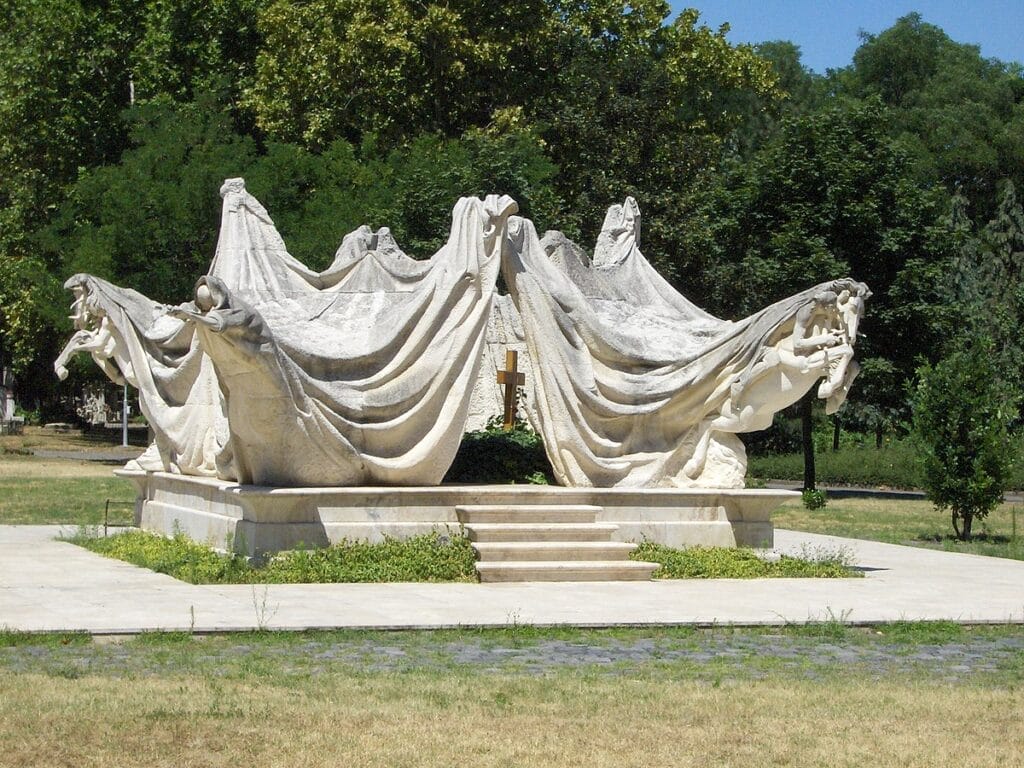
Antall developed lymphoma shortly after being elected prime minister and died on December 12, 1993 at the age of sixty-one. His tomb, sculpted by Miklos Melecco, can be seen in the Kerepesi Cemetery in Budapest. Some scenes from the 2008 film The Boy with the Striped Pyjamas were filmed in this cemetery. His legacy is honored by the Antall József Knowledge Centre at Corvinus University in Budapest and the József Antall Building, one of the buildings of the European Union in Brussels.
References
- Banerjee AK. The Semmelweis Museum of Medical History, Budapest. Hektoen International, 2025. https://hekint.org/2025/07/28/the-semmelweis-museum-of-medical-history-budapest/
- Jozsef Antall. Wikipedia. https://en.wikipedia.org/wiki/József_Antall
- Fiume Road Graveyard. Wikipedia. https://en.wikipedia.org/wiki/Fiume_Road_Graveyard
DR. ARPAN K. BANERJEE qualified in medicine at St Thomas’s Hospital Medical School. London. He was a consultant radiologist in Birmingham 1995–2019. He was President of the radiology section of the RSM 2005–2007 and on the scientific committee of the Royal College of Radiologists 2012–2016. He was Chairman of the British Society for the History of Radiology 2012–2017. He is Chairman of ISHRAD. He is author/co-author of papers on a variety of clinical, radiological, and medical historical topics and eight books, including Classic Papers in Modern Diagnostic Radiology (2005) and The History of Radiology (OUP 2013).