
.jpg)
The origins of the Sanssouci Park date back to 1744 when Frederick the Great, King of Prussia, envisioned a summer retreat that would embody his philosophy of “sans souci” — French for “without worry.” He personally designed the palace and its surrounding terraced vineyards, transforming the landscape into a Baroque pleasure garden. The park expanded over time, incorporating Neoclassical and Romantic elements under the reign of Frederick William IV in the 19th century.
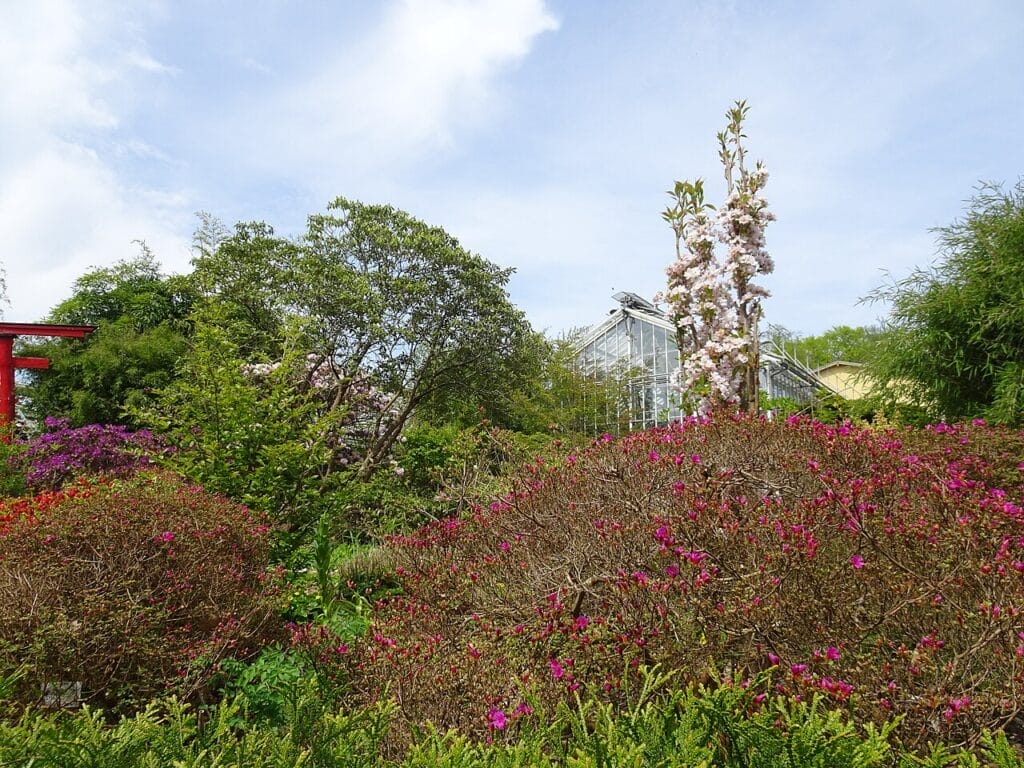
The Botanic Garden itself was established much later, in 1950, on the site of the former Royal Garden Centre, as part of the University of Potsdam. It occupies 8.5 hectares and includes eight display greenhouses that house over 10,000 plant species. These range from tropical and subtropical flora to succulents and crops essential to human and animal nutrition. The garden is part of a UNESCO World Heritage Site and reflects centuries of horticultural innovation, royal vision, and medicinal exploration.
The garden serves as a vital resource for researchers, educators, and visitors interested in the healing properties of plants. It features curated beds of herbs traditionally used such as chamomile and valerian, ephedra and artemisia. It also plays an active role in scientific research, collaborating with institutions such as the Salk Institute and California State University San Marcos in genomic and biochemical studies. Accordingly, the garden functions as a cultural and educational sanctuary, where visitors can explore themed gardens, attend workshops on herbal remedies, and participate in guided tours that highlight the historical and medicinal significance of various plant species. The garden’s integration into the broader Sanssouci Park allows for a seamless experience where art, architecture, and botany converge.