
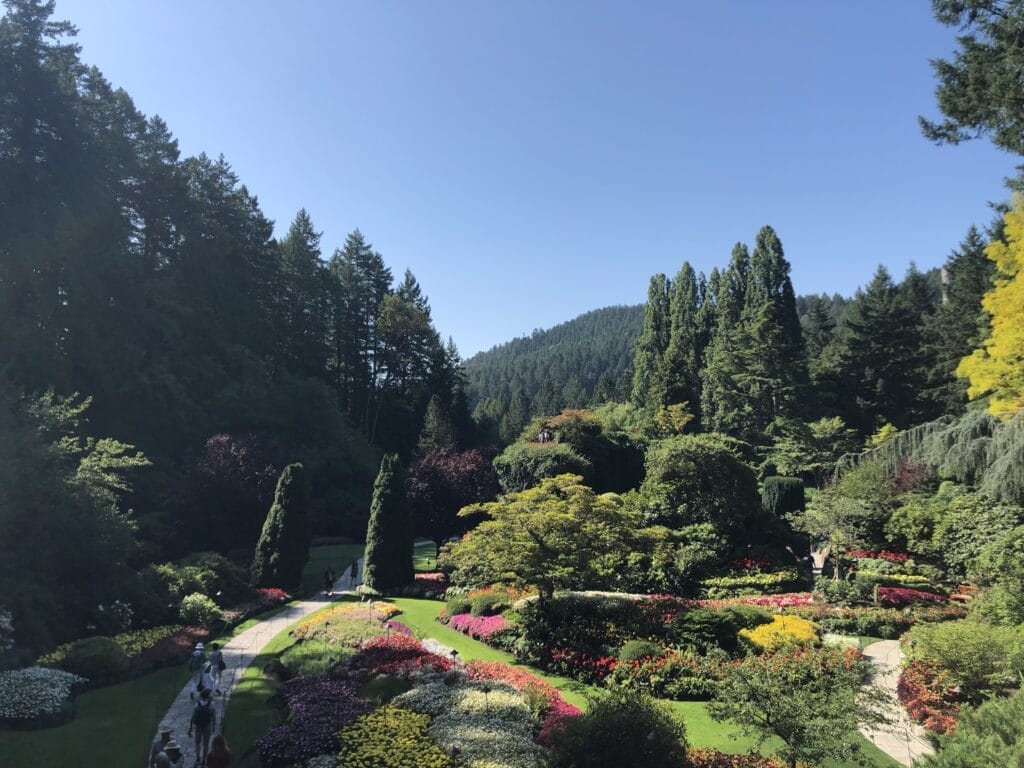

The Butchart Gardens on Vancouver Island, located near Victoria in British Columbia, are one of the most celebrated horticultural attractions in the world. Spanning over 55 acres of meticulously designed floral displays, they began as the vision of Jennie Butchart in the early 20th century. Their origins are rooted in industry and transformation, when 1904, Robert Pim Butchart, a pioneer in the cement industry, established a limestone quarry on Vancouver Island to supply his cement plant. As the quarry was gradually exhausted, Jennie Butchart envisioned turning the land into a lush garden. Her efforts began in 1909, and by 1921 the former quarry had been transformed into a horticultural masterpiece. Jennie Butchart’s passion for gardening reflected broader trends in Victorian and Edwardian society, where ornamental horticulture was often intertwined with concepts of health, leisure, and social status. The gardens but eventually became a public attraction, opening in the 1920s to visitors from around the world.
Since its establishment the Butchart Gardens have welcomed more than one million visitors every year and the Canadian government has granted them National Historic Site of Canada status. The gardens are celebrated primarily for their ornamental beauty, but many of the plants cultivated there also have historical and medical significance.
The Butchart rose garden features numerous roses which people have utilized for medical purposes since ancient times. During medieval times rose petals served apothecaries for their soothing characteristics when they used them to create treatments for sore throats and skin irritations. The maritime communities near the Pacific coast relied heavily on rose hips to combat scurvy because they contained high levels of vitamin C.
Lavender, cultivated for its pleasant scent, was traditionally used both as a treatment for anxiety and for its antimicrobial properties. Traditional European medicine incorporated lavender oil as a primary treatment for wounds as well as relief of anxiety and plague infection management.
Yew trees, featured in formal gardens such as Butchart’s structured spaces, now also have modern pharmaceutical applications. Scientists extracted paclitaxel (Taxol) from Pacific yew tree bark (Taxus brevifolia) during the late twentieth century to create a revolutionary cancer treatment drug.
The Butchart Gardens demonstrate the historical truth that interaction with nature also leads to better health outcomes. During the 19th and early 20th centuries sanatorium gardens operated as essential elements of tuberculosis treatment because doctors believed that natural surroundings combined with fresh air improved patient recovery. Currently, the gardens created by Jennie Butchart serve primarily as an aesthetic space, but visitors to the gardens frequently experience lower stress levels and improved mood, valuable attributes a time when the stress of urbanization and environmental awareness are rising.is rising. The gardens demonstrate a lasting connection between beauty and health along with their ability to create beneficial natural environments. Through her vision Jennie Butchart converted industrial waste into a life-giving sanctuary which shows that gardens can heal the earth and bring peace to human minds.