Barbara Mera
Emma Ryan
Julius Bonello
Peoria, Illinois, United States

At the end of the 1800s, the art of surgery was changing. The almost universal usage of anesthesia, coupled with the growing support of germ theory and the beginnings of antiseptic surgery, enabled people to undergo less painful and much safer procedures. More complicated operations could now be performed, and conditions that were previously thought to be beyond the realm of surgery, such as appendicitis, were becoming reasons for surgical intervention.
Into this flourishing environment arose a man from Wisconsin who would become, as expressed by William Mayo, “the surgical genius of our generation”—John B. Murphy.
John Murphy was born in a log cabin on December 21, 1857, in Appleton, Wisconsin, the youngest of five children. His parents had fled Ireland in the late 1840s to escape poverty and the devastating effects of the potato famine. Murphy was raised on a farm and attended a one-room school for his first seven years of education. While attending high school, he worked part-time at a local pharmacy, earning five cents a week. A general practitioner living above the pharmacy, H.W. Reilly, took a liking to young Murphy, hired him as an apprentice, and provided him with anatomy and physiology books. John began his informal medical training by memorizing Gray’s Anatomy and Draper’s Physiology. Soon, he was dissecting trapped birds, rabbits, and squirrels to study anatomy. His mother, recognizing his interest and fascination with biology, urged her son to continue these studies. “If you are educated,” she told him, “There is no man’s achievements which you cannot equal or excel, provided you have industry and integrity, and are temperate.” After working a year of apprenticeship under Dr. Reilly, Murphy, with his mother’s financial help, applied to Rush Medical College in Chicago.
At the age of twenty-one, Murphy enrolled at Rush, where he proved to be an excellent student, never missing a lecture or demonstration. During these grueling two years, Murphy’s experience in medical school inspired him to become a surgeon. He met students who had heard of advanced surgical procedures being performed in Europe. Realizing this could strengthen his skills, he vowed to witness these techniques firsthand. After his final year, John ranked first on an oral examination for an internship at Cook County Hospital.
In 1881, Murphy joined the former head of surgery at Cook County, Edward W. Lee, in private practice in Chicago. Lee encouraged Murphy to travel to Europe, promising to hold his position until his return. Murphy then spent eighteen months visiting Vienna, Berlin, and Heidelberg, watching and learning from the continent’s leading surgeons, including Theodor Billroth. Now considered the father of abdominal surgery, Billroth had performed the first gastric resection in the world just one year earlier. His operations attracted surgeons from around the globe and filled surgical theaters with awestruck spectators. These inspiring European experiences prompted Murphy to return to Chicago in 1884 with renewed vigor. Endowed with great intellect, dedication, and indefatigable energy and trained by the world’s great surgeons, Murphy’s future accomplishments in both innovative surgical techniques and surgical education are not surprising.
After returning from Europe, Murphy continued to work with Dr. Lee at Cook County and accepted a lectureship at Rush Medical School. On November 25, 1885, he married Jeanette “Nettie” Plamondon, a former patient and daughter of a wealthy businessman. Her parents gifted them a home as a wedding present. Nettie would prove to be a strong supporter of her husband for the next thirty years, and together they would have five children, with three surviving to adulthood.
Now relieved of financial worries, Murphy was able to spend more time in experimental research. He converted a barn behind his home into a surgical research laboratory. Seeing her husband’s tireless dedication to advancing his surgical skills, Nettie secretly had another laboratory built as a gift and equipped it with the necessary tools. Murphy took great pride in his laboratory and often spoke of his humane treatment of the dogs used in his research. There, often with his wife’s assistance, he performed hundreds of experiments to advance his craft.
In the laboratory, he devoted much effort to improving techniques for intestinal surgery, although orthopedic, vascular, and lung surgery also occupied his active mind. After one year of experiments with dogs, he achieved a breakthrough in intestinal anastomosis. His device consisted of two metal pieces that snapped together after attaching the ends of severed bowels. After multiple successful procedures with dogs, Murphy proved the effectiveness of his technique in humans. The “Murphy Button” became one of the most common techniques for bowel anastomosis in the country, and the Mayo Clinic used it successfully for almost forty years. In experiments dealing with fluid deficits, especially sepsis and peritonitis, he popularized the “Murphy Drip”—a technique of proctoclysis, or rectal infusions of solution for hydration when the oral route was unavailable. Other experiments on repairing or reuniting arteries and veins using different animals took place in the summer of 1886. One must wonder if Murphy possessed extraordinary prescience, because three months later, he performed the very first successful human end-to-end anastomosis of the femoral artery.
While maintaining a growing surgical practice, Murphy found time to teach at three schools in Chicago: Northwestern, Rush, and the College of Physicians and Surgeons. At Northwestern, one of his students, the future Dr. Charles Mayo, described him as the greatest teacher of clinical surgery. In 1884, Murphy performed the first appendectomy in Chicago and advocated for early surgery in cases of appendicitis, then known as perityphlitis.
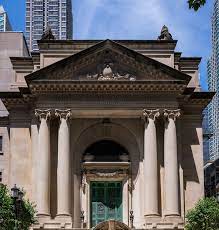
In 1885, Murphy was named Chief of Surgery at Mercy Hospital, where he made most of his major contributions to surgery. Twice a week, he held clinics during which he operated and lectured before hundreds of physicians. These lectures were published as Clinics of John Murphy, but eventually became the Surgical Clinics of North America, which is still published today. Together with Dr. F. Martin, they launched the journal Surgery, Gynecology and Obstetrics, which is now published as the Journal of the American College of Surgeons. In 1901, he wrote the first “Yearbook of Surgery,” which continues to be published today. This was in addition to his authoring over 100 book chapters and journal articles. John was elected president of both the Chicago Medical Society and the American Medical Association. In 1913, he helped found the American College of Surgery.
Plagued by recurrent angina exacerbated by Chicago’s hot and humid weather, Murphy and his wife vacationed on Mackinac Island in northern Michigan. There, in his room at the Grand Hotel, with his wife in attendance, he died on August 11, 1916. The “surgical genius” of his generation was only fifty-eight years old.
References
- O’Regan, SH. (1986). Lord of the Knife. Palmer Publications Inc.
- George I, Hardy MA, and Widmann WD. (2004) John Benjamin Murphy. Current Surgery Vol. 61/Number 5. September/October. 439-441.
BARBARA MERA is a fourth-year medical student at the University of Illinois College of Medicine Peoria (UICOMP). She will graduate in 2026 and plans to pursue a career in surgery.
EMMA RYAN, MD, is a fourth-year surgical resident at UICOMP. She will finish her residency in 2027. She plans on pursuing a career in critical care and trauma surgery.
JULIUS BONELLO, MD, is a Professor Emeritus at the University of Illinois. He has been teaching students for 50 years.