
Óscar Lamas Filgueira
Valencia, Spain
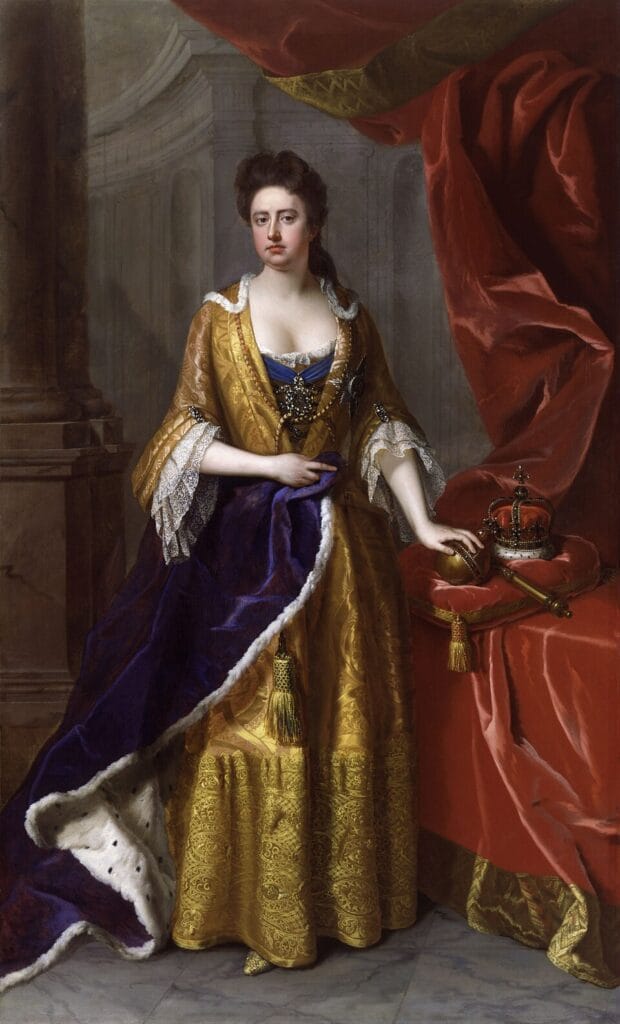
Queen Anne is remembered as the last Stuart sovereign and the queen under whom the kingdoms of England and Scotland were formally united in 1707. Her personal life was marked by profound physical suffering. Contemporary accounts described her as chronically ill, exhausted, swollen, and in constant pain. For centuries, historians attributed her symptoms to gout, obesity, or a generally “weak constitution.” Modern retrospective interpretations, however, have increasingly suggested a far more complex diagnosis: systemic lupus erythematosus associated with antiphospholipid syndrome.1
Anne experienced at least seventeen pregnancies, yet almost none resulted in surviving offspring.2 Many ended in miscarriage, stillbirth, or neonatal death. Her only child to survive infancy, William, Duke of Gloucester, died at the age of eleven after years of fragile health.3 The repeated cycle of pregnancy and loss profoundly shaped both Anne’s personal life and the future of the British monarchy itself, ultimately contributing to the end of the Stuart line.
Descriptions of the queen’s symptoms are compatible with autoimmune disease. She suffered recurrent joint pains and swelling severe enough to impair her mobility, chronic fatigue, episodes of worsening illness during pregnancy, and progressive edema later in life. Several portraits attributed to Michael Dahl depict erythema across the cheeks and nasal bridge, suggestive of the malar rash classically associated with lupus.4 Though retrospective, the convergence of obstetric complications, inflammatory symptoms, and artistic representation has led many modern historians and physicians to reconsider Anne’s illness as a manifestation of autoimmune disease.
For centuries, historians and physicians attributed Anne’s condition primarily to gout, a diagnosis frequently applied to members of the aristocracy, whose lives were associated with rich diets, obesity, and limited mobility. Contemporary descriptions indeed portray the queen as increasingly swollen, fatigued, and physically debilitated toward the end of her life. Gout alone, however, fails to explain many of the most striking aspects of her medical history, particularly her recurrent pregnancy losses, inflammatory symptoms, photosensitivity, and progressive systemic deterioration.
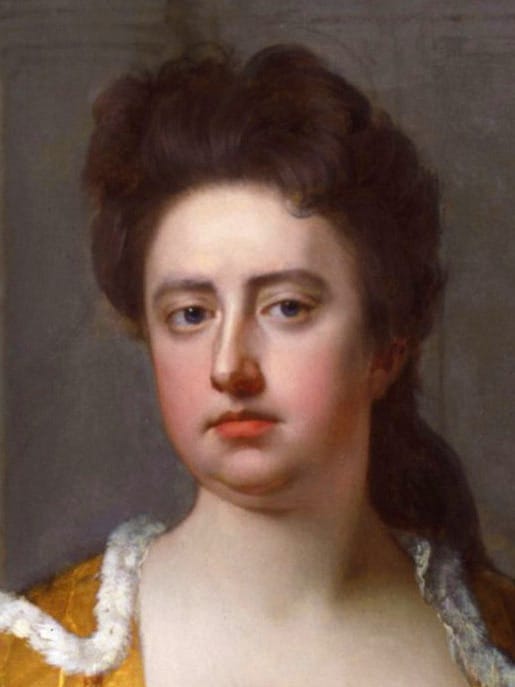
Modern retrospective interpretations have therefore proposed that Queen Anne may have suffered from systemic lupus erythematosus (SLE), possibly associated with antiphospholipid syndrome (APS), an autoimmune condition strongly linked to recurrent miscarriages and fetal loss.2,5 APS is now recognized as one of the leading causes of recurrent pregnancy morbidity, particularly in women with underlying autoimmune disease.6 Several features of Anne’s clinical history are compatible with this hypothesis: chronic joint pain, severe fatigue, facial erythema suggestive of a malar rash, worsening symptoms during pregnancy, edema, and repeated fetal losses.
Her obstetric history is especially striking from a modern medical perspective. Such an extraordinary pattern inevitably raises questions regarding an underlying maternal disorder. In modern obstetric medicine, recurrent fetal loss associated with autoimmune disease is strongly linked to antiphospholipid antibodies, which may provoke placental thrombosis and severe placental insufficiency.7
The emotional dimension of these repeated pregnancies is difficult to reconstruct historically, yet impossible to ignore. Behind the political anxiety surrounding the succession of the Stuart dynasty stood a woman whose body had become inseparable from grief. One might imagine Anne herself reflecting: “Before giving birth to an heir, my body had already learned the language of loss.”
Beyond written descriptions, art itself may preserve visual traces of Anne’s illness. Several portraits attributed to Michael Dahl depict the queen with a striking erythematous flush extending across the cheeks and nasal bridge. While artistic conventions of the late Stuart court often idealized royal appearance, the persistence and distribution of facial redness across several portraits have prompted modern observers to speculate whether these images inadvertently captured a clinical manifestation of disease.
The so-called “malar rash,” classically associated with systemic lupus erythematosus, is among the most recognizable cutaneous manifestations of autoimmune illness. Though retrospective diagnosis through portraiture must always be approached cautiously, the visual similarities are compelling. Art history and medicine occasionally intersect in this manner, allowing portraits to function not merely as political representations but also as silent clinical documents.⁶
For Anne, however, illness was not simply a physical condition. She occupied a uniquely political role. As queen, her pregnancies were matters of state, her fertility inseparable from the survival of the Stuart dynasty. Every miscarriage, stillbirth, or infant death represented not only personal grief but also national uncertainty. The burden of monarchy transformed private suffering into public anxiety.
This intersection between chronic illness and dynastic expectation may explain why Anne’s suffering became so visible in contemporary accounts. Observers described a queen increasingly exhausted, emotionally withdrawn, and physically debilitated by the end of her reign.8 Modern readers may recognize in these descriptions not only the progression of chronic autoimmune disease, but also the psychological toll of repeated bereavement.
One of the most poignant parts of Anne’s story is the fate of her only surviving child, William, Duke of Gloucester. Frail throughout his life, he died at age eleven after a severe febrile illness.8 From a modern medical perspective, his poor health has also prompted speculation about possible congenital or immunological effects linked to maternal autoimmune disease.
Retrospective diagnoses inevitably remain uncertain. No physician can definitively diagnose Queen Anne three centuries after her death, and many of her symptoms may never be fully explained. Yet revisiting historical figures through the lens of modern medicine offers something beyond diagnostic curiosity. It allows contemporary readers to recognize the profound human dimension of illness hidden beneath political history and royal ceremony.
For centuries, Anne was remembered primarily as an unsuccessful mother, an unhealthy queen, or as the last Stuart monarch. Modern medicine, however, permits a different interpretation: that of a woman who may have endured chronic autoimmune disease while carrying the physical and emotional burden of repeated pregnancy loss under the relentless scrutiny of monarchy.
Her portraits preserve not only the image of a sovereign, but perhaps also the visible marks of suffering itself.
References
- Rahman A, Isenberg DA. Systemic lupus erythematosus. N Engl J Med. 2008;358(9):929-939.
- Gregg E. Queen Anne and her pregnancies: a medical historical perspective. J R Soc Med. 2001;94(9):449-452.
- Gregg E. The death of Prince William, Duke of Gloucester: a historical medical review. J Med Biogr. 2006;14(2):83-87.
- Aronson JK. When art meets medicine: retrospective diagnosis in portraiture. J R Soc Med. 1999;92(11):601-605.
- Antovic A, Sennström M, Bremme K, Svenungsson E. Obstetric antiphospholipid syndrome. Lupus Sci Med. 2018;5(1):e000197.
- Branch DW, Khamashta MA. Antiphospholipid syndrome: obstetric diagnosis, management, and controversies. Obstet Gynecol. 2003;101(6):1333-1344.
- Hughes GRV. Hughes syndrome (the antiphospholipid syndrome): ten clinical lessons. Autoimmun Rev. 2008;7(3):262-266.
- Somerset A. Queen Anne: The Politics of Passion. London: HarperPress; 2012.
ÓSCAR LAMAS FILGUEIRA is a 6th year medical student at Universidad Católica de Valencia, Spain. His writing explores the dialogue between art, history, and medicine, with a particular interest in narrative medicine.