
Alan Jay Schwartz
Philadelphia, Pennsylvania, United States
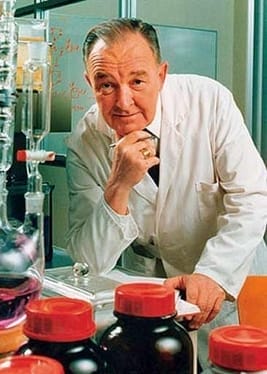

Fentanyl is a remarkably potent opioid analgesic, but unfortunately is easily abused. It was invented by Paul Janssen (1926–2003) a Belgian entrepreneurial physician and founder of Janssen Pharmaceutica.1,2 Paul was the son of Constant Janssen (1895–1970), whose entrepreneurial mission importing and marketing pharmaceuticals eventually eclipsed his physician general practice. Growing up, Paul studied medicine at Ghent University in Belgium (MD, 1951), and, even as a student, he understood that to develop new pharmaceuticals, he needed to understand current research in chemistry and pharmacology. To acquire this understanding, he visited and studied in the US (1948). He subsequently pursued graduate studies in chemical pharmacology at Ghent University (PhD, 1956). Instead of pursuing an academic career or joining existing laboratories, he set as his goal to establish an independent research company. He was motivated not by financial gain, but rather by proving he could give life to such an enterprise.
Paul Janssen was convinced there must be a connection between the chemical structure of a pharmaceutical compound and its in vivo action. The Janssen pharmaceutical enterprise operated on the premise that medically useful compounds could be produced by modifying of the chemical structure of older ones.
Together, a large group of research collaborators, young inquisitive scientists whom Paul mentored, ultimately developed more than 80 pharmaceutical compounds, many still useful in human, veterinary, and botanical medicine. Their long list of newly synthesized pharmaceuticals turned out to be extremely beneficial in anesthesiology, psychiatry, gastroenterology, cardiology, virology, immunology, and parasitology. Some of the recognizable medications in this catalog include Lomotil (synthesized in 1956), haloperidol (1958), droperidol (1961), etomidate (1964), ketoconazole (1976), and risperdal (1984).
The fentanyl family of drugs developed over a 16-year period included fentanyl (synthesized 1960), sufentanil (1974), carfentanil (1974), and alfentanil (1976). This analgesic pharmacology grew out of Paul Janssen’s understanding of meperidine’s piperidine ring structure, which was similar to morphine. Given that the piperidine ring structure was associated with the analgesic properties of both medications, Janssen and his collaborators undertook chemical alterations of the simpler meperidine structure to explore new formulations that might be more potent analgesics. The potency ratio of the chemically developed fentanyl family of analgesics ranged from meperidine (potency ratio 1) to the veterinary medication carfentanil (>16,000). The fentanyl family of analgesics owes its popularity to anesthesiologists who recognized that the pharmacodynamics of these compounds enjoyed stable cardiovascular physiology, a boon to the burgeoning open-heart surgeries being performed.3
An interesting side story about the FDA approval of fentanyl included a premonition of its abuse potential. Robert Dunning Dripps (1911–1973), Chair of Anesthesiology at the University of Pennsylvania, was introduced to Paul Janssen through a mutual colleague, Robert McNeil of McNeil Laboratories. Dr. Dripps was opposed to FDA approving fentanyl because of its potency and the possibility of its abuse. A compromise between him and Janssen resulted in the FDA’s approval of Innovar (1968), which was a medication combination of droperidol and fentanyl, a 50:1 ratio for use as a neurolept-analgesic. Innovar is virtually abandoned clinically today, yet fentanyl’s use skyrocketed as it entered the pharmacopeia.
The exponential growth of Paul Janssen’s pharmacology enterprise, Janssen Pharmaceutica, was facilitated by several factors. One facilitator was Janssen’s associations with other manufacturers including Smith Kline and French, Searle, Johnson & Johnson and McNeil Laboratories. The other was Paul Janssen’s mentoring of talented colleagues. Starting in the late 1950s, more than 30 university graduates gravitated to Janssen Pharmaceutica to become research pharmaco-chemists. This critical mass of scientists reached out to the likes of Nobel Laureate Corneille Heymans (1892–1968).
…Paul Janssen was surely a scientist of great historical significance to clinical pharmacology and to anesthesiology in particular…he forged a path of innovative thinking and creativity [and collaborative mentorship] that has had a huge impact on the quality of human life and the practice of anesthesia…The specialty of anesthesia has been fortunate to have had such a talented and energetic man interested in our therapeutic area.1
References
- Stanley TH, Egan TD, Van Aken H. A tribute to Dr. Paul A. J. Janssen: entrepreneur extraordinaire, innovative scientist, and significant contributor to anesthesiology. Anesth Analg. 2008;106(2):451-462. doi: 10.1213/ane.0b013e3181605add.
- Moon JS. Dr Paul Janssen: Making Piperidine Dreams Come True. Anesthesiology 2022;136(3):419. doi: 10.1097/ALN.0000000000004157.
- Stanley T, Webster L. Anesthetic Requirements and Cardiovascular Effects of Fentanyl-Oxygen and Fentanyl-Diazepam-Oxygen Anesthesia in Man. Anesth Analg. Jul-Aug 1978;57(4):411-416. doi: 10.1213/00000539-197807000-00008.
ALAN JAY SCHWARTZ received an MD from the Lewis Katz School of Medicine Temple University and MSEd from the University of Pennsylvania (PENN). He practiced cardiac and pediatric anesthesiology at PENN and Children’s Hospital of Philadelphia (CHOP). He is Associate Editor of ANESTHESIOLOGY, Editor of The Pharos, Docent at The Mutter Museum and Trustee Wood Library Museum of Anesthesiology.