Nicolas Robles
Badajoz, Spain
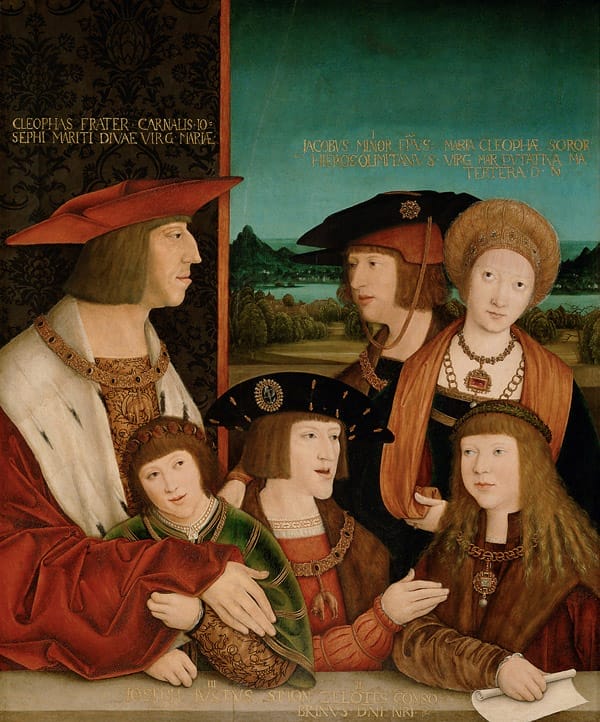
Charles V, Holy Roman-Germanic Emperor, was born in Gent (Belgium) on February 24, 1500. Son of Philip the Handsome and Joanna I of Castille, he was the grandson of Emperor Maximilian I of Habsburg and the Catholic Monarchs. In 1517, he moved to Spain to receive recognition from the courts of Castile and Aragon. He was also crowned emperor in Aachen in 1520. Ongoing confrontations with France, the Turkish threat in the Mediterranean, and the war between Protestants and Catholics in Germany took their toll on Charles V. On October 25, 1555, he abdicated the throne in Brussels and divided the vast patrimony between his brother Ferdinand and his son Philip II.
Charles inherited from the Habsburgs a prominent lower lip and from the House of Burgundy a mandibular prognathism. This prevented him from closing his mouth properly and made his speech difficult to understand. But his biggest medical problem was gout.
His first episode of gout was in Valladolid, in 1528, when he was twenty-eight years old. In that same city, in 1542, he suffered a ninth attack of gout. And in one of the best documented episodes, in 1546 during the Battle of Mühlberg when he had to ride on horseback for hours, his foot was tied to the stirrup in an effort to relieve the pain.
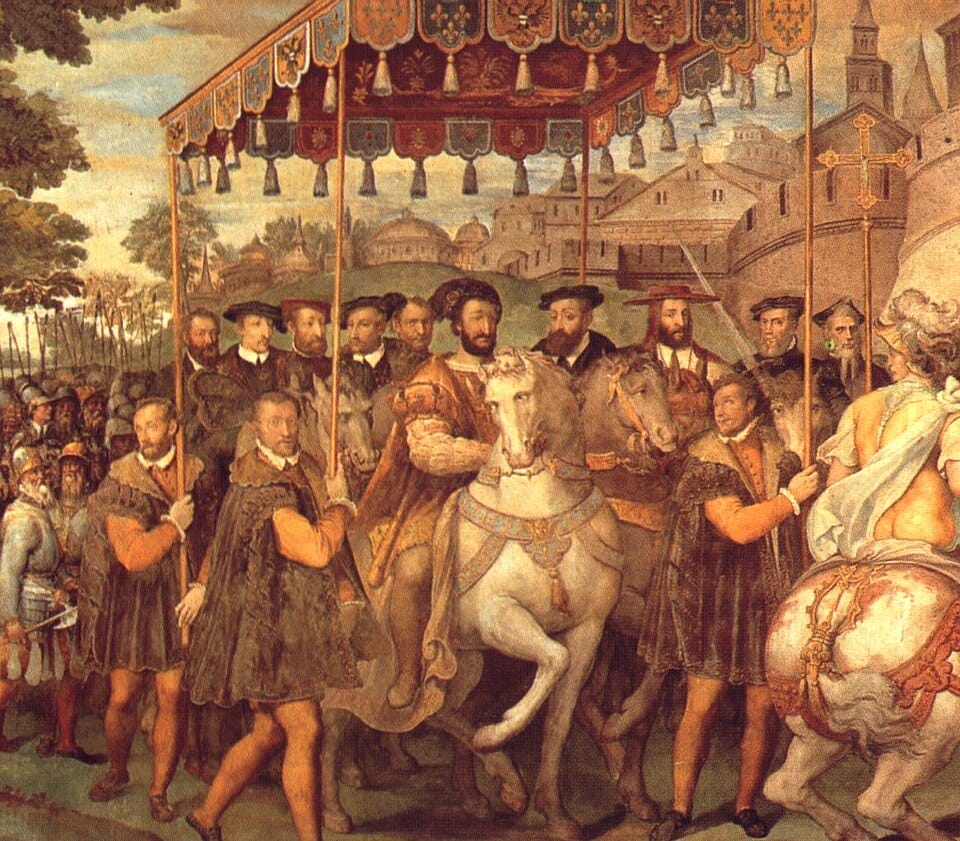
He suffered frequent, painful, and occasionally disabling gouty crises, which arose in part from his diet and excessive appetite; “The royal doctors advise him to follow a strict diet, which provokes the wrath of the king.” In fact, physicians advised him well about his diet, but Charles V, a great eater, as were his father and grandfather, did not heed their medical advice, despite a popular and effective notion in the treatment of gout at the time: “Gout is cured by covering the mouth.” In 1548, he suffered two severe episodes, one in spring and the other in December. In the latter he needed a cane to walk, and the intense pain led to screams heard all around the palace.1
His taste in food did not help him much, either. During his voyages in Germany in the 1540s, the emperor was served at each meal six dishes that he accepted or rejected, but always keeping “lechon roast, the head of the calf and similar dishes. In the morning he drank cold beer.” Although abstinence from alcohol has long been recommended to avoid hyperuricemia, today we know that the most dangerous drink is beer, not so much because of its alcohol content but because of its high purine content.2
He suffered from kidney and bladder stones with obstructive episodes in the latter part of his life. The relationship between gout and urolithiasis had been pointed out by Erasmus of Rotterdam, who in a letter to Thomas More expressed, “You have urinary stones and I have gout. We have married two sisters.” The emperor himself practiced urethral catheterizations to unblock the urinary tract as he had been taught by Vesalius and Laguna, his doctors, using a device called a “candelilla,” a kind of wax filament with a solvent liquid.3
Charles V died at the Monastery of Yuste, Extremadura, Spain on September 21, 1558. He was buried in the monastery, but later, his son, Philip II, transported his remains to El Escorial, where he is still buried today.
References
- Pérez Frías J, Rodríguez Cabezas A. Patografía del Emperador Carlos. De la acromegalia de la princesa al prognatismo imperial. CAROLVS. De Flandes a Yuste. Carlos de Gante una figura poliédrica. Edelmayer F, Murcia Rosales D, Pérez Frías PL, (Eds). Alcalá la Real. Ayuntamiento de Alcalá la Real. 2024.
- Danve A, Sehra ST, Neogi T. Role of diet in hyperuricemia and gout. Best Practice and Research: Clinical Rheumatology, 2021. doi:10.1016/j.berh.2021.101723.
- Guerrero Cabanillas V. La salud de Carlos V. Badajoz. Fundación Academia Europea de Yuste, 2005.
NICOLAS ROBERTO ROBLES is a full professor of Nephrology at the University of Extremadura (Badajoz) and member of the Academy of Medicine of Extremadura.