
Avi Ohry
Tel Aviv, Israel
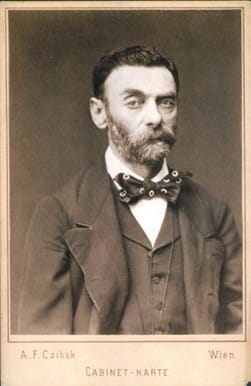
The Cambridge physician-orientalist Edward Granville Browne has described in detail further aspects of Islamic and in particular Persian medicine (9th to the 11th century) in his book Arabian Medicine.1,2 He had studied medicine at St. Bartholomew’s Hospital, earned his M.B. degree in 1887, and through his work and lectures was responsible for a revival in interest in Eastern medicine.
Ali ibn Sahl Rabban al-Tabari, 9th century physician and psychologist, produced one of the first Islamic encyclopedias of medicine, titled Firdaws al-Hikmah (The Paradise of Wisdom).
Ali ibn Abbas Majusi Ahvazi (Haly Abbas) (AD 949–982) is regarded as the first scientist who rejected ancient Galenic principles of medicine and who tried to present a new kind of medicine, based on observational data. He was a painstaking scientist in the field of medicine and proposed new diagnostic criteria and medical treatments about different ailments. He followed the main school of Hippocrates3 and Ibn Sina (Avicenna; c. 980–1037), a leading philosopher and physician of the Muslim world who had served a few Iranian rulers and was also influential to medieval European medical and scholastic thought.
In the 19th century, Iran began to modernize. The process began with the pioneering work of a Jewish-Czech-Austrian physician, Jakob Eduard Polak (1818–1891), who played an important role in introducing modern medicine in Iran.4,5 Polak studied medicine in Prague and Vienna and was one of the six Austrian teachers invited by Amir Kabir, the chief minister of Iran, as the instructors of Dar al-Fonun, the first modern (military) higher education institution in Iran. By his own account, he entered Iran on 24 November 1851, before the inauguration of the Dar ul-Fonun. He taught, in French and then in Persian, from 1851 to 1860. He served as personal physician to the Shah, and after his health deteriorated,6 he was replaced by a French physician, Joseph Désiré Tholozan, 1820–1897.
Dr. Polak was an active man. Over a period of nine years in Iran, he traveled to different parts of the country, subsequently writing his observations and memories. His detailed descriptions of Iran and Iranians are both critical and positive. Dr. Polak’s travel book was translated into Persianin 1982. The title of the original version was Persien, das Land und Seine Bewohner, which was published in Leipzig, Germany in 1865.8 Polak returned to Vienna, and worked as a physician and as an expert in Persian culture. He received the rank of Ritter des Franz-Joseph Ordens by the Habsburg Royal Court. Today he would be called a general surgeon, but apparently operated also as an ophthalmologist and urologist. He published medical textbooks in Persian. Polak represented Iran in various international medical meetings.
Professor Tholozan trained many Iranian physicians and performed important observations on the epidemiology of the plague, cholera and other infectious diseases such as the Asian relapsing fever7 and later trained a Dutch physician called Johann Louis Schlimmer (1819–1881).8,9
Louis André Ernest Cloquet (1818, Paris – 1855, Tehran) who was a physician during the reigns of Mohammad Shah Qajar (1834–1848) and Naser al-Din Shah Qajar (1848–1896). He also served as the French minister to the court at Tehran from 1846 to 1855. During his years in Persia, Cloquet concentrated his scholarly activity on cholera, of which he witnessed two epidemic outbreaks, in 1846 and 1853. In 1855 his native assistant erroneously poured him a glass of tincture of cantharides (Spanish fly) instead of brandy; upon the realization of what had happened, Cloquet downed a second glass in order to shorten his suffering.10
Today, we note one medical eponym which includes an Iranian11,12: Jack Herbert Rubinstein (1925–2006) and Hooshang Taybi (an Iranian-American pediatric radiologist; 1919–2006) syndrome, “a rare genetic condition characterized by short stature, moderate to severe learning difficulties, distinctive facial features, and broad thumbs and first toes.”13
References
- “Obituary: Edward Granville Browne, M.B., F.R.C.P., F.B.A.” Br Med J 1926;1(3394):122-3. https://doi.org/10.1136/bmj.1.3394.122-b
- “Edward Granville Browne.” Wikipedia. https://en.wikipedia.org/wiki/Edward_Granville_Browne
- Khosravi, Azam. “Haly Abbas (949–982 AD).” Mizaj Research. https://www.mizajresearch.com/history-of-medicine/haly-abbas-949-982-ad/
- Azizi MH. “Dr. Jacob Eduard Polak (1818–1891), the pioneer of modern medicine in Iran.” Arch Iranian Med 2005;8(2):151–152.
- “Jakob Eduard Polak.” Wikipedia. https://en.wikipedia.org/wiki/Jakob_Eduard_Polak
- Gächter, Afsaneh, Thorsten Halling, Shahrokh Shariat, Friedrich Moll. “Transfer of Knowledge in Urology: A Case Study of Jacob Eduard Polak (1818–1891) and the Introduction of Contemporary Techniques of Lithotomy and Lithotripsy from Vienna to Persia in the Mid-19th Century: A New Analysis of Scientific Papers from the 19th Century.” Urol Int 2019;102(1):1–12. https://doi.org/10.1159/000492156
- “Joseph Désiré Tholozan.” Wikipedia. https://en.wikipedia.org/wiki/Joseph_Désiré_Tholozan
- Shirbache, Kamran, Amirreza Liaghat A, Hamidreza Namazi. “A Bridge Between East and West: Dr. Johan Louis Schlimmer’s Medical Contributions in Qajar Iran (1819–1881).” Cureus 2024;16(9):e69015. doi:10.7759/cureus.69015.
- Azizi, Mohammad-Hossein. “Dr. Johan Louis Schlimmer (1819–1881): the eminent professor of modern medicine at Dar Al-Fonun School.” Arch Iran Med 2006;9(1):83–84. PMID: 16649388.
- Richter-Bernburg, Lutz. “Cloquet, Louis-André-Ernest.” Encyclopaedia Iranica, last updated June 25, 2013. www.iranicaonline.org/articles/cloquet-louis-andr-ernest-b/
- Vanhoenacker, Filip, and Ralph Lachman. “History Page: Leaders in MSK Radiology: Hooshang Taybi, 1919–2006.” Semin Musculoskelet Radiol 2024;28(5):657–658.
- Cohen, Ronald, and Richard Gunderman. “Hooshang Taybi: a study in integrity.” Pediatr Radiol 2022;52(9):1599–1600. doi:10.1007/s00247-022-05425-4.
- “Rubinstein–Taybi syndrome.” Wikipedia. https://en.wikipedia.org/wiki/Rubinstein–Taybi_syndrome
AVI OHRY, MD, is married with two daughters. He is Emeritus Professor of Rehabilitation Medicine at Tel Aviv University, the former director of Rehabilitation Medicine at Reuth Medical and Rehabilitation Center in Tel Aviv, and a member of The Lancet‘s Commission on Medicine & the Holocaust. He conducts award-winning research in neurological rehabilitation, bioethics, medical humanities and history, and on long-term effects of disability and captivity. He plays the drums with three jazz bands.