
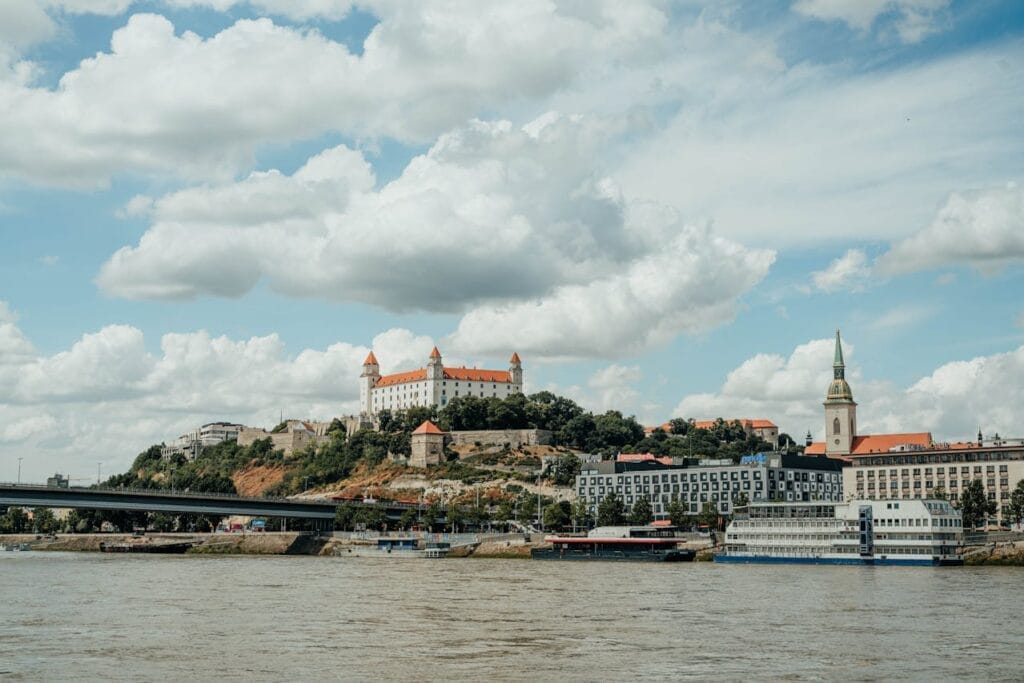
The present-day territory of Slovakia has been inhabited since prehistoric times. Celtic tribes settled it first, most notably the Boii, who left behind artifacts such as the famous “Biatec” coins. Germanic tribes later moved through the area; then, the Romans incorporated the southern part of Slovakia into their empire, particularly along the Danube frontier. Early medicine in that area relied heavily on herbalism, spiritual healing, and empirical observation. Archaeological evidence demonstrates that early populations used medicinal plants such as yarrow and chamomile. Medieval towns established hospitals, often run by religious orders, which provided care for the poor and pilgrims. The arrival of the Black Death in the 14th century profoundly affected the region. As elsewhere in Europe, the plague led to early forms of quarantine and isolation, increased attention to sanitation, and the growth of municipal health regulations.
In the ninth century, Slovakia became part of Great Moravia, one of the first Slavic political entities. The missionary Saints Cyril and Methodius introduced literacy and Christian learning, including rudimentary medical knowledge rooted in Byzantine traditions such as herbal remedies, hygiene practices, and monastic care for the sick. After the fall of Great Moravia (c. 907), the Kingdom of Hungary gradually incorporated the Slovak lands (1000–1526). The Battle of Mohács saw the Ottomans also conquer the Slovaks, but they eventually came under Austrian control. Bratislava (then Pressburg) became the site of the coronation of the Habsburg emperors. Conflicts with the Ottoman Empire along the southern borders continued, but gradual modernization came, especially under the rule of Maria Theresia.
The Enlightenment brought further reforms. Hospitals evolved from charitable institutions into more structured care centers. Improved water supply and urban sanitation began to reduce the incidence of epidemics. Early epidemiological thinking also emerged. Public health campaigns began addressing hygiene, nutrition, and working conditions. This era also saw the beginning of modern medical institutions and the professionalization of medicine in the region.
In the 19th century, the Slovaks experienced a cultural and political revival while remaining under Austrian and Hungarian rule. Leaders like Ľudovít Štúr codified the Slovak language and promoted national identity. Industrialization transformed society, bringing both progress and new health challenges. World War I resulted in industrial development, education expansion, and improved healthcare infrastructure. In World War II, a Slovak Republic existed briefly as a separate state aligned with Nazi Germany (1939–1945). Led by Jozef Tiso, a politician, dictator, and Catholic priest, it participated in the invasions of Poland and the Soviet Union, enacted strict anti-Jewish laws, and deported some 70,000 Jews to Nazi death camps. After the war, Slovakia became part of communist Czechoslovakia. It remained so until the Velvet Revolution, which ended communist rule and led to the splitting of Czechoslovakia into two independent nations.
The division left the eastern part of Czechoslovakia a country of some 5.4 million people, increasingly prosperous, with its capital, Bratislava, a delight, only slightly spoiled by the monstrosities across the Danube left behind by the Soviet era. The city boasts a refined atmosphere and excellent cuisine, making it especially enjoyable to dine aboard a restaurant on a boat anchored along the Danube. The city’s small opera house is an easy evening trip from Vienna, with time for a meal before returning on the tourist bus the same evening. One can also visit the old cathedral, the memorial to the Red Army soldiers who died fighting the Nazis, or more prosaically modern shops and restaurants. A little further west of Bratislava runs the river Morava, bordered by meadows that during the Iron Curtain days were off-limits to the local people, who, on their radios, could listen to debates in the Austrian county council of Graz but had no access to what was going on elsewhere in the world.
There is much more to see and learn about Slovakia. At its eastern end lies Kosice, served by red tramways, with attractive parks and elegant houses reminiscent of an era long gone. Travel by train takes one past the snow-covered peaks of the Tatra Mountains, behind which lies Poland. It offers an opportunity to view Slovakia’s scenery and its picturesque small towns before returning to Bratislava and then to the Schwechat airport, which also serves Vienna.
The historian visiting Slovakia cannot fail to notice that World War I marked the final stage in the dismemberment of the once-powerful Habsburg Empire. But in the arrangements that followed, the Slovaks remained second-rate citizens, living largely in the countryside, many as peasants, and were looked down upon by Austrian and Hungarian city dwellers, as shown by such expressions as “you eat like a Slovak.” Though its breakup has sometimes been regretted, distinguished Slovaks have been heard to concede that it may have been for the best.