Farah Jasarevic
Istanbul, Turkey
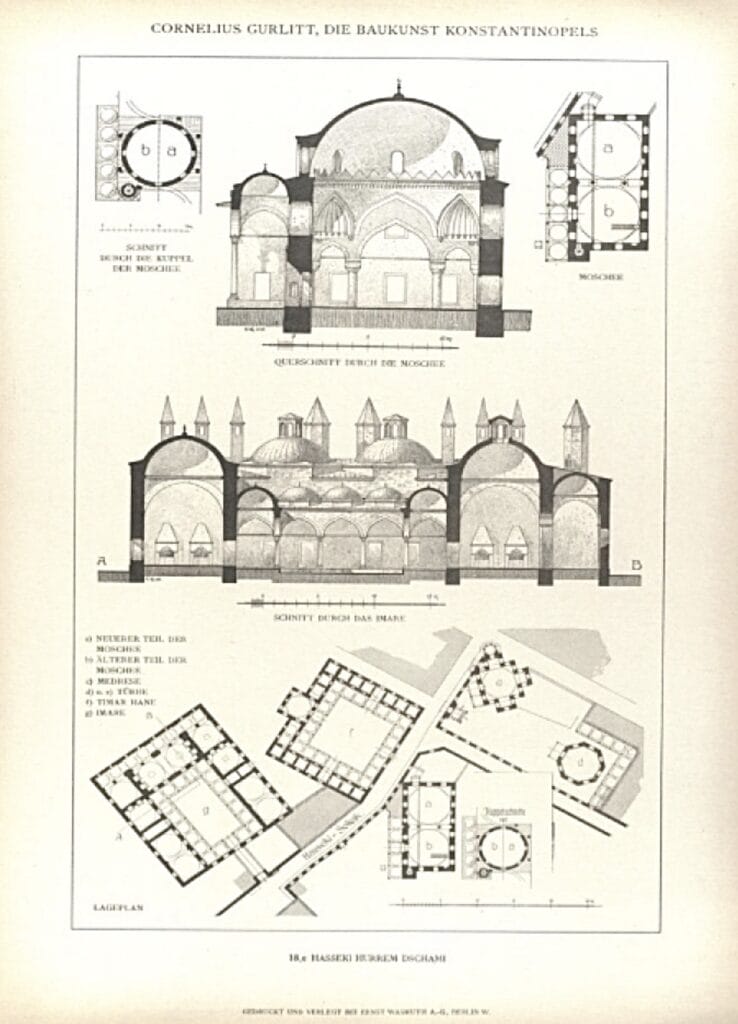
In the sixteenth century, Istanbul was defined by constant movement of people, goods, ideas, and, inevitably, disease. Plague swept through its streets in recurring waves, shaping social patterns and medical responses. In this environment, Haseki Hürrem Sultan, wife of Sultan Süleiman the Magnificent, commissioned a new medical complex: the Haseki Sultan Külliyesi. Funded through her charitable foundation, the complex became a sanctuary for the poor, the sick, and the vulnerable.
Yet Haseki was more than a hospital. It was an early experiment in what we might today call integrated public health: a space where spiritual, educational, and medical care were inseparable. Patients received treatment, meals, and spiritual guidance within the same complex. Over time, the institution transformed in response to epidemics, reforms, earthquakes, gendered social needs, and scientific revolutions.1
Historical background
The concept of a darüşşifa,2 meaning “house of healing,” emerged in the Islamic world long before the rise of the Ottoman Empire. Structured hospitals first took shape under the Abbasids in ninth-century Baghdad, where they operated as secular and socially inclusive institutions open to all classes. These early hospitals employed physicians, surgeons, pharmacists, and nurses. They also maintained written diagnostic and treatment records and often served as teaching centers for medical schools. They were among the most advanced and systematically organized medical institutions of the medieval world.3
Under the Seljuk Empire, many hospitals were established along trade routes and pilgrimage corridors, integrating medical care into the broader caravanserai network. Treatment was offered free of charge as both an expression of religious duty and a mechanism of political legitimacy. This Seljuk model strongly influenced the emerging Ottoman state.
The Ottomans, however, introduced a distinct architectural and social strategy. Instead of building hospitals as isolated structures, they embedded them within large multifunctional complexes known as külliyes.2 These complexes typically combined a mosque, madrasa, imaret,2 bathhouse, school, caravanserai, and hospital, unifying spiritual, educational, and material services in one space. This reflected the Ottoman understanding of urban welfare, which perceived healing as simultaneously physical, moral, and social.
The Haseki Sultan Complex became one of the most influential examples of this philosophy. Commissioned by Haseki Hürrem Sultan and constructed between 1538 and 1550 under the direction of Mimar Sinan,4 the complex embodied both charitable purpose and imperial symbolism. As the most powerful woman of Süleiman’s reign, Hürrem used her foundation to fund institutions serving the poor, aligning herself with the longstanding tradition of royal female patronage. Ottoman imperial women such as Mihrimah, Kösem, and Nurbanu Sultan regularly sponsored mosques, schools, and welfare buildings, especially during moments of social tension or public hardship. Hürrem’s establishment of a hospital was therefore both an act of devotion and a strategic assertion of influence within imperial politics.1

The Haseki Sultan Külliyesi was constructed in the district of Avratpazarı, a developing neighborhood on the outskirts of Istanbul’s old city walls. Over time, the complex grew so prominent that the surrounding district itself came to be known simply as Haseki. The hospital building followed the characteristic plan of an Ottoman darüşşifa: a rectangular structure organized around a central courtyard with patient rooms, examination spaces, and service areas arranged along its perimeter. Water channels and small fountains were incorporated into the design, reflecting the belief that running water created a calming and harmonious therapeutic environment.
Sixteenth-century sources describe how medical practice within the complex adhered to the principles of humoral medicine but also drew on a wide repertoire of complementary therapies, including dietary regimens, aromatherapy, and even music therapy. Physicians trained in the adjoining medical school sometimes assisted in the darüşşifa, creating a fluid boundary between education and clinical practice. The imaret provided nourishing meals for both patients and the poor, reinforcing the idea that social welfare and medical care were inseparable. Some accounts mention that patients who had recovered would visit the mosque to pray, symbolizing the completion of a physical and spiritual healing process.
The hospital’s function shifted repeatedly as the empire confronted political reforms, public health crises, earthquakes, and evolving medical needs. By the early nineteenth century, the institution continued to serve medical purposes but increasingly took on additional roles shaped by the empire’s changing circumstances.
In 1812, a devastating plague epidemic spread through Istanbul. At the Haseki darüşşifa, infected people were isolated and treated according to the medical theories of the time. Physicians employed fumigation, cleansing rituals, herbal preparations, and dietary controls to mitigate symptoms. Although germ theory had not yet emerged, Ottoman doctors recognized the importance of separating patients and maintaining controlled environments to limit transmission.
Between 1835 and 1840, during the upheavals of the Tanzimat era, the complex briefly functioned as a poorhouse or temporary shelter. Treasury records document a daily allocation of 110 loaves of bread for its residents, showing both the depth of urban poverty and the flexibility of these institutions.
By 1843, the hospital had taken on yet another new identity. A letter by chief physician Abdülhak Molla referred to the site as “Haseki Sultan Darüşşifası, reserved for women,” placing it among the earliest hospitals in the Ottoman Empire for women only. In subsequent decades, it also housed a pharmacy dedicated to maternal care and a section for mental health patients, further broadening its social role.3
A catastrophic earthquake in 1894 severely damaged the complex, forcing its temporary closure because of structural instability. Only in 1946 did the Istanbul Municipality undertake a major restoration, converting the historic darüşşifa into a modern clinic. This renovation marked Haseki’s full integration into the contemporary medical system.
A legacy of healing
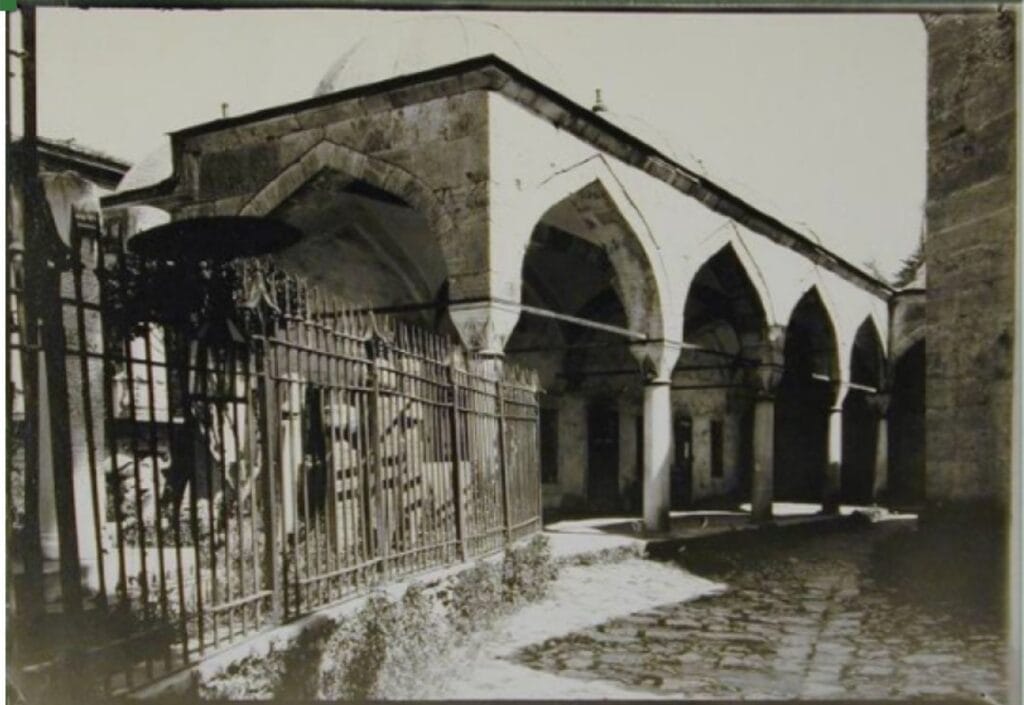
Today, the Haseki Sultan Hospital continues a tradition of crisis medicine that now spans five centuries. Though Istanbul’s diseases, populations, and scientific understanding have changed dramatically, the hospital’s role as a refuge for the vulnerable has endured.
A training and research hospital, Haseki is affiliated with the University of Health Sciences and hosts general and specialty clinics and departments. The hospital also publishes the Medical Bulletin of Haseki, a peer-reviewed scientific journal that disseminates original research across a spectrum of medical disciplines.
During the COVID-19 pandemic, Haseki’s modern infrastructure was key to Istanbul’s public health response, providing PCR testing, CT-based diagnostic imaging, oxygen therapy, antiviral treatment, and intensive care interventions. These technologies are much more advanced than Ottoman-era methods, yet reflect the same institutional agility and crisis responsiveness that enabled the original darüşşifa to serve plague victims centuries ago.
Despite the huge differences between past and present medicine, today’s Haseki Training and Research Hospital carries the same basic mission it had in the sixteenth century. From treating plague patients in the Ottoman era to managing COVID-19 cases in the twenty-first century, Haseki has remained a key part of Istanbul’s healthcare system. Its long history shows a clear pattern of resilience, flexibility, and dedication to public service.
References
- Yıldırım N. İstanbul’un sağlık tarihi. Istanbul: Istanbul University Press; 2010.
- T.R. Directorate General of Foundations. Dictionary of foundational terms. https://engelsiz.vgm.gov.tr/about-us/about-us/dictionary-of-foundational-terms
- İstanbul Tarihi. Istanbul darüşşifas (hospitals) in the classical period. https://istanbultarihi.ist/476-istanbul-darussifas-hospitals-in-the-classical-period
- Keçici ZC, Onat Hattap S. Mimar Sinan’s first work on Istanbul: Haseki Complex and historical development of Haseki Darüşşifa. ResearchGate; 2019. https://www.researchgate.net/publication/336375862
- Republic of Türkiye Ministry of Culture and Tourism. Darüşşifa Hospital (Amasya). https://amasya.ktb.gov.tr/EN-262625/darussifa-hospital.html
FARAH JASAREVIC is a second-year medical student at Acibadem University in Istanbul, Turkey. Her research explores Ottoman hospitals from their evolving roles in healthcare to their architectural design. She examines how these historical practices shaped integrated care and what lessons they offer for responding to epidemics today.