
Rao Uppu
Baton Rouge, Louisiana, United States
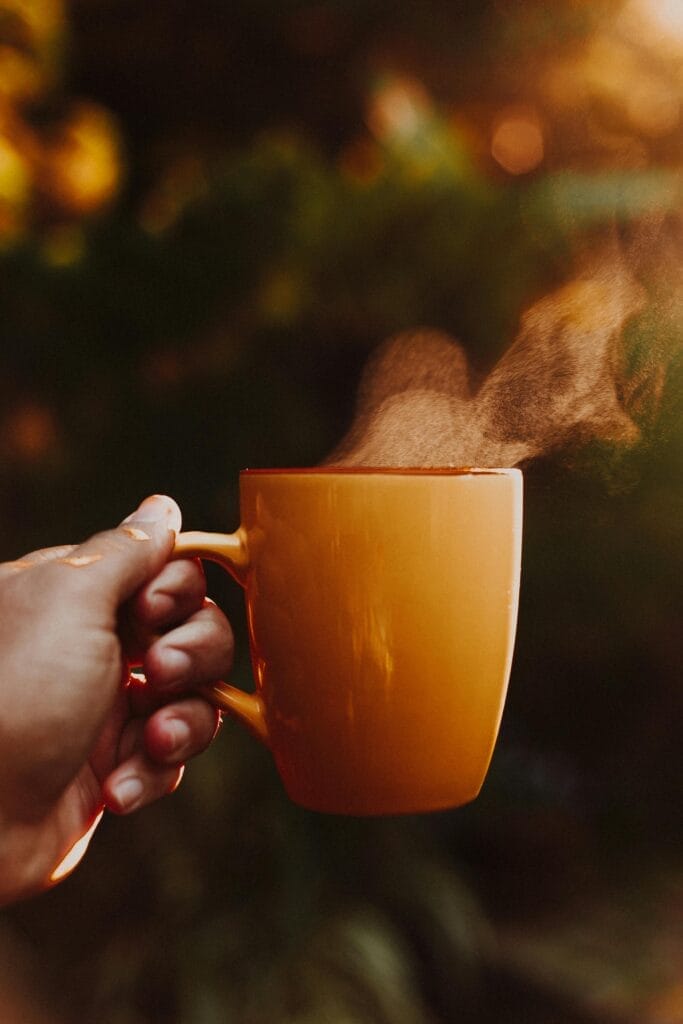
Coffee is more than a daily stimulant; it is a quiet lesson in biological balance. The long-running debate over whether coffee is “good” or “bad” increasingly shows that, for most people, moderate intake—about one to three cups a day—sits comfortably within that balance. Coffee also carries cultural meaning, reminding us that chemistry quickly becomes ritual and narrative. In the end, each cup illustrates a simple truth about medicine and life alike: stability arises not from eliminating tension, but from guiding it into proportion.
For most of us, coffee is a small daily comfort—a few minutes of warmth, aroma, and gentle alertness. But for a chemist or toxicologist, coffee is also an invitation into a world of controlled reactivity. Its scent reaches the olfactory receptors long before language wakes up, stirring memory, anticipation, and a sense of quiet readiness.
Coffee is a relatively recent companion in human history. Its widespread consumption spans less than five centuries. Yet in that short time, it has become one of the most widely consumed psychoactive beverages on the planet, likely reaching over half of the world’s adult population. That speed of adoption suggests that coffee offers something more than stimulation alone.
According to tradition, coffee’s effects were first noticed in Ethiopia, where monks observed that animals seemed unusually lively after eating coffee berries. Whether the story is literal truth or myth, it endures because it captures something essential: coffee was recognized not as intoxication, but as wakeful balance.
When coffee is brewed in Ethiopia today, where its cultural history runs deep, the ritual still unfolds like a meditation. Beans are roasted over open flame, ground by hand, and poured from a clay jebena. The crackle of roasting, the rising smoke, the earthy sweetness—these sensory moments are inseparable from the chemistry unfolding inside the beans.
Most conversations about coffee stop at caffeine. But a more interesting story involves two lesser-known molecules: cafestol and kahweol, diterpenes hidden within coffee’s oils. These compounds illuminate a broader truth about how living systems manage reactive chemistry—not by eliminating it, but by channeling it into proportion.
A ring of fire: The furan and its temperamental beauty
At the core of both cafestol and kahweol is a furan ring—a small chemical structure that can behave in both helpful and harmful ways. When the body’s detoxification enzymes (cytochrome P450s) act on this ring, they briefly generate unstable, highly reactive molecules. One of the first of these is an epoxide, which is more reactive than most ordinary double-bonded structures—although living systems have evolved ways to manage such compounds over millions of years.
With furan-containing chemicals, however, these epoxides can rapidly rearrange into even more reactive substances called cis-1,3-enedials. These readily bind to important cellular targets—including proteins, DNA, and protective molecules such as glutathione—with the potential to disturb the delicate redox balance that underlies healthy cell function.
What is remarkable is that these cis-1,3-enedials often bind to the very enzyme that created them, temporarily disabling it. In toxicology, this is called mechanism-based or “suicide” inhibition. The phrase sounds dramatic, but biologically it often represents restraint—a self-limiting reaction that prevents chemistry from running beyond control.
A reaction that appears destructive becomes an instrument of balance.
In one context, furan-containing molecules participate in gentle metabolic regulation; in another, they become instruments of injury—reminding us that chemistry itself is neutral, while biology is not.
Dose, context, proportion: The quiet determinants of outcome
Only trace amounts of cafestol and kahweol ever make it into a cup of coffee, yet they are sufficient to engage cellular pathways involved in antioxidant responses, bile acid metabolism, and detoxification. These effects are subtle. They do not shout. They whisper.
Change the brewing method, filtration, or roast degree—and exposure shifts.
Change genetics, medications, or liver-enzyme activity—and response shifts again.
Coffee is not inherently good or bad, healing or harmful. It adapts—to the person, the dose, the context.
This is biochemical truth disguised inside an ordinary drink.
A darker mirror
To understand why coffee’s diterpenes behave so gently, consider a furan-containing molecule from another context: 4-ipomeanol, a toxin produced in moldy sweet potatoes. It undergoes the same oxidative activation, forming the same reactive intermediates. But here the reaction occurs in abundance and in vulnerable tissues such as the lung. Cellular defenses buckle. The chemistry is identical; the outcome is not.
Coffee-derived furans coexist with metabolic restraint. Fungal furans, by contrast, often serve ecological roles tied to injury or defense. Biology does not divide molecules into good and evil. It deals in gradients, thresholds, and capacity.
Balance as a biological and cultural idea
Homeostasis is not stillness. It is choreography—activation and quenching, push and pull, generation and restraint. Living systems rarely achieve stability by suppressing chemistry. They achieve it by directing chemistry.
Coffee reflects this logic culturally as well as physiologically. It stimulates yet soothes, awakens yet invites pause. It sharpens attention while anchoring ritual.
Nowhere is this interplay more striking than in northern Thailand, where a rare luxury product known as Black Ivory Coffee is produced. Ripe coffee cherries are fed to elephants, animals revered in Buddhist tradition. The cherries are digested, but the beans pass intact. After collection, washing, drying, roasting, and brewing, the resulting coffee is notably less bitter.
The phrase “dung coffee” provokes curiosity and even discomfort, but it misrepresents the practice. This is not novelty for its own sake. It is a convergence of biology, belief, and habit: digestion alters bitterness; reverence frames the process; meaning transforms perception. That such a practice has emerged within a few centuries of coffee’s global spread reminds us how quickly chemistry becomes culture.
As Lewis Thomas once observed, nature maintains order not by eliminating tension, but by harnessing it. Coffee embodies this paradox every morning.
What coffee teaches us about health narratives
Public discussion about coffee often oscillates between celebration and alarm. One day it is protective; the next, suspect. A more accurate framing recognizes that:
- Brewing methods alter diterpene exposure.
- Enzyme activity varies among individuals.
- Dose and frequency matter.
- Context shapes outcome.
The real question is not “Is coffee good or bad?” but rather “How much, for whom, and under what circumstances?”
That question extends far beyond coffee.
Conclusion: A lesson in proportion disguised as a drink
Coffee is a daily chemistry experiment we perform on ourselves. From aroma to metabolism, it reveals how organisms transform chemical restlessness into something livable. Its diterpenes are neither heroes nor villains. They occupy the narrow space where reactivity meets restraint.
Every cup is a reminder: nature’s balance does not arise from avoiding reactive forces, but from shaping them into proportion.
RAO M. UPPU is Professor of Environmental Toxicology and Chemistry at Southern University and A&M College in Baton Rouge, Louisiana. His scientific and reflective writing often explore how everyday experiences—including something as simple as a cup of coffee—can illuminate broader lessons about biology, balance, and the quiet intelligence of living systems.