
JMS Pearce
Hull, England
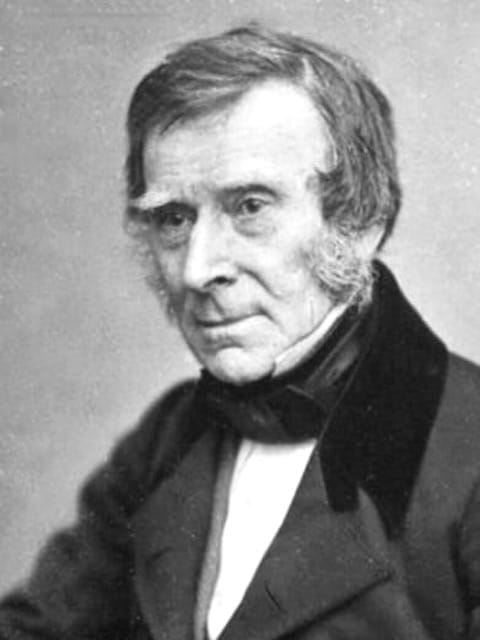
Benjamin Collins Brodie (1783–1862) was born in Winterslow, near Salisbury. His father, Peter Bellinger Brodie, was the local rector. Having graduated from Worcester College, Oxford, he chose to educate Benjamin at home since he was unable to meet the fees of the public schools.
Choosing medicine as his career, Benjamin ventured to London in 1801. He briefly attended the anatomical lectures of John Abernethy and studied at the famous Windmill Street School and at St. George’s Hospital. He was a student of the controversial Sir Everard Home, who was a pupil of John Hunter.
Brodie recounted his early training:
The consequence was, that I was enabled to take my education very much upon myself; and I soon found that I could nohow obtain so much useful knowledge as by a diligent attendance on the dissecting-room, and on the wards of the hospital. I cannot say that I neglected the use of books, but it was more in the way of reference and illustration than by a regular course of reading. I attended lectures on Anatomy, and, during one season, Dr. Crichton’s lectures on the Practice of Physic, Materia Medica, and Chemistry, the latter especially with some advantage. During my first season in London, I had entered as a pupil to Mr. Abernethy’s lectures on Surgery; but having at the time seen no surgical practice; I did not understand them, and soon ceased to attend them.
He was appointed assistant surgeon in 1808 and senior surgeon in 1822 at St. George’s Hospital, London, where he served for over thirty years. In 1810, aged twenty-six, he was elected a Fellow of the Royal Society and a year later was awarded the Copley Medal, its youngest recipient. He contributed several original investigations in physiology and surgery. They included the papers “On the Influence of the Brain on the Action of the Heart and the Generation of Animal Heat” and another “On the Effects produced by certain Vegetable Poisons (Alcohol, Tobacco, Woorara).” His Croonian Lectures, “On the influence of the nervous system on the action of the muscles in general, and of the heart in particular,” detailed experiments on how the brain affected heart function.
He was a man of keen intellect, unwavering integrity, and humanity who distinguished himself as one of the foremost and versatile surgeons of his age. His private practice grew rapidly. Henry Gray dedicated his monumental Gray’s Anatomy to him, published in 1858. He worked with great industry as a supremely successful surgeon and teacher. This culminated in his presidency of the Royal College of Surgeons in 1844.1
Several surgical conditions are linked to his name.2 Brodie’s abscess is an intraosseous abscess secondary to osteomyelitis, usually in the femur or tibia3; Brodie’s anal skin tag accompanied chronic anal fissures “later referred to as a ‘sentinel pile’”; and Brodie’s tumor was a rare, benign, fibrocystic breast mass resembling a fibroadenoma.4 His 1837 “Lectures on the Diseases of the Nervous System”5 outlined the motor deficits caused by spinal cord injury. It gave an account of neurophysiology and the effects of spinal cord lesions on muscle tone, spasms, and reflex responses—although their mechanisms were not well understood.
Brodie’s interests extended far beyond surgery. It was said that “he was more distinguished as a physician-surgeon than as an operating surgeon.”8 Conservative in his approach, he published Lectures on Diseases of the Urinary Organs. In a monograph of 1854, under the title of Psychological Enquiries, he speculated on the mutual relationship between the physical organization and the mental faculties, the pursuit of knowledge and his understanding of the psychological aspects of illness and human nature. He also condemned homeopathy and quackery.
His most celebrated works were his studies of joint disease. He described in detail the common forms of arthritis—tuberculous and septic—in the fifth edition of his book Pathological and Surgical Observations on the Diseases of Joints.6 It contained early descriptions of ankylosing spondylitis, Reiter’s syndrome, and rheumatoid arthritis (described by Alfred Garrod in 1859 and named by his son Archibald Garrod in 1890).
He taught that many arthritides could be treated by rest, analgesics, and minimal surgical intervention. In so doing, he spared countless patients from the common practice of amputation.
One of his patients (described to the Royal Medical and Chirurgical Society in June 1843) was the famous Isambard Kingdom Brunel, who in April that year had inhaled a half-sovereign into his right bronchus when entertaining children after dinner. With surgical colleagues, Brodie failed repeatedly to recover the coin, despite performing a tracheostomy. Only after Brunel had devised a mobile, hinged platform on which he lay prone and was repeatedly struck on his back was the coin dislodged. Brunel recovered.
Conservative in surgery, he was a fine diagnostician and teacher. Sir Henry Acland observed: “None who heard him can forget the graphic yet artless manner in which, sitting at his ease, he used to describe minutely what he had himself seen and done with an elegant and clear deliverance.”7
He attended George IV in 1819 in his last illness, and was Serjeant‑Surgeon to William IV (1832) and Queen Victoria. In 1834, he was created a Baronet. A review of his autobiography comments on his outstanding success and repute, which were ascribed to:
The legitimate influence of a high order of intellect, thoroughly devoted to the practical application of the stores of professional knowledge acquired by his own assiduity and experience. The result of the practical sagacity of Brodie was that he became the surgeon of his day, that he was employed by the courts of three successive sovereigns…8
On retirement, he attended the Royal Society’s meetings regularly, and from 1838 was chairman of its Committee on Zoology and Animal Physiology. He was elected president in 1858, aged seventy-five, the first surgeon to receive this honor, which he “prized beyond any peerage.” He finally resigned in November 1861 when his strength and sight had declined, and he died on 21 October 1862, with a painful swelling of the right shoulder of uncertain pathology (previously dislocated in a fall from a pony in 1834).
His autobiography9 is filled with remarkable details of his indebtedness to his father and family, his early life, education, and aspirations. It reveals the many famous people he encountered professionally and socially, often in the Academical Society near the Inns of Court.
In a biographical sketch, the physician Sir Henry Acland, an eminent contemporary noted:
It was impossible to see him acting in any capacity without instinctively feeling that there he would do his duty, and do it well. Nor could he be imagined in a false position. A gentleman …‘he did to others that which he would desire to be done to him, respecting them as he respected himself.’ … He was beloved, not having courted popularity. … As a scientific man his one object was the truth, which he pursued for its own sake, wholly irrespective of any other reward.
He married Anne (née Sellon) in 1816; they had four children. Their eldest son, Sir Benjamin Collins Brodie FRS, 2nd Baronet, was an Oxford professor of chemistry known for his investigations on the allotropic states of carbon and his discovery of graphitic acid, a derivative of graphite.
References
- Le Fanu WR. Sir Benjamin Brodie, F. R. S. (1783-1862). Notes and Records of the Royal Society of London 1964;19:42-52.
- Holmes T. Sir Benjamin Collins Brodie, (Masters of Medicine Series), 8vo, London, 1897.
- Brodie BC. An Account of some Cases of Chronic Abscess of the Tibia. Med Chir Trans. 1832;17:239-49.
- Brodie BC. Lectures in Pathology and Surgery. London: Longmans Green & Co. 1846;147.
- Brodie, Benjamin. Lectures illustrative of certain local nervous affections. London: Longman 1837. Wellcome Collection. https://wellcomecollection.org/works/pkcb3ejw
- Brodie BC. Pathological and Surgical Observations on the Diseases of Joints. London, Longman 1818, reprinted by Classics of Medicine Library, Birmingham, Alabama, 1989.
- Plarr’s Lives of the Fellows. Royal College of Surgeons of England. Brodie, Sir Benjamin Collins (1783-1862): RCS: E000016.
- Hawkins C. The Works of Sir Benjamin Collins Brodie, Bart., D.C.L., Serjeant‑Surgeon to the Queen, President of the Royal Society, &c. With an Autobiography. Br Foreign Med Chir Rev. 1865 Oct;36(72):372‑407.
- Brodie BC Jr. (ed.) Autobiography of the late Sir Benjamin C Brodie, Bart, London, Longman (1865).
JMS PEARCE is a retired neurologist and author with a particular interest in the history of medicine and science.