
Matthew Turner
Hershey, Pennsylvania, United States
Michael Lawson
San Antonio, Texas, United States
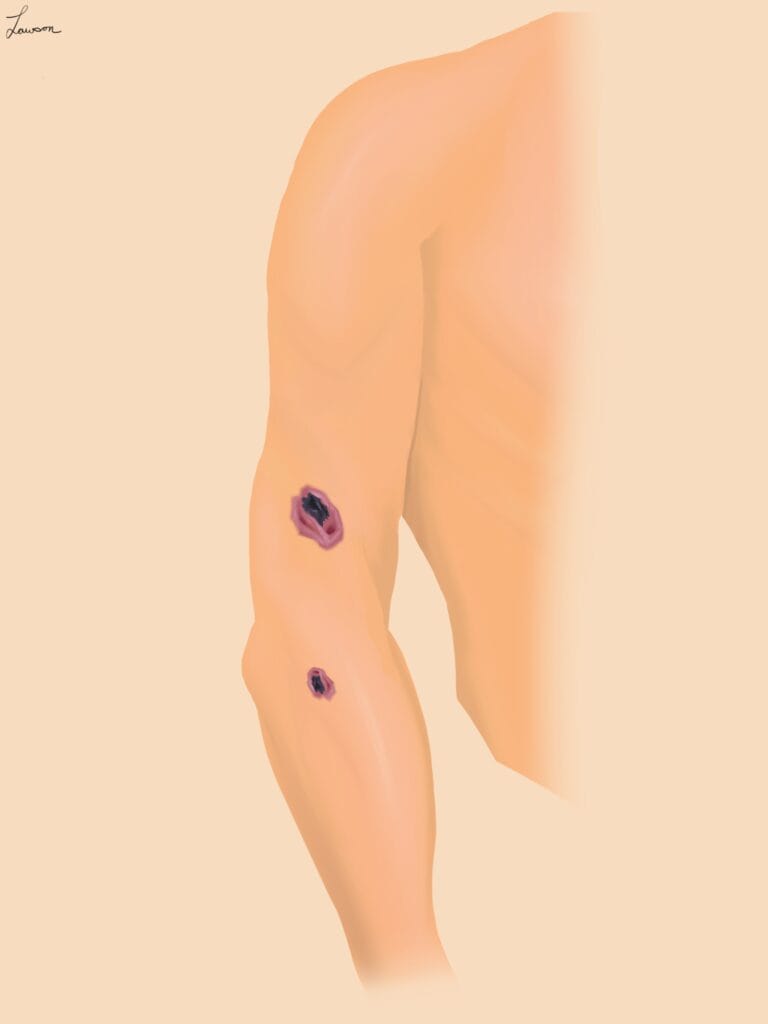
The ancient Roman poet Virgil (70–19 BC), widely considered by contemporaries and historians as the greatest of the Latin poets, is most well known today for the epic poem the Aeneid.1 Born to a rural family, Virgil often glorified the agrarian culture of the early Romans and enjoyed spending time at his family farm. As such, he was innately familiar with contemporary agriculture, and in his Georgic works spent extensive time discussing horticulture, viticulture, tilling of the soil, beekeeping, and animal husbandry.1 In Virgil’s third Georgic, an interesting reference to an unknown disease afflicting cows, sheep, and horses can be found: “A terrible plague once sprang up there… not only destroying one flock after another, but killing animals of all kinds. Nor did the victims die an easy and uncomplicated death.”1
Virgil explicitly notes that the mysterious disease can be transmitted to humans through animal hides: “The pelts of diseased animals were useless, and neither water or fire could cleanse the taint from their flesh… If anyone wore garments made from tainted wool, his limbs were soon attacked by inflamed papules and a foul exudate, and if he delayed too long to remove the material, a violent inflammation consumed the parts it had touched.”1
Virgil’s description is highly consistent with cutaneous anthrax. The majority of human cases of cutaneous anthrax are caused by exposure to contaminated animal hides or animal products, usually in an agricultural setting.2 Over 90% of cases worldwide today are cutaneous, and most often occur on the head, forearms, or hands. Cutaneous lesions are papular, often with depressed necrotic eschars in their center, surrounded by erythematous, edematous tissue.3 While the disease is currently rare in the developed world, it was endemic throughout the Mediterranean during Virgil’s day; it appears that a large outbreak several centuries before his birth may have killed as much as half the animal population of Rome.4 Anthrax seems to have increased from the expansion and trade networks of the Roman Empire, as later outbreaks followed the path of Rome’s spreading influence.4
This is one of several ancient references to what is likely cutaneous anthrax. Ancient Indian literature described painful carbuncles that could be transmitted from domesticated animals to humans as early as 500 BC4; a similar disease was described by Hippocrates.5 Some researchers have even argued that the fifth plague in the biblical book of Exodus, where cattle were cut down by a mysterious plague, may have been one of the first recorded anthrax outbreaks.6
Virgil’s description of the dangers of wearing anthrax-contaminated cloth also appears to have been mirrored in other ancient literature. Several ancient myths, such as in the story of Medea or the tales of Heracles, feature poisoned cloth that leads to significant skin inflammation and ultimately death, suggesting an awareness of anthrax-contaminated cloth in the ancient world.6 Even in the modern day, contaminated animal hides remain a dangerous vector of cutaneous anthrax.7
Given this, it appears that Virgil’s lifelong love of farming and agriculture made him an expert on cutaneous anthrax in both animals and humans. His vivid description of the disease remains recognizable over 2,000 years later.
References
- Dirckx JH. Virgil on anthrax. The American Journal of Dermatopathology. 1981;3(2):191-6.
- Doganay M, Metan G, Alp E. A review of cutaneous anthrax and its outcome. Journal of infection and public health. 2010;3(3):98-105.
- Kolbe A, Yuen MG, Doyle BK. A case of human cutaneous anthrax. Medical Journal of Australia. 2006;185(5):281-2.
- Jones SD. Death in a Small Package: A short history of anthrax. Johns Hopkins University Press+ ORM; 2010.
- Schwartz M. Dr. Jekyll and Mr. Hyde: a short history of anthrax. Molecular Aspects of Medicine. 2009;30(6):347-55.
- Swiderski RM. Anthrax: A history. McFarland; 2004.
- Carter T. The dissemination of anthrax from imported wool: Kidderminster 1900–14. Occupational and Environmental Medicine. 2004;61(2):103-7.
DR. MATTHEW D. TURNER is a current PGY-3 EM resident in Hershey, PA. One of his interests is the intersection of history and medicine.
MICHAEL LAWSON, MD – Wilford Hall Surgical Center, San Antonio, TX, Dermatology Department.