
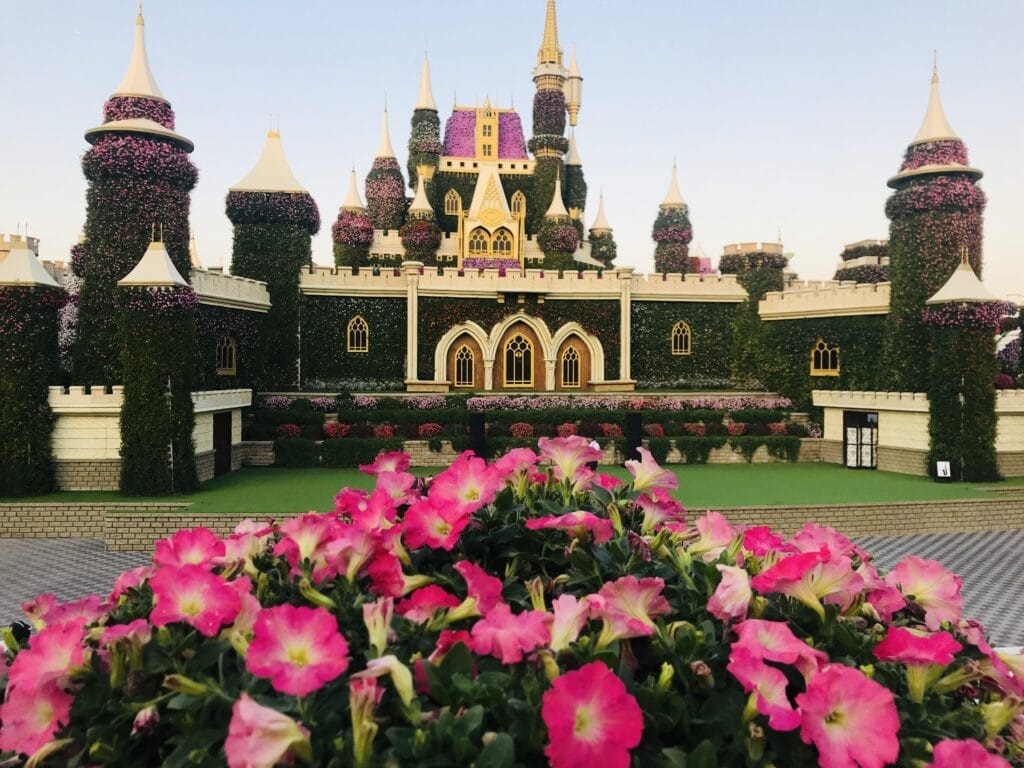

Dubai Miracle Garden establishes itself as an outstanding horticultural marvel in the middle of the Arabian Desert. The 72,000-square-meter botanical garden in Dubai shows what can be achieved in one of the driest areas on Earth, which experiences ten centimeters of yearly rainfall and summer temperatures above 45 degrees Celsius.
The project began under the leadership of Abdel Nasser Rahhal to fulfill Dubai’s mission of developing world-class attractions that would establish the emirate as a leading global tourism hub. Dubai Miracle Garden welcomed visitors for the first time in February 2013. During its development process, the garden faced numerous hurdles. The combination of innovative irrigation systems and advanced agricultural techniques along with specific plant choices made the project feasible. Visitors can experience the garden during its seasonal operation, which spans from October to April because these months offer optimal temperatures.
The Dubai Miracle Garden displays more than 50 million flowers across 150 different species in its annual themed displays. The floral arrangement includes several large-scale sculptures that replicate both notable landmarks and animals and architectural achievements. The Emirates A380 aircraft floral replica at the garden earned a Guinness World Record because it became the largest floral installation in the world. Visitors can walk through the flower-based themed zones which include heart-shaped arches together with pyramid structures and elaborate peacock displays. Drought-resistant plant species like petunias and marigolds and geraniums enable sustainable operations with continuous seasonal color display.
The garden achieves success through horticultural science that adapts to desert environments. The drip irrigation system gives plants exactly the right amount of water through root delivery which minimizes water loss and provides perfect hydration. The garden uses treated wastewater recycling to process about 757,000 liters each day, a vital sustainability practice in this water-deprived area. The soil conditioning process depends on specially made growing media that stores water and allows proper drainage. The garden’s agricultural team has created original methods for preserving flower health during hot temperatures through their work on shade placement and environmental temperature control. The natural compounds found in rose gardens produce mood-enhancing effects that benefit patients while lavender displays provide anxiety-reducing properties that improve sleep quality. This garden demonstrates that innovative scientific methods can be effective even in the harshest environments.