
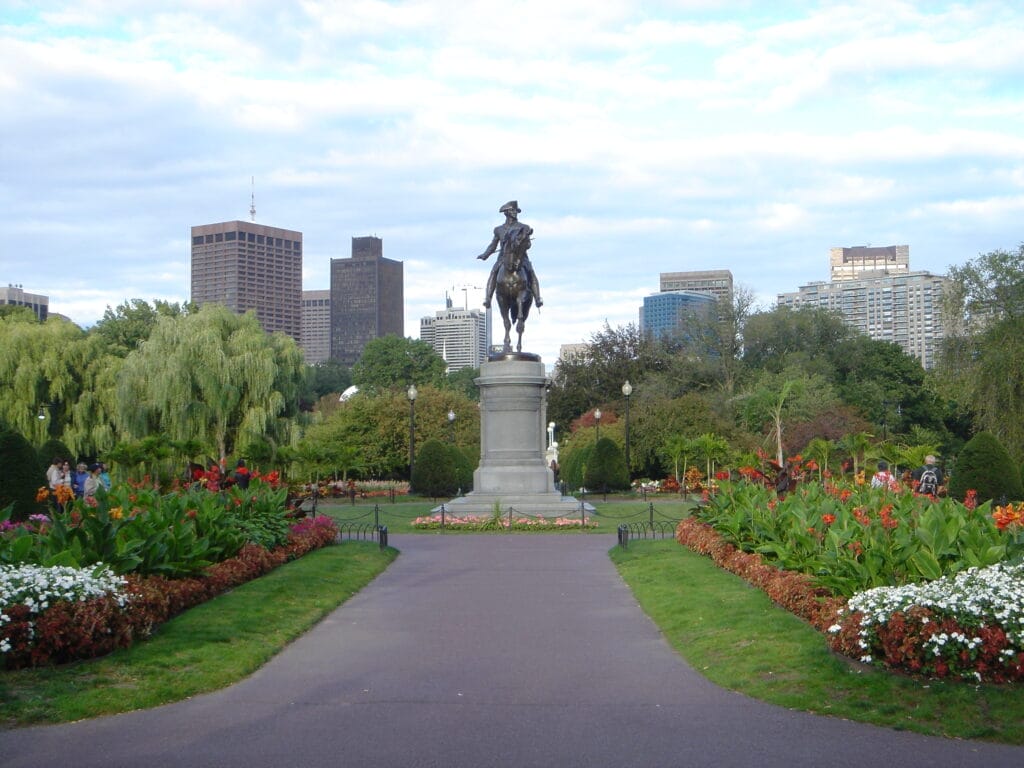

Situated in the heart of Boston and adjacent to the Boston Common, the Boston Public Garden, established in 1837, was the first public botanical garden in the United States. The Garden exemplifies the city’s long-standing commitment to horticulture, public health, and civic beautification. Beyond its picturesque winding pathways, elegant Swan Boats, and Victorian floral patterns, the Boston Public Garden also carries important associations with medical history and therapeutic innovation.
Before the Public Garden’s creation, the land was a salt marsh along the Charles River. The transformation into a botanical oasis was championed by philanthropists, physicians, and public figures who believed in the connection between green spaces and human well-being. One such proponent was Dr. Jacob Bigelow, a Harvard physician, botanist, and author of the influential Florula Bostoniensis (1814), a catalogue of plants in the Boston area. Bigelow strongly advocated for the Garden as both a site of aesthetic pleasure and botanical education. His dual interests in medicine and botany exemplify the 19th-century medical view that plant life was not only beautiful but essential to health and pharmacology.
The Garden became a repository for native and exotic plants with known or potential medicinal properties. In an era when physicians relied heavily on botanicals, gardens such as this served both as living laboratories and educational centers. The cultivation of medicinal herbs such as foxglove (Digitalis purpurea), used to treat heart conditions, and willow (Salix alba), a natural source of salicylic acid (a precursor to aspirin), reflects the Garden’s role in supporting the materia medica of the time. Many medical students from Harvard and nearby institutions studied plant specimens here, learning to identify, cultivate, and prescribe botanical remedies.
The Garden also aligned with broader public health movements that gained traction in the mid-19th century. As Boston’s population surged due to immigration and industrialization, city leaders and physicians became increasingly concerned with sanitation, ventilation, and the effects of urban crowding. The Public Garden, along with nearby green spaces like the Emerald Necklace designed by Frederick Law Olmsted, was seen as a “green lung” for the city—a place where citizens could walk, breathe fresh air, and escape the unhealthy conditions of crowded tenements. At the time, prevailing miasma theories of disease emphasized the role of foul air in spreading illness, reinforcing the belief that gardens could prevent epidemics through their purifying effects.
Aesthetic and horticultural practices in the Boston Public Garden also mirrored emerging trends in medical thought. For example, the Garden’s design incorporated serpentine paths and curved lines inspired by English landscape gardens, believed to promote mental calm and reflection. This corresponded with the rise of “moral therapy” in psychiatric care, which advocated for gentle, natural surroundings as part of the treatment for mental illness. Asylums and hospitals across the country began incorporating gardens into their campuses during this period, and the Public Garden set a civic standard for such integration.
In the 20th century, the Garden remained a locus of wellness and tranquility. The adjacent Massachusetts General Hospital, founded in 1811, became a global leader in medical innovation, and many of its physicians and patients enjoyed the therapeutic benefits of the Garden. Anecdotal accounts describe physicians recommending visits to the Garden for convalescing patients, particularly those recovering from tuberculosis or mental strain. The Garden thus continued its dual legacy as a public space and a quiet instrument of healing.
Today, the Boston Public Garden is a National Historic Landmark and a beloved urban sanctuary. Its blend of formal plantings, historical statuary, and botanical diversity is not only a testament to 19th-century civic vision but also a reminder of the intertwined histories of medicine and landscape design. With its origins rooted in both scientific inquiry and humanitarian ideals, the Garden remains a living symbol of the power of nature to soothe, educate, and heal.