
Shreya Sharma
London, Ontario, Canada
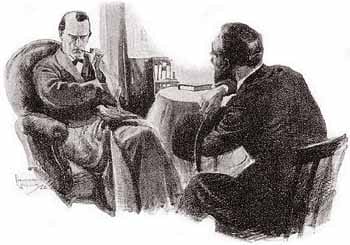
Throughout history, visible illness has been feared, medically and socially. Diseases with physical manifestations such as leprosy have carried a severe stigma, often leading to misdiagnoses, isolation, and discrimination. But what happens when fear, rather than science, dictates medical care? Arthur Conan Doyle’s short story “The Adventure of the Blanched Soldier” (1926, set in 1903) is a compelling case study. The focal character, Godfrey Emsworth, is wrongly presumed to have leprosy and is hidden away by his family, an unfortunate experience reflecting the widespread stigma that shaped real-world medical and social responses to disease. Doyle critiques the dangers of assumption-driven medicine by contrasting fear-based isolation with detective Sherlock Holmes’s logical approach.
During the nineteenth and early twentieth centuries, British colonial authorities labeled leprosy an “imperial danger,” fearing racial contamination from colonies such as India, South Africa, and the West Indies.1 Doctors often confused leprosy with psoriasis, vitiligo, or syphilis, relying too heavily on visible symptoms.2 The consequences were devastating, as those wrongly diagnosed were isolated, losing their personal and social identities. Fear dictated medical practices, and patients suffered.
Doyle’s story captures a moment of fear-driven medical practice. Emsworth returns home from South Africa with a blotchy skin condition, prompting his father to assume he has leprosy and confine him to an isolated region of their home.3 This response mirrored real cases at the time. Families often hid or disowned afflicted relatives, fearing social disgrace more than misdiagnosis.
Godfrey’s isolation does not just confine him physically; it strips him of his identity. He despairs, “I am no longer a man. I am a ghost,” capturing the emotional devastation of being treated as a pariah.3 This aligns with sociologist Erving Goffman’s theory of the “spoiled identity,” where an individual becomes defined by their condition rather than their character.4 Doyle’s inclusion of Godfrey’s despair is significant. It is not simply a plot device but a statement on the real-world impact of stigma. Historical leprosy patients experienced profound social and psychological trauma, mirroring Godfrey’s feelings of dehumanization. His feelings are not simply a result of illness. Rather, they are a product of societal fear.
Sherlock Holmes’s role in the story is pivotal. His scientific reasoning contrasts sharply with Emsworth’s father’s impulsive fear. Holmes does not accept the assumption of leprosy at face value; instead, he gathers evidence, examines symptoms, and ultimately diagnoses ichthyosis, a harmless, non-contagious condition. Holmes’s intervention does more than provide a correct diagnosis; it restores Godfrey’s dignity. By disproving the leprosy assumption, Holmes allows him to reclaim his place in society.
Doyle’s themes echoed again in the HIV/AIDS crisis of the 1980s and 1990s.5 Patients with visible symptoms like Kaposi’s sarcoma were not just feared; they were morally judged and socially ostracized. Media sensationalism reinforced stigma, much like colonial fears once shaped perceptions of leprosy. Terms like “innocent victims” and “guilty carriers” created a moral hierarchy of suffering, influencing policy and delaying medical response.6
Another contemporary issue is racial bias in dermatology. Many conditions, including ichthyosis and psoriasis, present differently on darker skin. Medical education has historically focused on white patients, leading to frequent misdiagnoses in people of color. Most medical textbooks still overwhelmingly feature light-skinned examples, creating diagnostic gaps with real consequences.7 Doyle’s warning about assumption-based medicine applies here: when physicians rely on superficial evidence, patients suffer.
Doyle’s “The Adventure of the Blanched Soldier” is more than a detective story; it reflects the consequences of fear-driven medicine. Through Godfrey’s unjust and unnecessary isolation and Holmes’s success through reason, Doyle exposes the dangers of assuming the worst based on superficial evidence. His critique is subtle yet direct: while he does not attack the medical field outright, his portrayal of the consequences of flawed diagnoses speaks for itself.
The relevance of this story extends far beyond its historical setting. The lessons remain the same today: when fear influences medical diagnosis and treatment, people suffer. Holmes’s methodology—questioning assumptions, prioritizing evidence, and rejecting stigma—serves as a model for detectives and doctors alike. The challenge for modern medicine is to fully embrace this lesson, ensuring that science, rather than social fear, dictates diagnosis and treatment. Literature, including Doyle’s work and beyond, reveals these biases, offering historical insight and fostering a more reflective and empathetic medical practice. By engaging with narratives that expose past and present failures, medical professionals and society can develop a deeper awareness of the ethical responsibilities inherent in healthcare.
References
- Wright HP. Leprosy : an imperial danger / by H.P. Wright. Wellcome Collection. 1889. Accessed February 25, 2025. https://wellcomecollection.org/works/u56g4sn3/items
- Edmond R. Leprosy and Empire: A Medical and Cultural History. Cambridge University Press; 2006.
- Doyle AC. The Adventure of the Blanched Soldier. The Strand Magazine; 1926.
- Goffman E. Stigma: Notes on the Management of Spoiled Identity. Simon & Schuster, Inc; 1963.
- van Oers R. Stigma, Prejudice, and Sympathy: British Press Coverage of HIV/AIDS in the 1980s. M.A. McGill University (Canada); 2022. Accessed February 25, 2025. https://www.proquest.com/docview/2838438743/abstract/16431BEE73EA4929PQ/1
- Dodds CA. Responsibility and HIV/AIDS: A Sociological Investigation. Thesis, University of Warwick, May 2003. https://webcat.warwick.ac.uk/record=b1677786~S15
- Alexis AF, Sergay AB, Taylor SC. Common Dermatologic Disorders in Skin of Color: A Comparative Practice Survey. Cutis. Nov 2007;80(5):387-94.
SHREYA SHARMA is a second-year medical student at Schulich School of Medicine and Dentistry. She is passionate about exploring the intersection of literature, history, and clinical care, and believes in medicine as both a scientific pursuit and a human story.