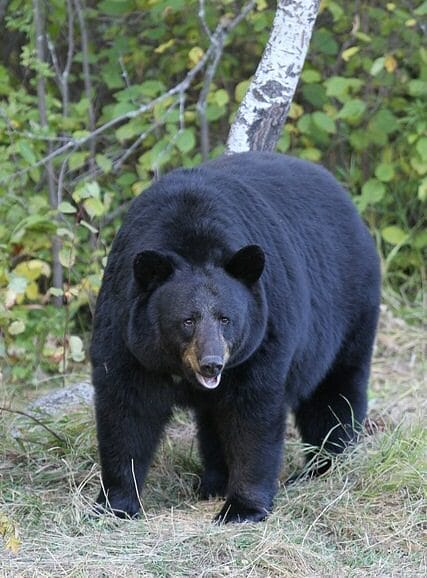

Bears are formidable animals, unbeatable in strength and resilience, some weighing over a thousand pounds. Some grizzly and polar bears reach massive sizes and with their muscular build, sharp claws, and powerful jaws can kill their prey swiftly and efficiently.
Although bears are powerful and robust, they are subject to various medical conditions. They can develop trichinosis, especially among the omnivorous species that eat raw meat, and more rarely brucellosis, canine distemper virus, rabies, tapeworms, and nematodes. Despite their high fat diet, they rarely suffer from atherosclerosis, cardiovascular disease, or diabetes. They live about 10–40 years, depending on the species and environmental factors. Of great interest to medical researchers, they can undergo prolonged periods of torpor or dormancy with minimal food or water intake, reduced heart rate, and slowed metabolism, able to avoid muscle atrophy, osteoporosis, or kidney failure.
Indigenous cultures have long revered bears and respected their place in nature. Native American tribes often viewed them as symbols of strength and wisdom but also recognized the danger they could pose. Stories of bear encounters highlight the power of these animals and the need for caution when venturing into their domain. While most bears prefer to avoid human contact, there have been many cases of attacks in which individuals have been killed and even eaten.
One of the most tragic encounters with a bear was that of Timothy Treadwell, an environmentalist who dedicated his life to studying grizzly bears in Alaska. He believed he had developed a connection with the animals but became their prey in 2003 when he and his companion were killed and eaten by a hungry adult male brown bear. His fate is a chilling reminder that wild animals, regardless of human perception, remain untamed and unpredictable.
In literature, no bear story is more famous than the death of Antigonus in Shakespeare’s The Winter’s Tale. Antigonus, the courtier who had just abandoned the infant Perdita on the Bohemian coast, represents the corruption and cruelty of Leontes’ court. The stage direction “Exit, pursued by a bear” serves as one of theater’s most illustrated moments of swift poetic justice as the man who abandoned an innocent child also suffers her fate.
In the Bible (2 Kings 2:23–24), two bears maul forty-two children after they mock the prophet Elisha, a cautionary tale against disrespecting divine authority. In American frontier narratives, bear attacks have been interpreted as the continent’s resistance to European colonization. In The Revenant (2002) by Michael Punke, a brutal bear attack nearly kills the protagonist Hugh Glass, an American frontiersman fur trapper and hunter. Jack London’s novels also portray the bear as representing the untamed wilderness resisting human domination.
In Russian and Scandinavian folktales, bear attacks often carry moral weight and function as punishments for disrespecting the laws of nature. Thus from the frozen plains of Kamchatka comes the story of three men from a crew wandering too far from their camp. The first signs are subtle, the eerie quiet of birds going mute. Then comes a growl, low and thunderous, and out of the thicket emerge three massive brown bears. The panicked men flee in all directions, but the bears, clever and unhurried, follow. And the local villagers say that sometimes, when you walk on the yellow leaves in the fall, you can still feel the crunching of their bones.
Elsewhere, deep in the northern forests, there lived the Bear Man, able to speak to bears. The villagers are all afraid of him. Then one spring a young girl from the village wanders too far into the woods and stumbles upon a huge bear resting beneath a tree. She freezes in terror. The bear lifts its massive head and sniffs the air. Then, from behind the girl, a deep voice says, “Do not fear.” As a man steps forward, the bear ambles toward him, brushing against his leg like a loyal hound. With a nod, the man takes the girl’s hand and leads her home. After that day, the villagers see the Bear Man with a certain reverence, knowing that the forest is dangerous but that he watches over their safety.
Then there is the story of Marcus, a hunter who always prided himself on understanding the wilderness. But the bears in these mountains are different, moving with an intelligence that chilled him. Crouched behind a fallen log, Marcus watches three massive grizzlies emerge from the tree line. They walk upright, their dark eyes scanning the clearing with purpose. The largest one sniffs the air and turns its massive head directly toward his hiding spot. Marcus had come here to hunt, but is beginning to understand that he has become the hunted. The bears circle his position, their movements coordinated like a pack of wolves. Marcus closes his eyes and whispers a prayer to whatever gods protect foolish men who wander too deep to where nature decides to bite back.
In sum, animal images evoking awe and terror serve as potent narrative devices. In Edgar Allan Poe’s The Murders of the Rue Morgue, the horrible crime is committed not by a bear but by an orangutan. Less gruesome but more indelicate is the story of a large black bear joining a queue of men waiting outside a house of ill repute. At the end of the day, when all the clients had left, the madame reviews the books and informs her boss that all the customers have paid except for the gentleman in the black coat.